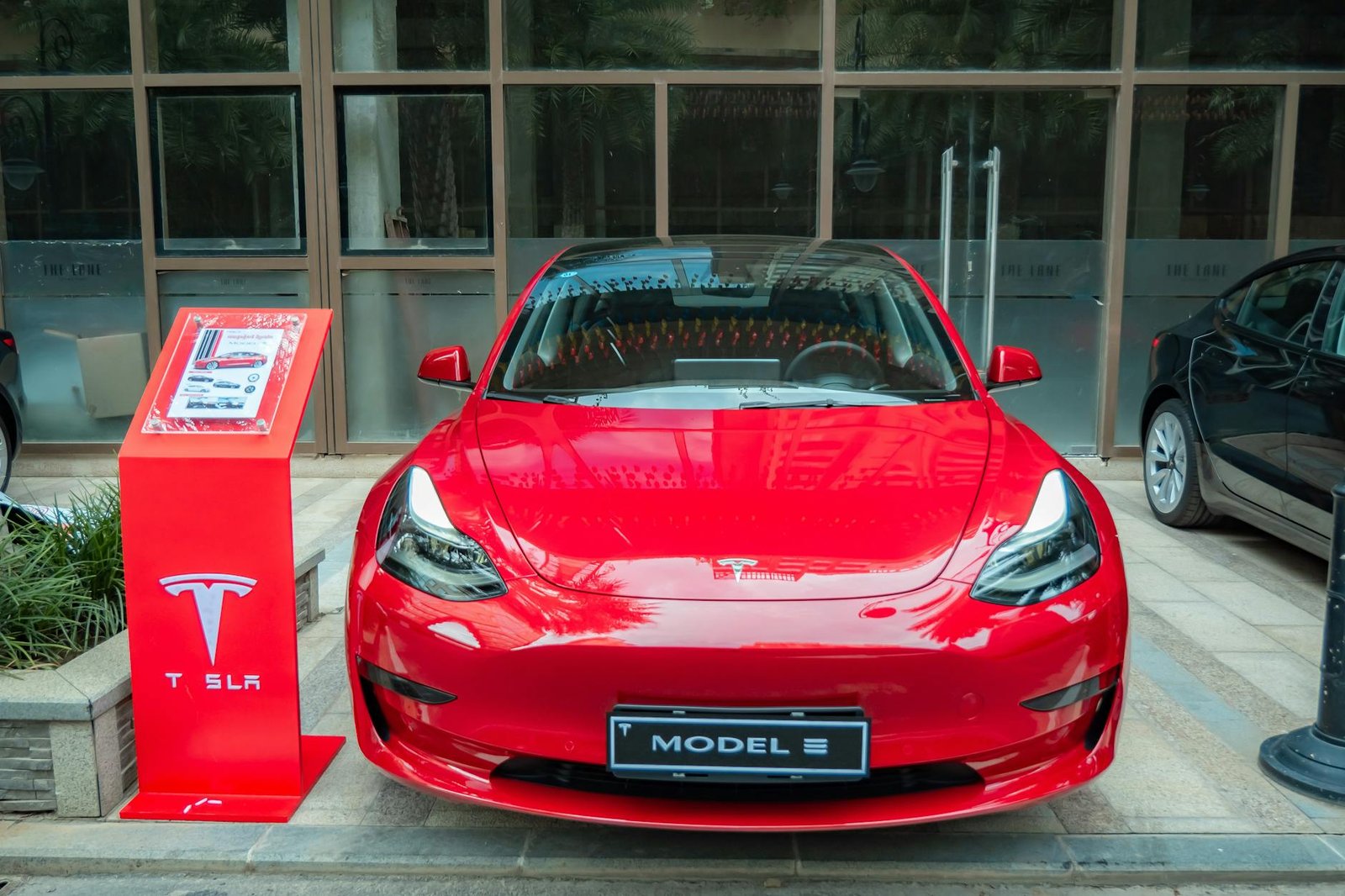
A 2019 Nissan Leaf with 149 miles of range and an incompatible charging port is worth 37% of its original sticker price after five years. The owner who bought it new absorbed a $7,500 federal tax credit, then watched the remaining value crater by 63%. EV depreciation currently runs at 49% over five years, compared to 38.8% for the industry average. Hybrids depreciated at 37.4% five years ago. Today they’re down to 34.8%, slightly beating gas cars. The pattern matters more than the panic.
What Seven Years of Hybrid Data Actually Shows
In 2017, hybrids lost value faster than conventional vehicles. Buyers treated them as complicated compromises with unproven battery longevity and uncertain repair costs. The resale market priced in maximum risk. By 2024, hybrids retain value better than gas-only cars because the risk assessment changed. Enough vehicles stayed on the road long enough to prove the battery packs don’t fail at 100,000 miles. Repair shops learned to service them. A worn hybrid still delivers better fuel economy than a worn sedan.
The shift took seven years of vehicles proving themselves in daily use. The first Prius owners took the depreciation hit. The second wave benefited from their data. EVs are tracking the same adoption curve, just compressed. A five-year-old Volkswagen ID.4 has lost approximately 55% of its value. Early adopters take the loss, but the steep drop creates a secondary market where price-sensitive buyers can access electric vehicles at rational price points.
The Federal Tax Credit Created a Depreciation Accelerant
The $7,500 federal tax credit artificially inflates new EV transaction prices, then disappears the moment the car becomes used. A buyer comparing a three-year-old EV to a new one sees the used vehicle priced at 51% of original MSRP, but the new vehicle effectively costs $7,500 less after the credit. The used car has to compete with a subsidized new product. Gas cars don’t face that discontinuity.
Ultra-cheap lease deals compounded the problem. Manufacturers structured leases to capture the tax credit themselves, offering monthly payments that made new EVs cheaper than used ones for qualified buyers. Why buy a three-year-old Leaf when you can lease a new one for less? The rational answer for the informed buyer was to avoid the used market entirely. Used EVs competed for buyers who either didn’t qualify for new-car financing or didn’t understand the incentive structure. Thin demand drives steep depreciation.
The secondary market treats the tax credit as a permanent feature of new EVs, pricing used vehicles as if they’re competing against permanently discounted new inventory. Used EV values will stabilize when the credit eventually phases out or narrows because the comparison will normalize. Hybrids never had a $7,500 cliff separating new from used. Their depreciation curve smoothed out naturally as the technology matured.
Range Anxiety Is a Resale Risk, Not Just a Purchase Fear
A 2019 Nissan Leaf with 149 miles of range wasn’t just range-limited when new. Battery degradation reduces that 149 miles by 10-15% over five years, dropping real-world range to around 127-134 miles. A buyer in 2024 looking at that used Leaf knows they’re buying a car that can’t road trip and might struggle with winter commutes. The depreciation reflects limited use case, not technology failure.
Hybrids don’t face this constraint. A 2019 Toyota Camry Hybrid with a degraded battery still runs on gasoline. The owner loses some fuel efficiency but retains full utility. The resale buyer isn’t gambling on whether the car can reach the next city. This asymmetry in risk tolerance shows up directly in residual values. Depreciation measures buyer confidence in future utility, not just current condition.
Newer EVs with 250-300 mile EPA ranges will depreciate less steeply because degradation to 215-255 miles still covers most daily driving. The Leaf started with barely enough range and had nowhere to degrade. Hybrids proved that perceived reliability risk diminishes as fleet data accumulates. EVs are proving that range risk diminishes as starting range increases.
Charging Infrastructure Compatibility Is a Documented Asset
The 2019 Leaf uses CHAdeMO charging, incompatible with the vast majority of fast-charging infrastructure built since 2020. A used car buyer in 2024 looking at that Leaf sees a vehicle that can’t use most public charging networks. The car lost value because the charging ecosystem moved on without it.
First-generation iPhones without 3G connectivity became worthless faster than later models because the network infrastructure they relied on became obsolete. The device itself still worked, but its utility collapsed. EVs with non-standard charging ports face the same obsolescence penalty. Buyers price in the risk that charging networks will optimize for Tesla’s NACS standard or CCS, leaving outliers stranded.
Hybrids never faced this problem because gasoline infrastructure doesn’t fragment. Every hybrid can refuel at every gas station. The standardization was inherited, not negotiated. EV depreciation will stabilize as charging standards consolidate and buyers stop worrying about whether their car can use the chargers being built in 2028.
The Buy-vs-Lease Decision Reveals True Ownership Cost
Buyers who lease EVs avoid depreciation risk entirely. The manufacturer or leasing company absorbs the residual value uncertainty, which explains why lease penetration runs higher for EVs than for conventional vehicles. Rational buyers with access to cheap leases don’t absorb five-year depreciation. They pay for three years of use and walk away. Used EV inventory concentrates among buyers who either bought outright or are returning leased vehicles to auctions where depreciation gets realized all at once.
Hybrids stabilized when enough buyers purchased rather than leased, proving residual values through real transactions. EV residuals remain volatile because too much volume flows through lease returns. Auction prices reflect clearing excess inventory, not organic buyer demand. The used market can’t price risk accurately when most vehicles enter as off-lease inventory dumped in bulk.
Tesla’s recent delivery patterns show this dynamic in action. The company produced 476,000 vehicles in Q3 2024 but delivered only 463,000, adding 13,000 units to inventory. When production outpaces demand, manufacturers face pressure to either cut prices or offer higher incentives to clear stock. When Tesla cuts prices on new inventory, used Tesla values drop in lockstep. No gas car manufacturer can flood the used market by discounting new inventory this aggressively. The leverage works in reverse for EVs.
Early Adopters Pay for Data the Market Needs
The buyers absorbing 49% depreciation on five-year-old EVs are generating the usage data that will stabilize future residuals. They’re proving battery longevity, charging behavior, repair costs, and real-world range in climates from Arizona to Minnesota. That data has value, but it accrues to future buyers, not the people paying for it. Early Prius owners subsidized Toyota’s hybrid learning curve. Early Tesla buyers funded the Supercharger network.
Hybrids took seven years to flip from higher depreciation to beating conventional cars because that’s how long it took to accumulate enough fleet data to shift buyer risk perception. EVs are on year five of mass-market availability. The depreciation curve is steep because uncertainty is still high. As 2019-2020 EVs cross 150,000 miles without major battery failures, used buyers will price in lower risk. Depreciation will moderate because buyers get smarter, not because EVs get better.
The Path Forward Is Already Documented
Zero fully electric vehicles appear in the top 25 lowest-depreciation models today. Half of the top 10 fastest-depreciating models are EVs. The market is pricing in maximum uncertainty while supply outpaces informed demand. The pattern is temporary, not structural. Hybrids proved that buyers will pay for used electrified vehicles once they trust the technology. The question is how fast EV fleet data accumulates relative to new model improvements that make older vehicles obsolete.
Current EV depreciation is brutal for early adopters, but it’s creating a used market where practical EVs sell for $15,000-$25,000, accessible to buyers who would never pay $45,000 new. That’s adoption through affordability, not subsidy. The depreciation pain is real, yet it’s expanding the addressable market by making EVs available to a wider range of buyers.
Hybrids took seven years to stabilize. EVs have better range, faster iteration cycles, and more diverse model lineups. The timeline should compress, but the physics of market learning can’t be skipped. The buyers taking the depreciation hit now are funding the data that makes the next wave viable.