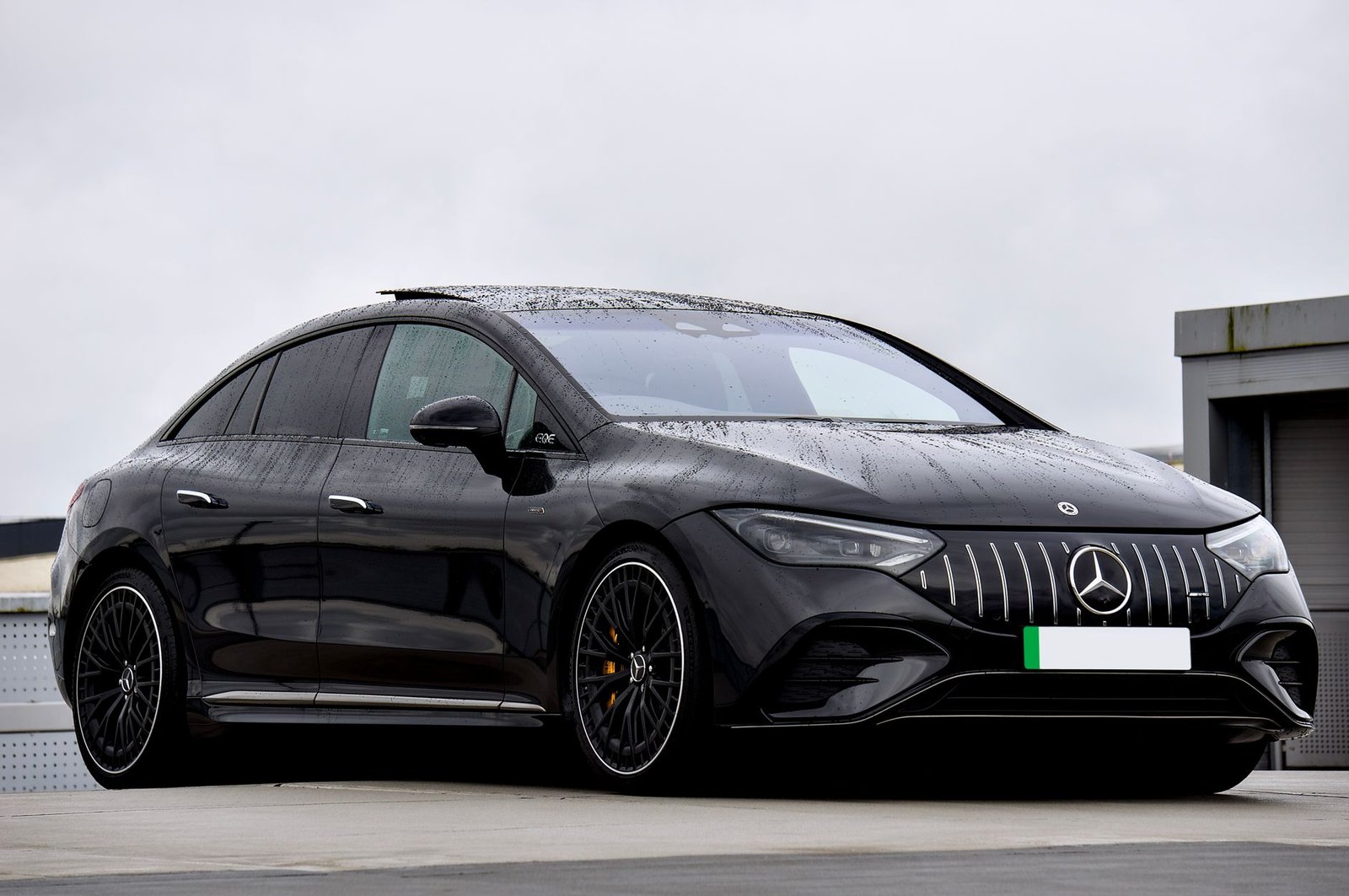
Mercedes-Benz has discontinued the EQE Sedan in America but kept three EQ models on the roster for the 2027 model year: the EQS Sedan, EQS SUV, and EQE SUV. The EQS 450+ sedan claims a 467-mile EPA range estimate and 350 kW DC fast charging through an 800-volt architecture upgrade from the previous 400-volt system. Base pricing starts at $101,450 for the EQS 450+, $64,950 for the EQE SUV, and $89,950 for the EQS SUV, according to InsideEVs. A Mercedes-Benz USA spokesperson confirmed both SUV models remain available to customers. Yet sales of Mercedes-Benz’s EQ lineup have been characterized as lackluster, and the pruning of the EQE Sedan and Mercedes-Maybach EQS SUV from the 2027 lineup suggests the company is consolidating around models that might actually move metal. The question isn’t whether the Mercedes EQS 2027 offers improved range or faster charging. The question is why luxury buyers keep walking past these vehicles on showroom floors.
Luxury Buyers Don’t Tolerate Compromise on Core Attributes
The Mercedes-Benz customer base built its purchasing behavior around non-negotiable expectations: interior materials that feel expensive under your fingertips, ride quality that filters out the world’s imperfections, and a brand cachet that signals status without requiring explanation. These buyers will accept a sedan that burns premium fuel at 18 mpg combined if the driving experience meets their threshold. They will not accept a vehicle that asks them to rethink how they refuel, where they park overnight, or how they plan long-distance travel, unless the EV delivers a materially better version of what they already value. The EQS 450+ offers 467 miles of range on the 2027 model, up substantially from the outgoing model’s roughly 390-mile rating, enabled by a larger battery and the shift to an 800-volt architecture. That’s a meaningful improvement in maximum touring distance. But luxury sedan buyers don’t optimize for maximum range; they optimize for minimum friction in their daily routine.
A Mercedes S-Class buyer expects to pull into any gas station in Greenwich or Palo Alto, spend four minutes refueling, and continue their day. The EQS buyer must either install a Level 2 charger at home (requiring electrical panel upgrades in many older affluent neighborhoods where homes weren’t wired for 40- or 50-amp circuits), identify DC fast charging stations along their preferred routes, or accept that a road trip from San Francisco to Carmel now includes a charging stop even with 350 kW peak charging capability. The 2027 EQS adds a native NACS port for DC fast charging alongside the J1772-compatible AC connection, which improves network access but doesn’t eliminate the behavioral shift. The buyer who can afford a $101,450 vehicle has already solved the transportation problem; they’re not early adopters seeking to beta-test infrastructure. They’re established buyers expecting a product that fits their existing life without demanding new habits.
The Price Premium Over Combustion Erodes the Value Proposition
The 2027 Mercedes EQS 450+ carries a $101,450 starting price. A Mercedes-Benz S 500 4Matic sedan starts around $118,000, and while that’s higher than the base EQS, the S-Class buyer isn’t cross-shopping these vehicles as functional equivalents. The S-Class represents the apex of Mercedes’ combustion engineering, with decades of refinement in noise suppression, chassis tuning, and powertrain calibration. The EQS represents a newer platform that shares the brand badge but asks the buyer to accept different tradeoffs: instant torque and silent propulsion in exchange for charging planning and depreciation uncertainty. The EQS 580 4Matic, the top-trim sedan for 2027 at $123,900, competes with the S-Class on price but not on the intangible qualities that justify six-figure sedans. Luxury buyers pay for the absence of compromise, not for the opportunity to explain why their fueling strategy is superior.
The 2027 EQS 450+ produces 355 horsepower in rear-drive form, while the EQS 580 4Matic delivers roughly 536 hp. Those are competitive figures against combustion luxury sedans, but horsepower alone doesn’t close the sale in this segment. The S-Class buyer expects a specific steering weight at highway speeds and an interior ambiance calibrated over multiple product cycles. The EQS delivers a different experience, one that some buyers will prefer and many will find disqualifying not because it’s objectively worse but because it doesn’t match the mental model of what a Mercedes flagship should feel like. The EQ lineup’s sales struggles likely stem less from product deficiencies and more from Mercedes attempting to migrate a customer base that never asked to be migrated.
The SUV Models Face the Same Behavioral Friction with Narrower Appeal
The 2027 EQE SUV starts at $64,950, and the EQS SUV at $89,950. Both models remain in the lineup after the EQE Sedan’s discontinuation and the Mercedes-Maybach EQS SUV’s exit, suggesting Mercedes sees more market traction in electrified SUVs than sedans. That aligns with broader industry trends where SUVs dominate luxury sales regardless of powertrain. But the EQE SUV and EQS SUV face the same charging infrastructure and behavioral change barriers as the EQS Sedan, now applied to buyers who expect SUV practicality: the ability to load ski gear, tow a small trailer, or handle a weekend trip to the mountains without route anxiety. The EQS SUV’s range figures weren’t specified in the available data for the 2027 model, but the platform shares the architecture constraints of the sedan. If a buyer is willing to plug in every night and plan charging stops, the EQS SUV offers a compelling blend of space and electric performance. If the buyer expects their luxury SUV to function like their previous GLE or GLS without new routines, the EQS SUV asks for patience the buyer hasn’t agreed to provide.
Mercedes pruned the EQE Sedan from the U.S. lineup, and the company discontinued the Mercedes-Maybach EQS SUV for the 2027 model year. Those cuts indicate the product mix isn’t finding buyers at a rate that justifies continued production investment. The remaining EQ models soldier on, but “soldiering on” describes endurance under unfavorable conditions, not thriving market acceptance. A company spokesperson told InsideEVs that the EQE SUV and EQS SUV remain available to customers, phrasing that confirms availability without claiming demand. Mercedes is running a portfolio management exercise, keeping the models that lose the least money or maintain brand presence in the EV category while waiting for either customer behavior to shift or battery costs to drop enough that the value proposition becomes undeniable.
The Strategic Error Was Assuming Brand Loyalty Transfers Across Powertrains
Mercedes-Benz likely expected existing customers to view the EQ lineup as the natural next step in their ownership journey, the same way E-Class buyers once migrated to the S-Class as their income grew. That logic holds when the new product offers more of what the customer already values: more space, more power, more refinement. It breaks down when the new product requires the customer to adopt new behaviors that offer no benefit they care about. The luxury buyer doesn’t prioritize fuel savings; they don’t necessarily commute in heavy traffic where EV efficiency matters most; they don’t optimize for environmental impact as the primary purchase criterion. They buy luxury vehicles because those vehicles remove friction from their lives through superior comfort, status signaling, and service networks that solve problems before the customer notices them. The Mercedes EQS 2027 may deliver strong acceleration and a longer range than previous electric Mercedes sedans, but it doesn’t remove friction. It redistributes it into charging logistics and infrastructure planning.
The 2027 EQS Sedan includes standard Airmatic air suspension and a next-generation Digital Light system with adaptive high-beam functionality. Those features position the EQS as a technology showcase, which appeals to buyers who want the newest gadgets. But the core Mercedes luxury buyer isn’t a gadget buyer; they’re a refinement buyer. They want the vehicle that feels correct the moment they sit in it, not the vehicle that promises to feel correct once they adjust to its quirks. Mercedes built the EQ lineup for a customer that largely doesn’t exist yet in sufficient numbers: the wealthy early adopter who treats charging as an acceptable tradeoff for electric propulsion. That customer exists, but in numbers too small to absorb six-figure production volumes. The mass luxury market still defaults to combustion because combustion still delivers the lowest-friction ownership experience, and friction is what luxury buyers pay to avoid.
The EQ lineup’s survival through 2027 suggests Mercedes is committed to maintaining an electric presence while it recalibrates product strategy. But keeping three models on the roster after cutting two others isn’t a growth plan; it’s a holding pattern. If the Mercedes EQS 2027 and its SUV siblings can’t convert the brand’s existing customer base, Mercedes will need to either find a new customer base or accept that electric luxury vehicles remain a niche product until charging infrastructure achieves parity with the gas station experience. The latter will take years, and the former requires admitting that brand equity doesn’t transfer seamlessly across powertrains. The EQS 450+ may achieve 467 miles of range, but until plugging in feels as frictionless as pulling into a gas station, range is just one variable in a purchase decision still dominated by habit, convenience, and the absence of compromise.