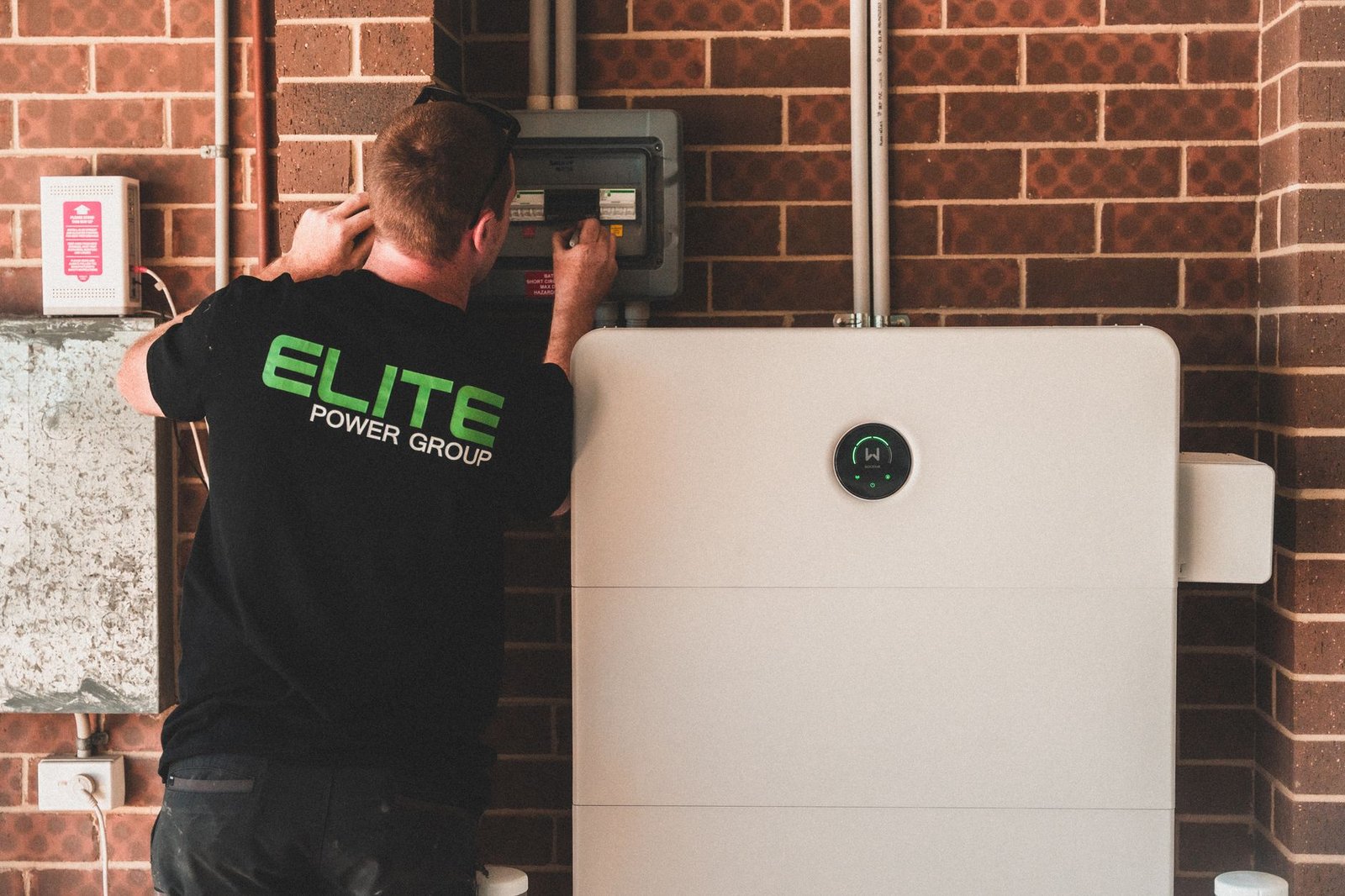
You’re standing in your garage at 2 AM during a blackout, flashlight in hand, trying to remember where you stashed the extension cords for the gas generator. Your neighbor’s house across the street? Still lit up. No noise, no fumes, no scrambling. They installed one of those new home battery systems six months ago, and right now you’re doing math in your head about whether you made the right call sticking with the Briggs & Stratton generator your dad swore by.
This isn’t a theoretical comparison anymore. Home battery backup systems like the new 16 kWh Briggs & Stratton battery generator have crossed a threshold where the total cost of ownership over five years competes directly with traditional gas generators for a large segment of buyers. Not everyone. Not every use case. But the decision tree just got a lot more complicated than “electric costs more upfront.”
The Sticker Price Everyone Fixates On
A quality 10 kW gas generator from Briggs & Stratton or Generac runs $3,000 to $5,000 for the unit. Add a transfer switch, concrete pad, and professional installation, and you’re at $6,000 to $8,000 all-in. Run it on natural gas if you have the line, propane if you don’t.
A 16 kWh lithium iron phosphate battery system? Figure $12,000 to $18,000 installed, depending on configuration and whether you’re bolting on additional capacity. The Briggs & Stratton battery generator sits in this range, designed to scale up as your power needs grow. Double the upfront cost, sometimes more.
That price gap is real and matters, but most buyers stop at the initial number and miss how operating costs shift the comparison over a five-year ownership period.
What Buyers Actually Experience Over Five Years
Gas generators require maintenance the way boats require maintenance. Oil changes every 50 to 100 hours of runtime. Spark plugs. Air filters. Fuel stabilizer if it sits unused for months. Carburetor cleaning when the stabilizer doesn’t work. You’ll spend $200 to $400 per year on maintenance if you’re diligent, more if you’re not and something corrodes.
Then there’s runtime cost. A 10 kW generator burns roughly 0.8 gallons of gas per hour at half load. During a three-day outage running intermittently, you’re looking at maybe 40 to 60 gallons of fuel at $3.50 per gallon: $140 to $210. Do that twice a year in an area with unreliable power, and you’re in the ballpark of $300 to $400 in fuel alone, every year.
The Briggs & Stratton battery generator alternative? Maintenance cost is effectively zero. No oil, no filters, no combustion. The lithium iron phosphate cells degrade slowly, losing on the order of 20 percent capacity over a decade of regular cycling. Runtime cost depends on how you recharge it. If you’re pulling from the grid during off-peak hours, figure around $3 to refill 16 kWh at $0.18 per kWh. If you’ve got rooftop solar, the marginal cost is zero.
Over five years, gas generator ownership totals roughly $11,000 to $14,000 ($8,000 upfront plus $1,000 to $2,000 maintenance and $1,500 to $2,000 fuel), while battery backup runs about $12,000 to $18,000 upfront with near-zero operating costs after installation. The ranges overlap, which is exactly the point: this is no longer a comparison where gas wins by default.
The Assumptions That Break the Model
None of this holds if you’re running a whole-house load for days at a time, multiple times per year. A 16 kWh battery gives you roughly 12 to 14 hours of power running essentials: fridge, freezer, a few lights, internet router, one heating or cooling zone. Not the entire HVAC system. Not the electric dryer and oven simultaneously.
If you live somewhere with week-long outages after hurricanes, you need a generator. Full stop. The battery can’t compete with a 500-gallon propane tank and a generator rated for continuous duty. The Briggs & Stratton battery generator wasn’t designed for that use case, and pretending otherwise sets you up for disappointment when the power stays out past day two.
But most buyers don’t face week-long outages. They face four-hour nuisance outages during storms, or rolling blackouts in California summer heat. The average annual outage duration per customer in most U.S. regions is only a handful of hours, and most individual events run under a day. For that profile, the battery covers the overwhelming majority of events without anyone noticing, while the gas generator sits cold nine months of the year accumulating varnish in the fuel system.
Solar pairing changes the equation completely. Add 5 kW of rooftop panels and the battery system recharges during the day, extending your off-grid window substantially as long as the sun shows up. The gas generator still needs fuel deliveries or propane refills. If the extended outage is regional and gas stations have no power for their pumps, your 500-gallon tank matters. Your neighbor’s 20-gallon jerry cans do not.
Who Each One Actually Serves
Buy the gas generator if you’re rural with a well pump that draws serious current, or if your area sees outages lasting multiple days several times per year. Buy it if you heat with electric resistance and live somewhere cold, where losing heat for 12 hours in January creates a frozen pipe risk. Buy it if you can’t get permits for battery storage due to wildfire zones or restrictive local codes. Buy it if you’re in your seventies and don’t want to learn a new system, you just want the thing that starts when you pull the cord.
Buy the Briggs & Stratton battery generator or its equivalent if your outages are short and infrequent, if you already have solar or plan to add it, if you’re in a suburban neighborhood where generator noise at 3 AM makes you that neighbor, or if the idea of storing 20 gallons of gasoline in your garage makes you nervous from a fire safety perspective. Buy it if you have an EV and want the battery system to serve double duty as emergency backup. Buy it if you’re grid-tied but evaluating time-of-use arbitrage: charge the battery at night when rates are around $0.12, discharge in the afternoon peak when rates hit $0.40.
The Variable That Settles It
The real decision point isn’t upfront cost or runtime hours. It’s replacement timing and policy stability. That gas generator lasts 10 to 15 years if maintained, then you buy another one. Straightforward. Predictable.
The battery system lasts 10 to 15 years too, but the replacement calculation is murkier. Will lithium cell costs keep falling through 2035, making your 16 kWh system look expensive in hindsight? Will federal or state incentives disappear, removing the 30 percent tax credit that makes the math work today? Will your utility implement a grid services program that pays you a few hundred dollars per year to let them tap your battery during peak demand, flipping the whole cost structure?
Gas generators offer predictable economics over a decade, while battery systems carry pricing uncertainty that some buyers will view as risk and others will see as upgrade optionality.
The Call You Make Today
If you’re facing frequent outages longer than 24 hours, the gas generator still wins on cost and capacity. If your outages are short and you have solar or plan to add it, the battery system wins on operating cost and convenience. If you’re unsure, buy the Briggs & Stratton battery generator with expansion capability and size it for critical loads only. You can always add modules later when the kids move back home and suddenly everyone needs to charge everything all the time.
The mistake is treating this as a 15-year decision. It’s a 5-year decision with an option to pivot. Buy what solves your problem today, then reevaluate when the system ages or when your power use changes. Someone who installed a battery in 2020 and watched cell prices fall over the following years still bought five years of reliability, and now has better upgrade options when ready to expand or replace the system.