A fleet manager is staring at two pitches. Tesla shows a Cybercab video claiming its unboxed manufacturing cuts assembly line size in half. Ford previews its Universal EV Production System for its upcoming mid-size electric pickup, splitting assembly into three parallel lines. Both companies say they’re doing the same thing: building vehicle sections simultaneously instead of sequentially. Both claim this is the future, but only one of them is betting real capital on vehicles people will actually buy next year.
Tesla unboxed manufacturing is not a new idea. It’s modular assembly, the same approach Ford is using for its new EV platform. The difference is what each company is building with it, and whether the investment makes sense for their business model.
The Efficiency Pitch Both Companies Are Selling
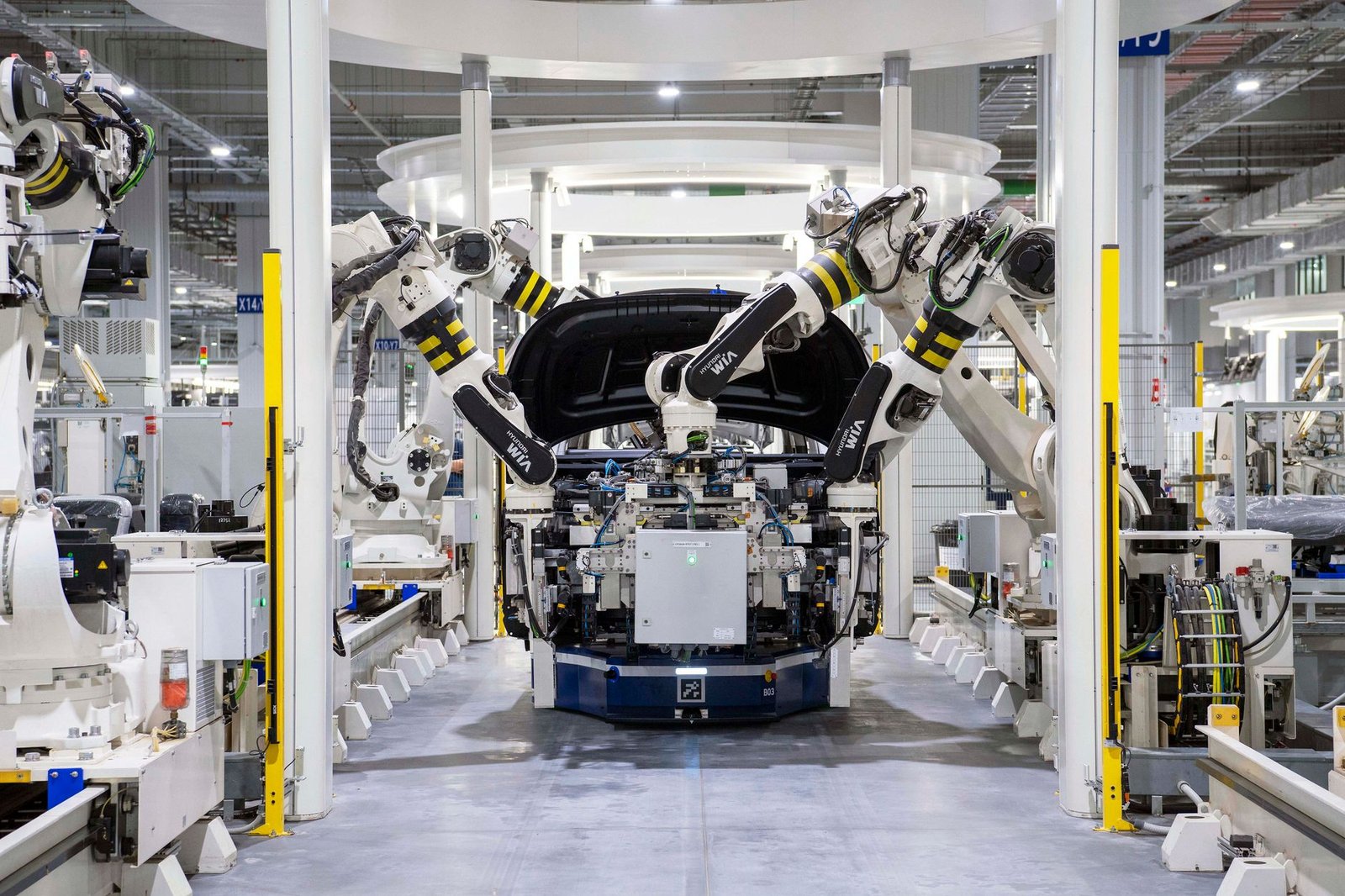
Tesla’s video shows the Cybercab being built in modules: battery box, front section, rear section assembled on parallel lines, then framed together at the end. Side panels, roof, and doors added after. Ford’s Universal EV Production System does the same thing for its new pickup: front, middle, rear built simultaneously, joined at the end.
Both companies claim this cuts factory footprint. Tesla says unboxed manufacturing can significantly reduce the assembly line footprint compared to a traditional car factory. Ford hasn’t published specific numbers, but the pitch is identical: parallel work cells instead of a single sequential line.
The specs both companies want you to focus on: factory square footage, cycle time, capital efficiency. These numbers matter if you’re building the factory. They matter less if you’re buying the vehicle.
What the Factory Tour Doesn’t Show You
Tesla bills this as a major revolution in automotive manufacturing. That’s marketing, not engineering. Modular assembly exists in every industry that builds complex products. Boeing builds fuselage sections in different facilities and joins them. Automakers have been experimenting with parallel work cells for decades.
The actual innovation here is casting. Tesla is using large cast metal parts to eliminate hundreds of individual stamped and welded pieces. That reduces part count, simplifies tooling, and cuts assembly time. Ford is doing the same thing with large castings on its new platform.
Casting isn’t about the assembly line layout. You can cast parts and still use a traditional sequential line. The decision to go modular is separate, and it introduces new costs people aren’t talking about.
Modular assembly works when every section can be built independently and the tolerances at the join points are tight enough that you don’t spend hours shimming and adjusting. That requires investment in precision tooling, measurement systems, and quality control at each work cell. If your tolerances drift, you end up with gaps, misaligned panels, and vehicles that need rework after final assembly.
Traditional sequential assembly has a century of refinement. Workers at each station see the cumulative result of every upstream process. Problems get caught early. Modular assembly can hide upstream problems until the sections come together. You need sensors, digital twins, and real-time feedback loops to replicate what a human assembly worker used to catch by eye.
Tesla says it is preparing to produce the Cybercab using unboxed manufacturing, with volume production targeted to begin in the coming year. Ford says its first pickups on the new system also arrive next year. One of these timelines is based on a facility building a vehicle with no steering wheel for an autonomous taxi service that doesn’t operate at scale yet. The other is based on a factory retool for a product customers can actually order and drive.
Where the Capital Is Actually Going
The Cybercab is a two-door vehicle with no steering wheel or pedals. It’s designed for a robotaxi network Tesla hasn’t deployed at scale. The production video shows a clean facility with a handful of vehicles being assembled. There are no volume figures and no firm delivery timeline attached to it.
This looks more like a process demonstration than a running high-volume line. The capital spent here is closer to R&D than manufacturing capacity. That’s fine if you’re proving out a process you’ll scale later. It’s wasteful if you’re building a factory for a product with no near-term commercial path.
Ford is spending capital on a pickup it will sell to retail and fleet customers. The Universal EV Production System is being installed in a real factory with real production targets. First deliveries are scheduled for next year. This is capital spent on manufacturing capacity, not a concept demonstration.
The difference matters because modular assembly requires upfront investment in tooling, measurement systems, and process control. If you’re building hundreds of thousands of vehicles a year, the efficiency gains pay back quickly. If you’re building a few thousand demonstration units for an autonomous taxi service that’s still working toward broad regulatory approval, the efficiency gains are largely irrelevant.
Tesla’s unboxed manufacturing for the Cybercab bets that autonomous vehicle regulations will loosen, that Tesla’s Full Self-Driving software will reach true driverless capability, and that consumers will accept robotaxis at the scale needed to justify dedicated production lines. Ford’s bet is that truck buyers want electric pickups and will pay for them. One of these bets requires the world to change. The other requires a good truck.
The Manufacturing Math That Actually Matters
Factory efficiency is meaningless without demand. A factory that’s half the size but builds vehicles nobody buys is not an achievement. It’s a write-down waiting to happen.
Tesla’s Cybercab production is optimized for a product category that doesn’t exist at scale yet. The vehicle has no steering wheel because it’s designed for full autonomy. But Tesla’s Full Self-Driving software is still classified as a driver-assistance system requiring active driver supervision. A Cybercab as designed can’t be sold to retail customers under current regulations, and it can’t operate in a commercial robotaxi service without regulatory approval that remains limited and geographically narrow in the United States.
Ford’s electric pickup is optimized for a product category with established demand. Pickup buyers exist. Fleet buyers exist. The F-150 Lightning proved there’s demand for electric trucks, even if the volume is smaller than Ford initially projected. The new truck is a next-generation product entering a market Ford already understands.
The capital discipline question is simple: Are you spending money to build vehicles people can buy, or to demonstrate technology for a future that may not arrive?
Who Each Manufacturing Approach Is Actually For
Tesla’s unboxed manufacturing for the Cybercab is for a company that treats vehicle production as a proof of concept for autonomy. The vehicle itself is secondary. The goal is to show the market that Tesla can build autonomous taxis at scale, even if the software and regulatory environment aren’t ready.
This makes sense if you believe Tesla’s core business is autonomy, not vehicles. It makes less sense if you believe Tesla’s core business is selling cars to people who drive them.
Ford’s Universal EV Production System is for a company that treats vehicle production as the business. The goal is to build trucks profitably, reduce per-unit costs, and compete with Rivian and GM in the electric truck market.
Ford is using modular assembly to reduce capital intensity for future EV platforms. The new pickup is the first vehicle, but the production system is designed to support multiple models. That’s capital discipline: invest in flexible capacity you can amortize across product lines, not single-purpose demonstration lines.
The Capital Allocation That Should Drive the Comparison
The question isn’t whether modular assembly is better than sequential assembly. The question is whether the capital spent on modular assembly is being deployed on products with near-term commercial viability.
Tesla is spending capital on a production system for a vehicle that can’t be sold in its intended form under current regulations. Ford is spending capital on a production system for a vehicle with scheduled deliveries. Both companies are using similar manufacturing techniques. Only one is using those techniques to build something people can buy today.
The efficiency gains from Tesla unboxed manufacturing are real. Parallel work cells reduce cycle time. Large castings reduce part count. But efficiency gains don’t matter if the product has no market.
The Verdict
If you’re evaluating manufacturing strategies, Ford’s approach is the disciplined bet. The Universal EV Production System is being deployed on a vehicle entering a market with established demand. The capital spent today generates revenue next year.
Tesla’s unboxed manufacturing for the Cybercab is a speculative bet on a regulatory and technological future that hasn’t arrived. The production line is impressive. The vehicle it’s building has no broad commercial path until Full Self-Driving reaches true driverless capability and regulators approve driverless taxis at scale.
Capital discipline means spending money on things that generate returns. Building a factory for a product you can’t yet sell isn’t efficiency. It’s hope dressed up as innovation.