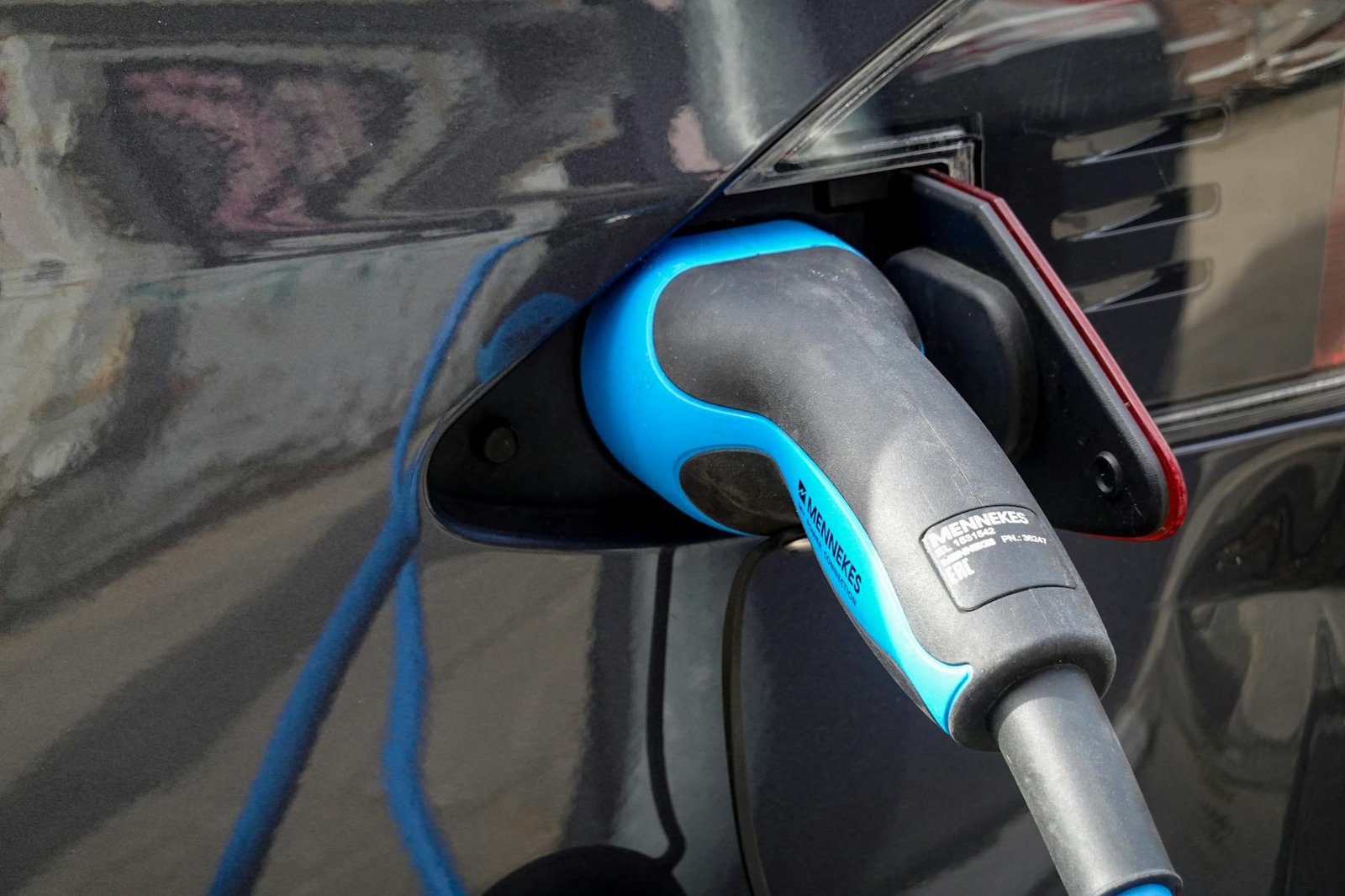
Toyota’s new 2026 bZ electric SUV earned an EPA rating of 314 miles, and real-world testing suggests it can exceed that figure. Cars occasionally beat their EPA estimates. What’s revealing is how Toyota positioned this as a selling point, and how the market responded with the same reflexive skepticism that has dogged every EV manufacturer claiming “better than rated” range.
A manufacturer announces a new model with X miles of range. Early testers find it delivers X plus 20 miles in ideal conditions. Buyers still ask, “Yeah, but what about in winter?” The EPA rating, theoretically designed to help consumers compare vehicles, has become a number almost nobody trusts for making an actual purchase decision. Instead, buyers develop elaborate personal formulas: take the EPA number, multiply by 0.7 for winter, add back 10% if you mostly do highway driving, subtract another 15% if you live where it gets properly cold.
Range anxiety persists even as real-world range increases. The toyota bz range of 314 miles puts it comfortably in the middle of the competitive set, yet Toyota felt compelled to emphasize that independent testing showed it could go further. A car that can drive from Los Angeles to Las Vegas on a single charge still triggers the “but what if” circuit in buyers’ brains.
The Number You See Versus the Number You Believe
The EPA’s five-cycle test methodology was designed for gasoline cars, where efficiency variance is relatively narrow. A sedan rated at 30 mpg might get 27 mpg in winter and 33 mpg in perfect conditions. That’s a 20% swing, and most drivers internalize it without much drama. They know they’ll get “around 30” and they’re usually right.
Electric vehicles break this mental model. The Kia PV5 with its 71.2 kWh battery pack claims 256 miles of range and an efficiency peak of 3.6 miles per kWh under WLTP testing. Drivers report swings from 2.2 miles per kWh in freezing temperatures with heavy use of climate control to 4.1 miles per kWh in mild weather with gentle driving. That’s an 86% variance between worst case and best case. The EPA number falls somewhere in the middle, which means it’s almost never what you actually experience.
When a buyer sees “314 miles” on the window sticker, they’re not thinking about the average of five test cycles conducted at 75 degrees Fahrenheit. They’re thinking about the Tuesday morning in January when they need to drive 180 miles with the heat on. The number they believe is the number that handles that scenario with margin to spare, which is why most EV buyers mentally apply a 30% to 40% haircut to any published range figure.
The Audi Q4 e-tron facelift illustrates the incremental nature of progress here. Audi improved motor efficiency by approximately 10%, which translated to a 19-mile increase in WLTP range for the single-motor SUV, bringing it to 359 miles. In percentage terms, that’s a 5.6% improvement. Meaningful for engineering teams, barely noticeable for buyers doing mental math about winter trips. The AWD variants saw even smaller gains, between 9 and 20 miles depending on configuration. These improvements move the needle on efficiency curves but don’t fundamentally change buyer behavior.
Why Fast Charging Changed the Calculation
Range anxiety persists even after the underlying problem has been largely solved for most use cases. The average American drives 40 miles per day. A car with 200 miles of real-world range covers five days of typical driving. Buyers still gravitate toward 300-plus mile range as table stakes.
Fast charging shifted the equation more than longer range did. The Audi Q4 e-tron’s ability to charge from 10% to 80% in 27 minutes, or add 112 miles in 10 minutes, changes the risk profile of a road trip. So does the 150 kW DC fast charging on the Kia PV5, which claims a 10-80% charge in around 30 minutes. In practice, that Kia achieved just under 100 kW on a “usually reliable” charger during testing, which tells you everything about the gap between specification and experience.
Fast charging capability reduces the actual risk of running out of charge on a long trip, but it doesn’t reduce the emotional discomfort of watching the range estimate drop. The toyota bz range of 314 miles feels more reassuring than 250 miles, even if both cars charge at similar speeds and both would require the same number of charging stops on a 500-mile journey. Buyers are paying for a psychological buffer as much as a functional one.
The charging infrastructure compounds the problem. Public charging networks are inconsistent enough that experienced EV drivers plan around charger reliability, not just charger location. If you know the charger at exit 47 frequently runs at half speed, you factor that into your mental model. If you know the one at exit 63 has a waitlist on Sunday afternoons, you plan accordingly. This kind of pattern recognition is second nature to EV owners after six months, but it’s invisible to prospective buyers reading spec sheets.
The Feature Set Nobody Asked For
Manufacturers keep adding features that test well in focus groups but don’t address the core friction points. The Audi Q4 e-tron facelift includes an AR head-up display that projects a 70-inch virtual screen, four customizable OLED taillight patterns, and a 12-inch optional passenger screen. It also includes ChatGPT integration, because apparently someone thought the car needed to answer philosophical questions while you’re stuck in traffic.
These features add cost. In Germany, the base Q4 e-tron starts at €47,500 with the 63 kWh battery, and the 82 kWh battery adds another €6,000. The Sportback variant starts at €49,450. Those prices put it in direct competition with vehicles that have solved the same range problem with less elaborate packaging.
What buyers actually want is more mundane: chargers that work consistently, range estimates that match reality in cold weather, and enough buffer to handle an unexpected detour without triggering a frantic search for the nearest charging station. The Kia PV5’s approach is revealing here. It’s a commercial vehicle first, designed after consulting with Uber and delivery companies, organizations that care deeply about uptime and total cost of ownership. The result: a vehicle with modest range (256 miles with the larger battery), straightforward features, and a starting price that reflects priorities different from the consumer market’s obsession with luxury appointments.
What the Warranty Reveals
The most honest signal about real-world range comes from battery warranties, not EPA ratings. Most manufacturers now guarantee 70% of original capacity for eight years or 100,000 miles. Do the math on a 314-mile vehicle: 70% of original capacity means 220 miles after eight years of normal use. Apply the winter discount and you’re looking at 150-160 miles in cold weather by the time the warranty expires.
Buyers who finance over six or seven years are implicitly accepting this degradation curve. The toyota bz range that starts at 314 miles will likely end up around 250 miles by the time the loan is paid off, assuming typical degradation patterns. For daily commuting, that’s still plenty. For the occasional road trip, it changes the charging calculus.
The used EV market shows steep discounts on early models partly for this reason. A 2019 vehicle with 200 miles of original range might have 140 miles of real-world range today. That’s barely enough for many buyers’ weekly maximum drive, which means it fails the “what if” test even though it would handle 95% of actual trips just fine. The risk tolerance isn’t rational in a strict sense, but it’s deeply embedded in how people evaluate major purchases.
How Buyers Actually Decide
Walk into a dealership and watch how EV purchases actually happen. The salesperson points to the EPA number. The buyer asks about winter performance. The salesperson deflects to fast charging. The buyer asks about charger availability on their specific route to visit family. The salesperson pulls up a map. The buyer squints at their phone, checking Google reviews for the chargers along that route.
What closes the deal is rarely the EPA rating. Either the buyer already owns an EV and understands the real-world patterns, or they have home charging and realize their daily driving never challenges the battery, or they decide to keep their gas car for road trips and use the EV for commuting only. The 314-mile rating on the Toyota bZ doesn’t overcome range anxiety; it just moves the goalpost to a number that feels safe enough to bet on.
The Audi Q4 e-tron’s 359-mile WLTP range would translate to roughly 310-320 miles EPA, putting it in the same psychological bracket. The Kia PV5’s 256 miles is honest about being a different kind of vehicle: commercial first, with range that handles a workday but doesn’t pretend to be a road trip champion. All three vehicles would meet the actual needs of most buyers most of the time. None of them fully solve the mental model problem.
The Metric That Matters
If EPA range doesn’t drive purchase decisions the way it should, what does? Increasingly, it’s miles added per 10 minutes of charging. The Audi Q4 e-tron’s 112 miles in 10 minutes is the number that changes trip planning. It’s concrete, it maps to existing behavior (gas station stops run about 10 minutes), and it solves the specific problem that makes buyers nervous about road trips.
Toyota’s positioning of the bZ range as “better than expected” suggests they understand buyers need a different framework entirely. How many miles can I add while I eat lunch? How many charging stops on a 400-mile drive? What happens if I need to detour 30 miles off-route?
Those questions can’t be answered with a single range number. They require honest conversations about charging networks, real-world efficiency in different conditions, and the specific routes a buyer actually drives. The industry keeps optimizing for the EPA test because it’s objective and comparable. Buyers keep ignoring it because it doesn’t answer the questions they’re actually asking.