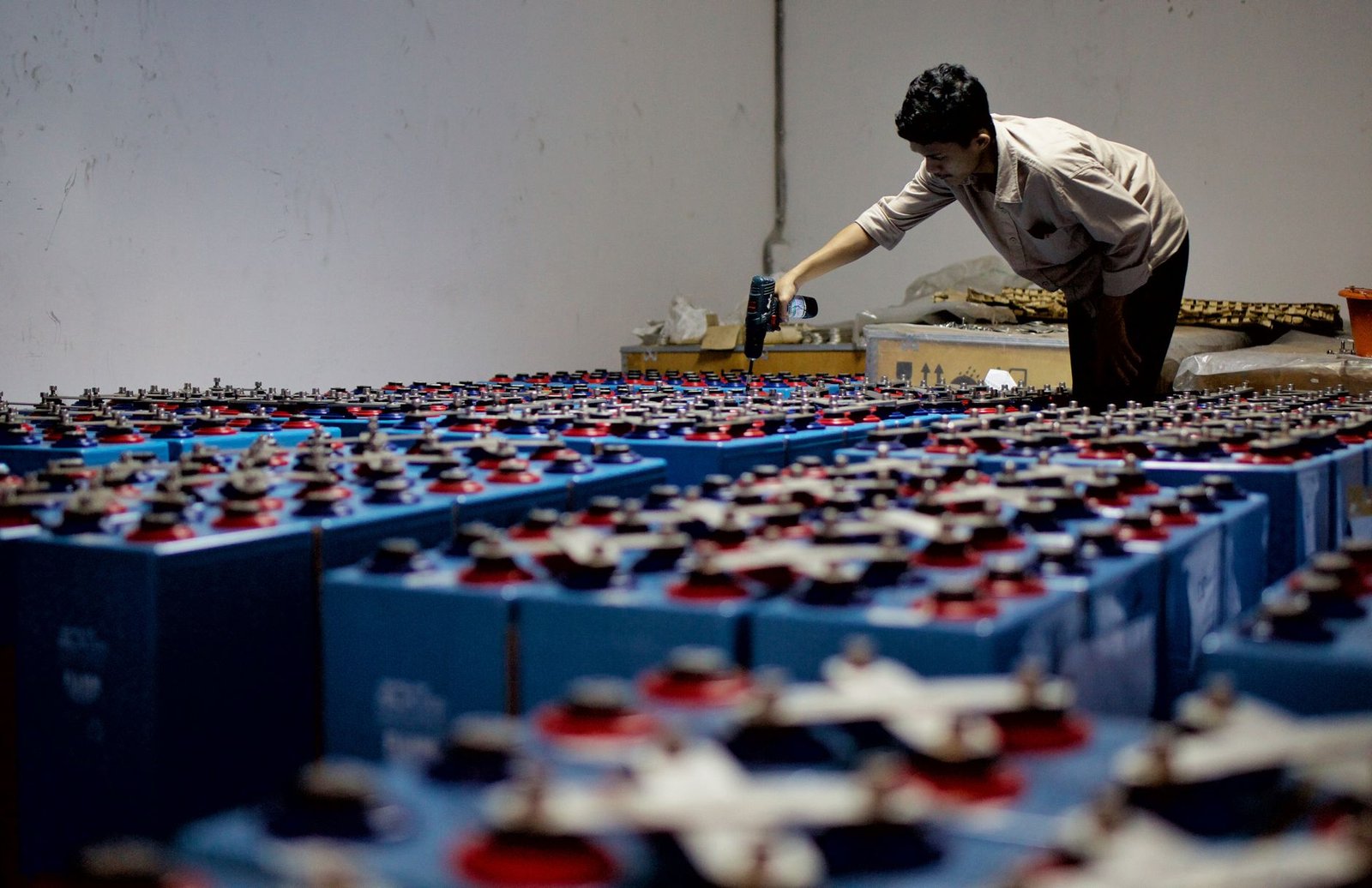
Tesla’s Megapack factory in Brookshire, Texas, received foreign-trade zone designation in early November after a multi-month approval process. The Federal Register announcement arrived quietly, months after the facility started building Megapack 3 units in August. Most coverage treated this as a straightforward win: defer duties on imported components, save money, compete better. But look at the actual tariff structure and you find something more revealing about what trade zones can and cannot do.
When Deferring Tariffs Doesn’t Mean Avoiding Them
The facility imports roughly 80 different components, paying duties up to 6.5% on parts coming across the border. Meanwhile, finished Megapacks face duty rates ranging from zero to 3.4% when entering U.S. commerce. A foreign-trade zone lets Tesla bring in those parts without paying the 6.5% immediately. Instead, the company pays the lower rate (or zero) when the finished product leaves the zone. That delta between 6.5% on components and 3.4% or less on finished goods represents real savings on conventional parts.
But battery cells driving the entire product hit a 25% tariff if they come from China. That jumped from 7.5% on January 1, 2026, under Section 301 tariffs targeting non-EV lithium-ion batteries. Trade zone status does nothing about that number. You still pay 25% on Chinese cells whether you defer the payment or not.
How Foreign-Trade Zones Actually Work
A foreign-trade zone operates as a designated area within the United States where imported goods can enter without immediately triggering customs duties. Companies manufacturing in these zones pay tariffs only when products leave the zone and enter U.S. commerce. If the finished product has a lower duty rate than its imported components, the company pays the lower rate. If the product gets exported, no U.S. duties apply at all.
Tesla’s Brookshire facility joins Subzone 84AM, part of FTZ 84 covering the Houston area. The company filed its application in May, months before Megapack 3 production began. The FTZ Board published the decision in the Federal Register. Tesla operates similar zones at its California facilities in Fremont, Livermore, and Lathrop, where Megapack and inverter production received FTZ approval.
The California operations produce roughly 40 GWh of annual capacity. Brookshire targets 50 GWh per year when fully ramped. Scale matters because the tariff savings multiply across volume. Save 3% on components for one Megapack and you pocket modest gains. Save 3% on 50 GWh worth of components annually and the accounting department notices.
But that math only works on components where the delta exists. The Megapack tariff problem sits with the cells themselves. Chinese lithium iron phosphate cells power many of these units, and the 25% Section 301 tariff applies regardless of trade zone gymnastics. You either pay it or source cells elsewhere.
Why Battery Cell Sourcing Creates Real Constraints
Tesla signed a $4.3 billion contract with LG Energy Solution to supply LFP cells from a Michigan facility. That contract exists partly because Chinese cells hit the 25% tariff wall. LG expects mass production in the second half of 2027. Until then, Brookshire either sources cells from outside China at different economics or pays the 25% and absorbs the cost.
The timing creates a gap. Brookshire ramped Megapack 3 production in August. LG’s Michigan cells arrive in the second half of 2027 at the earliest. That span covers roughly two years of production where cell sourcing determines whether Megapack tariffs eat into margins or force price increases to customers.
Cell costs typically represent 50 to 60% of a battery pack’s total cost. A 25% tariff on that portion moves the economics substantially. If a Megapack 3 uses $2 million worth of cells at pre-tariff prices, the tariff adds $500,000 to the input cost. Trade zone status might save $50,000 on the remaining components by optimizing duty rates. The cell tariff swamps that benefit by roughly tenfold.
This explains why Tesla pursued the LG contract so aggressively and why the $4.3 billion scale matters. Domestic cell production eliminates the tariff exposure entirely. But building cell factories takes years and capital. LG committed to Michigan capacity, but that capacity needs to ramp, validate quality, and scale output. The 2027 timeline assumes no delays in construction, equipment installation, or production debugging.
Meanwhile, competitors face the same pressure. Anyone building grid storage in the United States using Chinese cells pays the 25% tariff. Anyone building with domestic cells pays the capital cost of that domestic capacity, which someone has to finance. The trade zone designation helps around the edges but does not change the fundamental cell economics.
What the FTZ Timeline Reveals About Supply Chain Decisions
The FTZ Board approved Tesla’s Brookshire application for a finite period, consistent with standard FTZ practice. The designation aligns roughly with when LG’s Michigan cells should reach mass production in the second half of 2027.
Tesla applied for FTZ status in May, before Megapack 3 production started in August. The company knew Chinese cell tariffs would hit 25% in January 2026. The application timeline suggests Tesla planned to use the trade zone for non-cell components while bridging to domestic cell supply. The FTZ saves money on inverters, thermal management hardware, and structural components. It does not solve cells.
California facilities received their FTZ approvals earlier. That window aligns with the LG production start. Once domestic cells flow, the tariff pressure drops and the FTZ becomes less critical for the cell question. The zone still helps with other imported parts, but its strategic value diminishes when cells shift to Michigan.
This sequence indicates Tesla views trade zones as tactical tools for bridging to domestic cell supply. The actual solution to tariff exposure sits in cell supply chains: either build domestically or source from non-China suppliers at competitive costs. The trade zone buys time and captures savings on secondary components while the larger supply chain shift plays out.
What Most Coverage Misses About Manufacturing Economics
News coverage often treats FTZ approval as a major win, focusing on “deferring tariffs” and “saving costs.” That framing misses the constraint binding actual production decisions. Companies care about total delivered cost, not accounting timing. Deferring a 6.5% tariff helps cash flow but does not change whether you can compete on price.
Can you build grid storage in Texas at a cost competitive with imported finished units or with domestic competitors using different supply chains? Trade zone status gives a few percentage points of advantage on some components. Cell tariffs take back 25% on the most expensive input. Domestic cells eliminate the tariff but cost more to produce until scale drives unit economics down.
Tesla’s Brookshire facility makes sense only if the company achieves competitive delivered costs including tariffed or domestic cells. The 50 GWh annual capacity matters because scale spreads fixed costs. A factory producing 5 GWh per year cannot amortize equipment and labor efficiently. At 50 GWh, unit costs drop and margin appears even with higher cell costs.
LG’s $4.3 billion Michigan investment signals confidence in that scale. Four billion dollars buys a lot of cell production capacity. LG would not commit that capital without volume commitments from customers (primarily Tesla). The contract locks in a domestic supply chain, reduces tariff exposure, and scales U.S. cell production. But it costs billions and takes until the second half of 2027 to deliver.
Concrete Indicators to Watch for Real Progress
Three specific developments would signal whether Tesla’s tariff and supply chain strategy works. First, watch whether Brookshire maintains or increases production volume before LG’s Michigan cells arrive. If output drops or stalls in 2026-2027, cell costs or tariffs are biting hard enough to slow deployment. Sustained production means Tesla found economically viable cell sources or absorbed the tariff cost.
Second, track LG’s Michigan ramp timing. If production starts in the second half of 2027 as planned, Megapack cell tariffs become a non-issue for future builds. If delays push mass production into 2028, Tesla faces another year of tariff exposure or higher-cost alternative cells. The Michigan facility’s construction progress and equipment installation pace will show up in LG’s quarterly disclosures and site development activity.
Third, watch Megapack pricing to utility customers. If prices rise significantly in 2026-2027, Tesla is passing tariff costs through. If prices hold steady or drop, the company is either absorbing costs or achieving enough scale efficiency to offset tariffs. Grid storage contracts get publicly disclosed in utility filings, revealing actual delivered prices per MWh of capacity. Those numbers show whether the economics pencil out.
The FTZ approval matters, but only as one variable in a larger equation. Cell supply, production scale, and delivered costs determine whether domestic battery manufacturing competes. Trade zones help at the margin. They do not overcome a 25% tariff on your primary cost driver unless you shift that supply chain entirely.