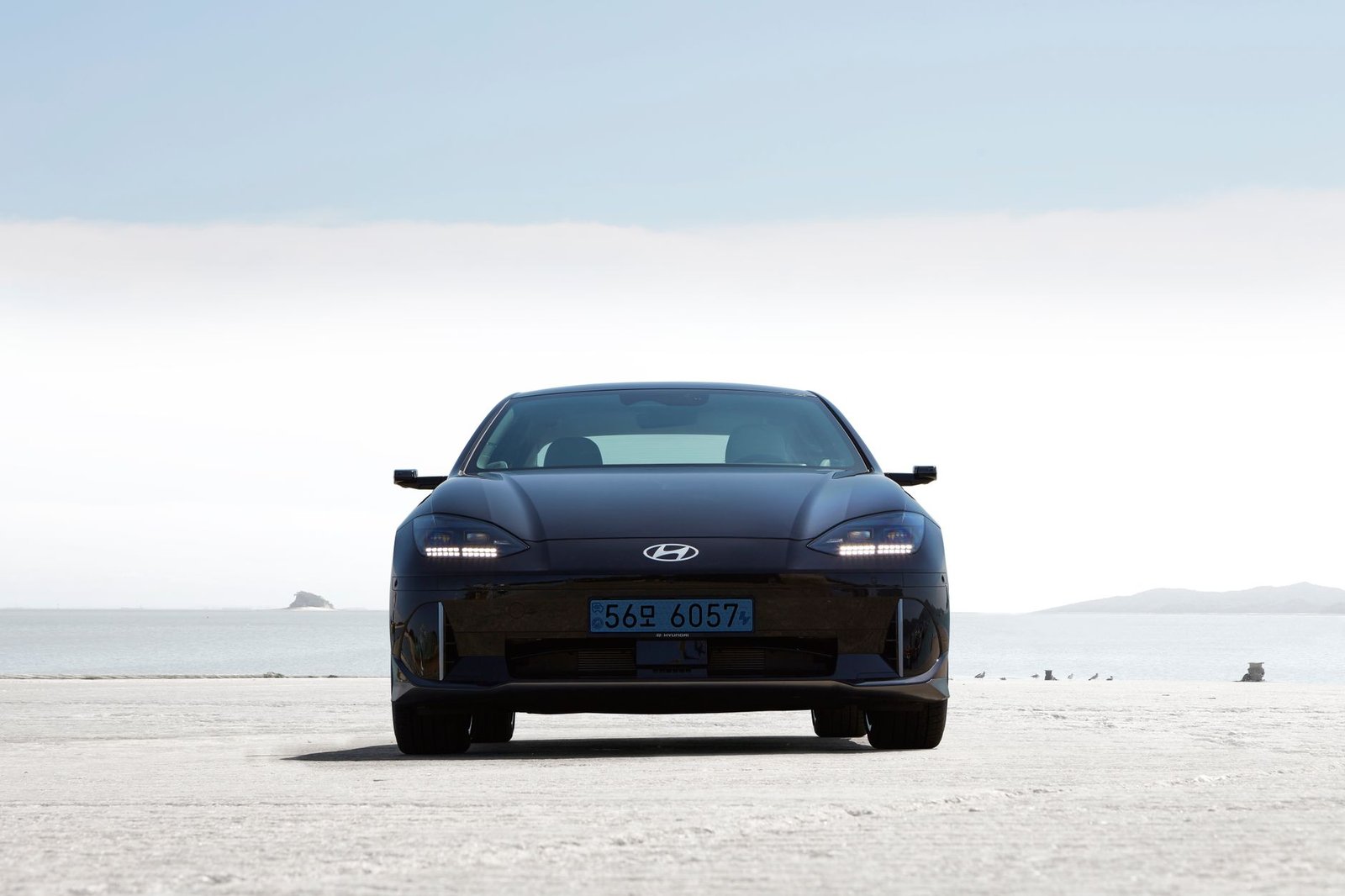
You’re configuring both vehicles in separate browser tabs at 11 p.m. The Hyundai IONIQ 6 and Tesla Model 3 start around $42,000. Both claim over 300 miles of range. Both accelerate fast enough to embarrass most gas cars. On paper, they’re close enough that choosing feels arbitrary. But spend five years and 75,000 miles with either one, and you’ll discover the spec sheet lied by omission. These cars make fundamentally different tradeoffs, and the right choice depends on constraints most buyers don’t consider until year two of ownership.
The Numbers Everyone Cross-Shops
The Tesla Model 3 Long Range starts around $42,500 and delivers roughly 333 miles of EPA range from a 75 kWh battery. The Hyundai IONIQ 6 SE Long Range starts around $42,000 and gets up to 361 miles from a 77.4 kWh pack. Both hit 60 mph in under five seconds. The Model 3 fast-charges at roughly 250 kW peak, while the IONIQ 6 peaks around 240 kW on DC fast charging. Both can qualify for federal tax credits if you navigate the assembly and battery sourcing rules correctly.
Buyers obsess over these numbers because they’re easy to compare. Range beats range. Price undercuts price. But these figures assume identical usage patterns, identical charging behavior, and identical depreciation curves. None of those assumptions hold. The Model 3’s Supercharger access matters more in Montana than in Los Angeles. The IONIQ 6’s longer warranty matters more if you plan to keep the car past 100,000 miles. The real cost difference emerges from constraints you won’t encounter until month six.
What Depreciation Data Actually Reveals
Tesla cut Model 3 prices repeatedly between January 2023 and mid-2024. Each cut improved affordability for new buyers and eroded resale values for existing owners. A 2021 Model 3 Long Range that sold for $51,990 lost roughly 45% of its value by late 2024, steeper than the average for electric sedans over the same period. The Hyundai IONIQ 6 launched in 2023 with more stable pricing, but the sample size is too small to call its depreciation curve predictable.
Here’s the part that matters: Tesla can cut prices quickly because it controls distribution through a direct sales model. No franchise dealers absorb the margin hit. Hyundai sells through franchised dealers, who negotiate on allocated inventory. When an automaker cuts MSRP mid-cycle, the dealer’s floor plan cost doesn’t change retroactively. This creates pricing friction that tends to stabilize resale values but reduces negotiating leverage on new inventory. If you’re buying to keep for three years, Tesla’s price volatility works against you. If you’re buying to keep for ten years, it’s noise.
The IONIQ 6 includes a 10-year, 100,000-mile battery warranty. Tesla’s Long Range battery warranty is 8 years, 120,000 miles. That difference changes the math if you finance for 72 months and plan to drive the car to 150,000 miles. You’re either paying for battery risk out of warranty or banking on Tesla’s battery durability exceeding Hyundai’s warranty confidence. The capital discipline question: are you allocating $42,000 toward a car you’ll own outright in year six, or toward a platform you’ll trade at year three when the next version offers more range and faster charging?
Charging Infrastructure as a Recurring Cost
Tesla’s Supercharger network has 2,000+ stations in the U.S. with 25,000+ stalls, placed on high-traffic routes with reliably high uptime. The Hyundai IONIQ 6 relies on third-party networks: Electrify America, EVgo, ChargePoint. Electrify America has roughly 900+ stations with 4,000+ chargers, but average uptime runs lower, and rural coverage has gaps. (With a NACS adapter, newer IONIQ 6 owners can also access many Superchargers, which narrows this gap but does not close it.)
Assume you road-trip 3,000 miles per year and fast-charge half of that. At roughly $0.48 per kWh for Electrify America versus roughly $0.35 per kWh for Supercharging (pricing varies by region and time), the Tesla saves you on the order of $100 annually on charging costs. Over five years, that’s a few hundred dollars. Not enough to move the needle on total cost of ownership, but enough to matter when a broken Electrify America station adds 90 minutes to a trip because the next working charger is 40 miles away.
The IONIQ 6’s 800-volt architecture theoretically charges faster, but real-world charge curves on Electrify America’s 350 kW stations rarely exceed what the Model 3 achieves on 250 kW Superchargers. The IONIQ 6 peaks around 240 kW but tapers after the midpoint of its charge. The Model 3 peaks at 250 kW and tends to hold usable power more consistently in cold weather thanks to robust battery preconditioning. The architectural advantage Hyundai advertises delivers inconsistent real-world benefit because the limiting factor is often the charging station’s power delivery and the car’s thermal state, not the peak acceptance rate on the spec sheet.
Who Each Car Actually Serves
The Tesla Model 3 makes sense if you drive more than 15,000 miles per year, take frequent road trips longer than 300 miles, or live in a region with sparse third-party fast-charging infrastructure. It makes sense if you value over-the-air software updates that add features post-purchase, if you’re comfortable with minimalist interior design that trades physical controls for touchscreen menus, and if you’re willing to accept higher price volatility in exchange for mature charging infrastructure.
The Hyundai IONIQ 6 makes sense if you drive under 12,000 miles per year, charge primarily at home or work, and prioritize warranty coverage over network convenience. It makes sense if you prefer traditional control layouts with physical buttons for climate and volume, if you value a quieter cabin with better sound insulation, and if you plan to keep the car past the point where Tesla’s software advantages stop mattering because the core functionality you use stabilizes after year two.
Neither car makes sense if you lack reliable home charging and depend on public Level 2 chargers for daily use. At that point, a plug-in hybrid with 40 miles of electric range and a gas engine for flexibility allocates your $42,000 more effectively than either electric sedan.
The Constraint That Drives the Decision
The choice between the Hyundai IONIQ 6 and Tesla Model 3 hinges on annual mileage and ownership duration. If you drive 18,000 miles per year and plan to trade at 36 months, the Model 3’s Supercharger access saves enough time and hassle to justify weaker resale values. If you drive 10,000 miles per year and plan to keep the car for eight years, the IONIQ 6’s longer warranty and stable pricing offset the charging network disadvantage.
The math shifts around 15,000 miles per year. Above that threshold, you’re fast-charging often enough that network reliability compounds into real cost. Below it, you’re charging at home most of the time, and the Supercharger advantage becomes largely hypothetical. The capital discipline lens: are you paying for infrastructure you’ll use weekly, or infrastructure you’ll use a handful of times per year on road trips?
The Verdict
If you drive over 15,000 miles per year or take monthly road trips longer than 300 miles, buy the Tesla Model 3. The Supercharger network justifies the price volatility and resale risk. If you drive under 12,000 miles per year and plan to keep the car past 100,000 miles, buy the Hyundai IONIQ 6. The warranty coverage and cabin refinement justify the weaker charging network. If you’re right at 15,000 miles per year, test both cars’ real-world charging experiences on the routes you actually drive. The spec sheet won’t tell you which charging network works where you need it.