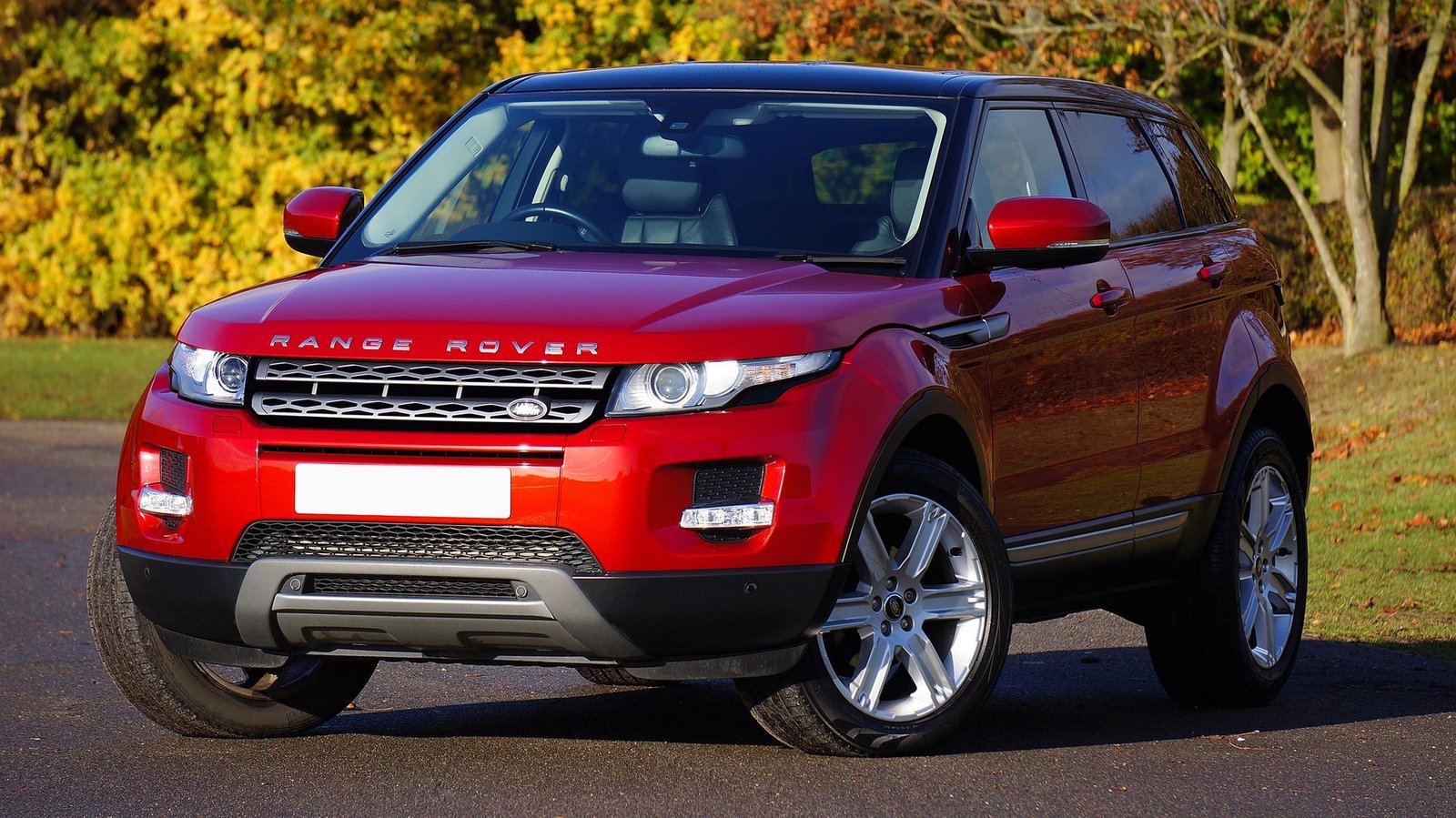
JLR boss PB Balaji told analysts during an earnings call that production of the smaller electric Defender would start by the end of 2027, sharing both platform and factory with the Range Rover Electric. The same Halewood facility currently builds the combustion Discovery Sport and Range Rover Evoque, models that will effectively be replaced by these battery-electric successors. Balaji’s announcement focused on the production timeline, but left unaddressed how JLR is managing the transition risk.
Range Rover EV Production Anchors Platform Economics
The baby Defender will ride on JLR’s Electrified Modular Architecture, a platform designed from the start to support 800-volt architectures and dual-motor powertrains. Using the same EMA bones as the Range Rover Electric eliminates the need to validate a second platform, amortizing development costs across two model lines before the first battery pack leaves the factory gate. This is competent capital discipline applied to platform economics.
The Range Rover Electric already in production uses a 117-kWh battery delivering around 330 miles of range, paired with dual motors making 542 horsepower. If the baby Defender carries over that pack and powertrain architecture, JLR locks in battery supply contracts at scale, simplifies thermal management validation, and avoids reinventing charging curves for each model. The alternative, building bespoke powertrains for each nameplate, is how you end up with five different battery formats and no negotiating leverage with cell suppliers.
The Factory Conversion Hides the Real Timeline Risk
Halewood currently builds two combustion models on existing tooling. Converting to EV production means ripping out ICE assembly lines and installing battery pack mounting stations, high-voltage harness routing, and cooling loop integration. The timeline Balaji offered, end of 2027, leaves roughly two years from announcement to first customer delivery, assuming tooling orders and line design start immediately.
Two years is tight but achievable if the platform is frozen and battery supply is locked. The constraint is the validation timeline for crash structures with large battery packs. A 117-kWh pack in a compact crossover platform sits low but occupies significant floor volume. Side impact testing with that much mass changes deformation patterns. Frontal offset crashes need to route impact loads around, not through, the pack enclosure. JLR has already validated this structure on the Range Rover Electric, which buys them months of test cycles they won’t need to repeat from scratch. Platform sharing compresses the validation schedule.
Battery Specs Matter More Than Brand DNA
Mark Cameron, managing director of Defender and Discovery brands, told Motor1 that “everything we do as Defender has the DNA of the brand: epic built-to-last, go-anywhere capability.” The engineering reality is that off-road capability in an EV comes down to pack placement, motor torque curves, and cooling capacity under sustained load.
A dual-motor setup with 542 horsepower delivers rear-biased torque split for climbing traction, but only if thermal management keeps both motors below their derate thresholds during repeated hill starts. The 800-volt architecture matters here because higher voltage means lower current for the same power output, reducing resistive heating in cables and connectors. This determines whether you get full power for 20 minutes versus 5 minutes when pulling a trailer up a 12 percent grade in summer heat.
If the baby Defender uses the Range Rover Electric’s fast charging capability, a 10 percent to 80 percent top-up in roughly 30 minutes is plausible, assuming the charging curve holds. For a vehicle marketed on go-anywhere capability, fast charging becomes the enabler for multi-day trips with limited charging infrastructure. A buyer planning a weekend trip to Moab doesn’t care about brand heritage if they’re stuck for 90 minutes at a 150-kW charger because the pack can’t handle higher rates.
Why the Full-Size Defender Electric Got Pushed to the 2030s
JLR delayed the full-size Defender electric replacement to sometime in the 2030s, which reflects current battery cost realities more than any strategic choice. A full-size body-on-frame Defender needs at least 150 kWh to match current combustion range expectations, possibly more if buyers expect towing capacity above 7,000 pounds. At current pack costs, that’s a price premium most buyers won’t absorb for a vehicle already pushing six figures in loaded trims.
The baby Defender sidesteps that problem by staying in the compact crossover segment where roughly 117 kWh delivers acceptable range without pushing pack costs into luxury sedan territory. By the early 2030s, pack costs might drop enough to make a 150-kWh full-size Defender viable at a price point that doesn’t require conquest sales from ultra-luxury buyers. Until then, JLR is building the vehicles where battery capacity aligns with what buyers will actually pay.
The strategic win here is the validation timeline you skip by reusing the platform. When JLR tests the Range Rover Electric’s battery pack for thermal runaway propagation, they’re simultaneously validating the pack design for the baby Defender. When they run durability cycles on the dual-motor powertrain, those test hours count toward both models’ certification requirements. This cuts an estimated 12 to 18 months off the development calendar and avoids millions in duplicate testing costs.
Electrified Modular Architecture was designed to support both pure battery-electric and hybrid powertrains, which means the structure can accommodate different pack sizes and motor configurations without requiring new crash testing for each variant. That flexibility matters when you’re trying to hit multiple price points with minimal tooling changes. A smaller pack with a single rear motor becomes the base trim, dual motors with the larger pack becomes the range-topper, and you’ve covered the market without engineering two separate vehicles.
The Halewood factory line can build both models on the same assembly stations because the platform hard points are identical. Battery pack mounting, high-voltage harness routing, cooling system connections, all standardized. The variable content like trim panels, seat configurations, and exterior sheetmetal gets installed downstream. That’s how you run flexible production without maintaining duplicate tooling.
The Naming Question Signals Positioning Uncertainty
Balaji reportedly didn’t want to call the smaller EV the Defender Sport, which suggests JLR hasn’t resolved how to position this vehicle relative to the existing Defender lineup. If you call it a Defender, buyers expect body-on-frame toughness and serious off-road hardware. If you call it something else, you lose the brand equity that justifies the price premium over non-luxury competitors.
The baby Defender’s unibody platform, shared with Range Rover, can’t deliver the same suspension articulation or approach angles as the current body-on-frame Defender. A unibody structure optimized for on-road refinement and efficient packaging of a large battery pack makes different tradeoffs than a ladder frame designed for maximum wheel travel and accessory mounting points. Calling it a Defender sets expectations the platform can’t meet. Not calling it a Defender leaves money on the table.
This naming ambiguity roughly two years before production suggests JLR is still working out whether this vehicle captures conquest sales from Tesla Model Y buyers or keeps existing Discovery Sport customers from defecting. Those are different engineering priorities and different marketing strategies. The platform can deliver either, but not both without compromising one or the other.
Why JLR Sequenced Small-First Correctly
By launching the smaller crossover on the EMA platform before attempting a full-size electric Defender, JLR sequences their Range Rover EV production risk correctly. They validate the platform, the battery supply chain, and the factory conversion on a vehicle segment where roughly 117 kWh delivers competitive range. If pack costs drop faster than expected, they can accelerate the full-size Defender timeline. If costs stay stubborn, they’ve got a profitable model line that doesn’t depend on breakthrough economics to work.
The baby Defender and Range Rover Electric get built because the physics and the cost structure both work at their size. The full-size Defender waits because it doesn’t yet. JLR is building the vehicles that make sense with today’s battery economics, not the ones they wish made sense.