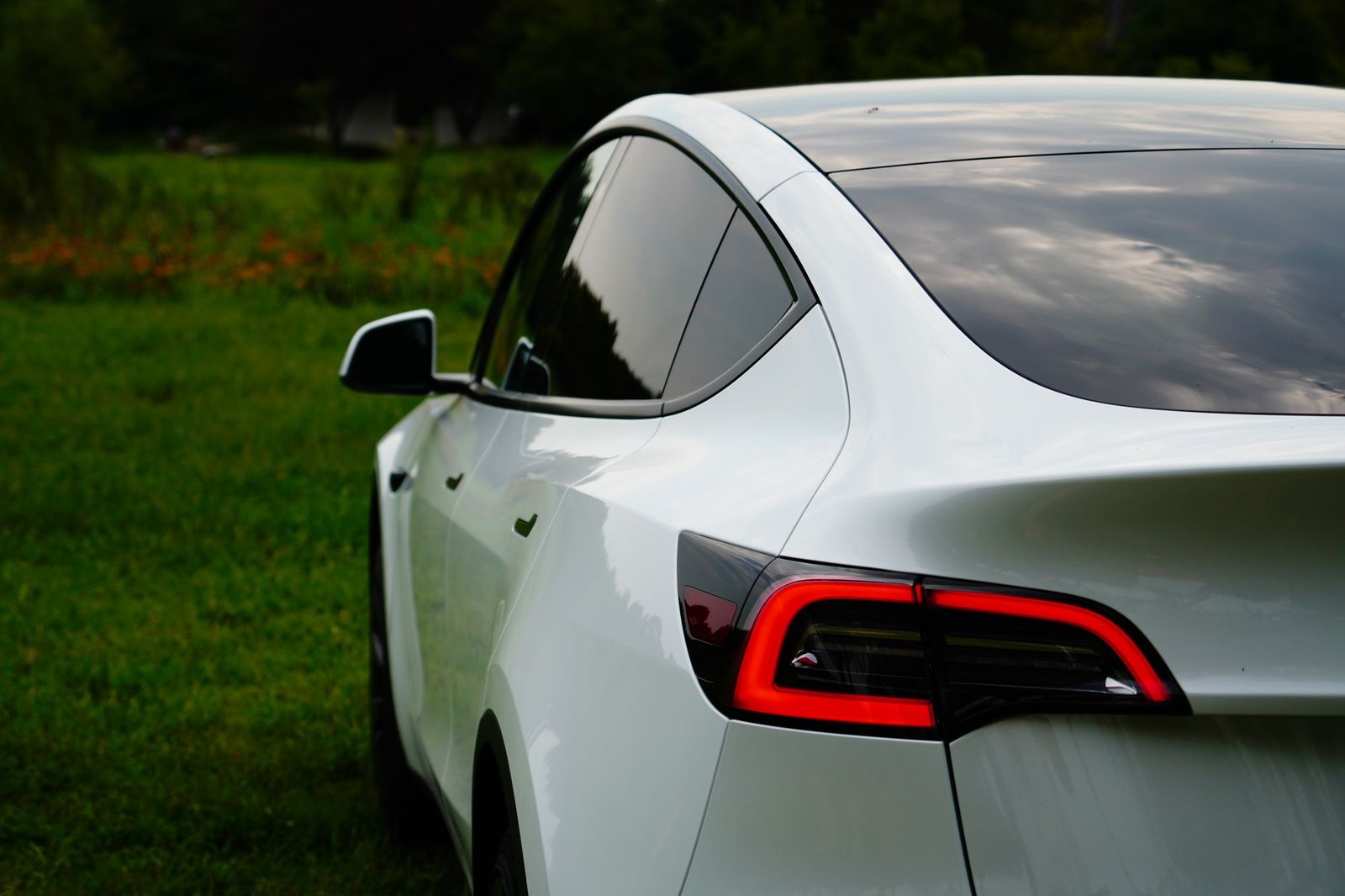
The Model Y All-Wheel Drive sat in Tesla’s online configurator for nine months before disappearing without announcement. Introduced in February 2025 at $41,990, it offered dual-motor capability for just $2,000 more than the rear-drive base model. Now the cheapest Model Y AWD costs $49,990, creating an $8,000 chasm between Tesla’s entry-level offering and its nearest all-wheel-drive variant. The gap functions as a compression test on buyer willingness to pay for capability they may not actually need.
The Product That Vanished
Tesla removed the base Model Y AWD from its configurator in late 2025, roughly nine months after launch. The timing matters because it suggests the trim didn’t fail for lack of awareness or inadequate marketing runway. Nine months is long enough to measure real demand signals, long enough for initial order backlogs to clear, long enough to see whether buyers trading up from rear-wheel drive actually valued the $2,000 premium.
According to InsideEVs, the discontinued variant delivered roughly 294 miles of EPA range and hit 60 mph in about 4.6 seconds. It weighed roughly 200 pounds more than the rear-drive base model, which achieves approximately 348 miles and a more leisurely 6.8-second sprint. The all-wheel-drive version traded 54 miles of range and carried extra weight for better acceleration and improved winter traction. On paper, the value proposition looked coherent: meaningful performance uplift, manageable range penalty, small price delta.
The discontinuation leaves a stark lineup. Buyers wanting Model Y AWD now face the Premium trim at $49,990 before destination, up $1,000 from its February launch price of $48,990. That’s a roughly 19% increase in the floor price for all-wheel-drive capability (from $41,990 to $49,990) in nine months, not because battery costs spiked or motor production got more expensive, but because Tesla removed the cheaper option.
Why Margin Discipline Drove the Decision
Tesla already builds rear-drive and dual-motor variants on the same production line, shares most components between base and premium trims, and absorbed the tooling costs for AWD years ago. The Model Y AWD’s discontinuation reflects margin discipline rather than engineering or cost constraints.
The base Model Y starts at $39,990 before destination, positioning it as Tesla’s true volume entry point. Adding all-wheel drive for $2,000 created a trim that likely cannibalized Premium sales without meaningfully expanding the total addressable market. Buyers serious about dual motors were already shopping the Premium tier for its better range (327 miles vs. 294), quicker acceleration (4.3 seconds vs. 4.6), and added features. The base AWD sat in an awkward middle ground, appealing mainly to cost-conscious buyers who wanted winter capability but weren’t willing to stretch to $50,000.
Tesla’s margin structure depends on pushing buyers toward higher trims. The Premium commands $10,000 more than the base RWD and includes upgraded suspension, better seats, more speakers, and ventilated front seats. The base model uses passive shock absorbers, a mix of vegan leather and cloth seating, fewer speakers, and lacks rear screens and ventilated seats. The glass roof is installed but covered by a headliner. These are cost-reduction tactics, not feature deletions driven by supply constraints.
The base AWD undermined this tiering by offering the most desirable powertrain upgrade at minimal cost. Buyers who cared about 0-60 times or snow traction could get dual motors without paying for premium interior materials or adaptive dampers. This created a margin challenge within Tesla’s product strategy.
The Physics of the Lineup Gap
All-wheel drive in the Model Y means adding a front motor, inverter, and associated wiring. The weight penalty runs roughly 200 pounds, which accounts for part of the 54-mile range deficit. The performance gain is straightforward: dual motors deliver more torque to the pavement and eliminate traction limitations in the rear-drive configuration. The 2.2-second improvement in 0-60 times (from 6.8 to 4.6 seconds) reflects the physics of available grip and combined motor output, not exotic hardware.
The hardware delta between RWD and AWD configurations isn’t exotic or supply-constrained, suggesting Tesla could build a base AWD variant profitably. The discontinuation stems from the realization that a $2,000 AWD upgrade trained buyers to anchor on that price point, making the $10,000 jump to Premium feel steeper than it should.
The current Premium AWD hits 60 mph in 4.3 seconds and achieves 327 miles of range. That’s marginally quicker than the discontinued base AWD and delivers 33 more miles per charge. The performance difference is real but incremental. The range improvement stems from the Premium’s slightly different battery pack and efficiency tuning, not a fundamentally different powertrain architecture. Buyers paying the difference are mostly funding interior upgrades and feature content, not propulsion capability.
Market Reality and Buyer Friction
Chevrolet’s Equinox EV LT AWD starts at roughly $40,295 with about 307 miles of EPA range, and Ford’s Mustang Mach-E Select AWD costs around $40,795. Both undercut Tesla’s cheapest Model Y AWD by roughly $9,000 while offering comparable range and dual-motor capability. The competitive pressure isn’t theoretical.
Tesla’s discontinuation of the base Model Y AWD widens this gap. Buyers cross-shopping on price and all-wheel drive now see Tesla asking roughly $9,700 more than Chevrolet for a comparable configuration. That’s a margin the brand can defend on charging infrastructure, software updates, and Supercharger network access, but it’s also a gap large enough to send cost-sensitive buyers toward domestic alternatives.
The buyer who stretches from a $40,000 Equinox to a $50,000 Model Y isn’t motivated purely by AWD capability. They’re buying into the Tesla ecosystem, betting on residual values, or prioritizing acceleration feel over interior materials. Tesla’s decision to eliminate the base AWD suggests the company concluded that buyer cohort was too small to justify maintaining a low-margin trim that complicated the value ladder.
What Tesla Is Actually Optimizing For
The Model Y lineup now enforces a clear choice architecture: take rear-wheel drive and save money, or pay $10,000 for Premium’s full feature set. There’s no intermediate step. Tesla has steadily simplified its lineup in recent years, paring back low-volume configurations in favor of higher-margin trims. The pattern is simplification and margin focus.
The base RWD at $39,990 serves as an acquisition price point, low enough to compete on monthly payment calculations and qualify for regional incentives. The Premium AWD at $49,990 captures buyers willing to pay for refinement and performance. The Performance at $51,490 targets enthusiasts who want the quickest version regardless of price. Each trim has a clear role. The base AWD had none.
Tesla’s decision to let the base AWD lapse nine months after introduction rather than adjust its pricing or feature set suggests the company concluded the configuration was unfixable. Raising the price would have pushed it too close to Premium, eroding the trim’s rationale. Lowering it would have compressed margins on a product already competing with the $39,990 RWD for cost-conscious buyers. The cleanest solution was removal.
The Precedent This Sets
The discontinuation establishes that Tesla views all-wheel drive as a premium feature worth $10,000 in the Model Y lineup, not a $2,000 incremental upgrade. That’s a reframing with implications for future product launches. When Tesla eventually introduces a refreshed Model Y or a next-generation platform, the base AWD configuration is unlikely to return at an affordable delta.
Other automakers watching this move now understand they can position dual-motor capability as a premium tier without meaningful competitive pressure from Tesla at the $42,000 price point. Chevrolet and Ford have an opening to own the budget AWD crossover segment while Tesla defends margin in the $45,000-plus range.
For buyers, the message is unambiguous: if you want Model Y AWD, you’re paying for Premium or walking away. The $8,000 gap is intentional, designed to force a decision between true budget constraints and feature appetite. Tesla isn’t trying to serve every point on the demand curve. It’s compressing the middle and betting most buyers will either step up or step down rather than defect to competitors.
Tesla discontinued the base Model Y AWD to prioritize margin consistency over incremental volume. That calculation reflects production economics and trim strategy rather than customer demand. The resulting $8,000 gap serves Tesla’s lineup architecture by eliminating an unprofitable middle option.