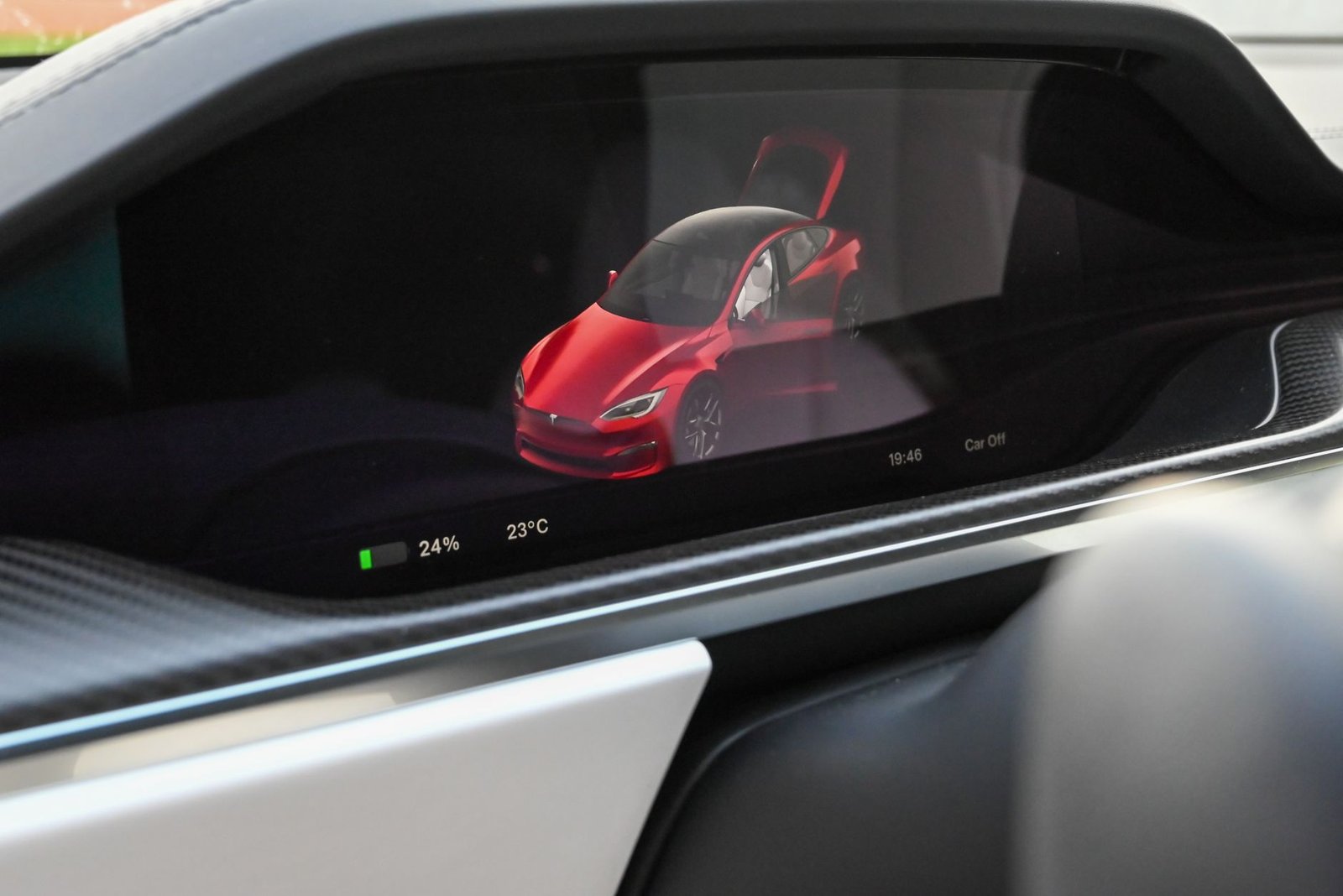
A Kia EV6 sat unplugged in a cold garage for nearly a month. When the owner checked, the battery had dropped from 80% to 78% state of charge. Two percentage points over four weeks. That’s not a battery defect. That’s what ev vampire drain actually looks like when nothing is actively wrong.
The term sounds dramatic, but the physics are mundane: every parked EV draws some energy to keep security systems active, maintain the 12-volt auxiliary battery, and prevent the main pack from getting too cold or too hot. Tesla’s Model 3 manual suggests owners can expect to lose roughly 1% of state of charge per day under typical conditions, though actual drain is often far less. A Reddit user reported their 2021 Model 3 lost just 1% over four days parked in 35°F weather with Sentry Mode off. Another owner left a Nissan Ariya at the airport for three weeks and came back to a 1% drop.
EVs lose charge while parked, just as every car with a 12-volt battery keeps the alarm system and clock alive. The rate of loss matters because of what it reveals about how manufacturers allocate energy budget between convenience features and actual driving range.
Where the Energy Actually Goes
Tesla’s documentation breaks down the consumption into system checks, 12-volt battery top-up, thermal management, and security systems like Sentry Mode. The last one is the biggest variable drain. Sentry Mode keeps cameras recording when the car detects nearby motion, which means running the main computer and multiple cameras continuously. That’s an active decision to trade parked range for a feature that makes owners feel better about leaving the car in a parking lot.
The 12-volt system is less obvious but more fundamental. EVs still use a small lead-acid or lithium auxiliary battery to power the computers, locks, and lights before the high-voltage contactors close. That 12-volt battery gets topped up periodically from the main pack, which means the big battery has to wake up, convert its high-voltage DC down to 12 volts, and charge the small battery even when the car isn’t moving. It’s a trickle, but it’s constant.
Lithium-ion cells have a happy temperature range, roughly 60°F to 80°F for optimal longevity. Outside that range, the battery management system has to intervene. In heat, that means running coolant pumps, fans, or a compressor to keep the pack from cooking. In cold, it means making sure the pack doesn’t drop below the point where internal resistance spikes and charging becomes unsafe. Both scenarios pull energy. The car might not move, but the battery is working.
The Cold Weather Display Problem
When a lithium-ion pack gets cold, a portion of its energy becomes temporarily inaccessible due to increased internal resistance. The battery management system knows this, so it shows a reduced available range. Tesla indicates this with a blue snowflake icon and a blue section on the battery meter. The energy is still there, but the car won’t let you use it until the pack warms up.
This is not the same as actual energy loss. If you park at 80% in warm weather and come back to find 78% displayed after the pack has chilled overnight, some of that 2% might reappear once you start driving and the pack warms from use. But owners see the number drop and assume the car burned energy sitting still, which conflates two different phenomena: real consumption and temporarily restricted capacity.
The distinction matters because it changes how you think about mitigation. Real drain means you plug in. Restricted capacity means you just drive, and the pack will warm itself. Confusing the two leads to unnecessary anxiety and bad advice.
What Varies and What Doesn’t
Older EVs with less sophisticated thermal management reportedly show higher drain rates in extreme cold. InsideEVs cites Chevy Bolt owners reporting “several percentage points per day” in very cold conditions, though no specific timeframes or temperatures accompany those reports. That’s vague, but directionally it suggests passive thermal systems weren’t keeping the pack in a stable range, forcing the BMS to work harder. (It’s worth noting the Bolt uses liquid cooling but a less aggressive conditioning strategy than newer packs, so “sophistication” here is about control logic as much as hardware.)
Nearly all new EVs have active battery cooling, which means pumps and fans that can intervene before temperatures get extreme. That’s a capital allocation decision: spending more on hardware and controls to reduce operating cost and preserve longevity. The alternative is a simpler, cheaper thermal system that lets the pack drift and burns more energy correcting it later, or accepts faster degradation.
The other variable is how aggressively the car checks in with remote servers. Opening the app to check battery status wakes the car and starts normal energy consumption, according to Tesla’s Model Y guide. If you check the app many times a day, you’re adding measurably to parked consumption. If you don’t, you’re not.
The Capital Discipline Angle
Every feature that runs while parked has an energy cost. Sentry Mode, cabin overheat protection, scheduled preconditioning, even keeping the cellular modem alive for over-the-air updates. Each one is a line item in the energy budget. Manufacturers could ship cars with none of these features and tout the lowest ev vampire drain in the segment. They don’t, because customers expect the car to stay connected, stay cool, and stay secure.
Tesla’s answer is to document the tradeoff and tell owners to leave the car plugged in. The Model 3 manual is explicit: “The most important way to preserve the high-voltage Battery is to LEAVE YOUR VEHICLE PLUGGED IN when you are not using it. This is particularly important if you are not planning to drive Model 3 for several weeks.” The features customers want cost energy, and the mitigation is free if you have access to a plug.
The harder case is owners without consistent access to charging. If you park on the street or in a non-electrified garage, a 1% daily drain becomes a real constraint over time. A two-week vacation at that rate could cost roughly 14% of your charge. That’s the difference between making it to a charger comfortably and arriving with single-digit battery percentage, which changes risk calculus.
Manufacturers could address this by building in a true “storage mode” that shuts down everything non-essential and minimizes drain to the chemical self-discharge rate of the cells, which is very low. Some EVs have a transport mode used during shipping, but it’s not user-accessible. Making it accessible would be cheap in software terms, but it would require clear communication about what gets disabled, and most companies avoid giving customers that level of control.
What the 1% Figure Actually Means
Tesla’s stated 1% per day is a guideline, not a constant. It varies with weather conditions and vehicle settings. Sentry Mode on in a hot climate with the car checking for software updates will drain faster than Sentry Mode off in moderate weather with the car sitting dark. The 1% is a rough budget, and actual consumption can run well below it if you configure the car conservatively.
Ford’s Intelligent Range system considers past driving behavior and weather forecasts to estimate available range. Tesla’s main display uses rated efficiency, while the Energy app provides personalized predictions. None of these are exact measurements. They’re models, and models make assumptions. If the model assumes average daily vampire drain and you’ve disabled the high-draw features, the displayed range will be conservative. If you’ve enabled everything and the model assumes defaults, it will be optimistic.
The practical takeaway is that the number on the screen is an estimate informed by recent behavior, not a direct readout of electrons remaining. You can influence that estimate by changing what the car does while parked, but the estimate is always lagging real conditions.
The Actual Lesson
EV vampire drain is real, measurable, and mostly manageable. The rate depends on how many convenience and security features you leave active, how extreme the ambient temperature is, and how often you wake the car remotely. For most owners with regular access to charging, it’s a non-issue. For owners who park unplugged for weeks at a time, it’s a constraint worth planning around.
This is a feature budget problem, not a battery chemistry problem. Every system that makes the car feel modern and connected costs energy. Manufacturers are betting that customers value those features more than an extra few miles of displayed range, and they’re probably right. But the tradeoff exists, and understanding it means you can adjust behavior to match actual priorities. If you need maximum range on a long trip, turn off Sentry Mode the night before. If you want the security footage, plug in. The car will do what you tell it to. You just have to tell it clearly.