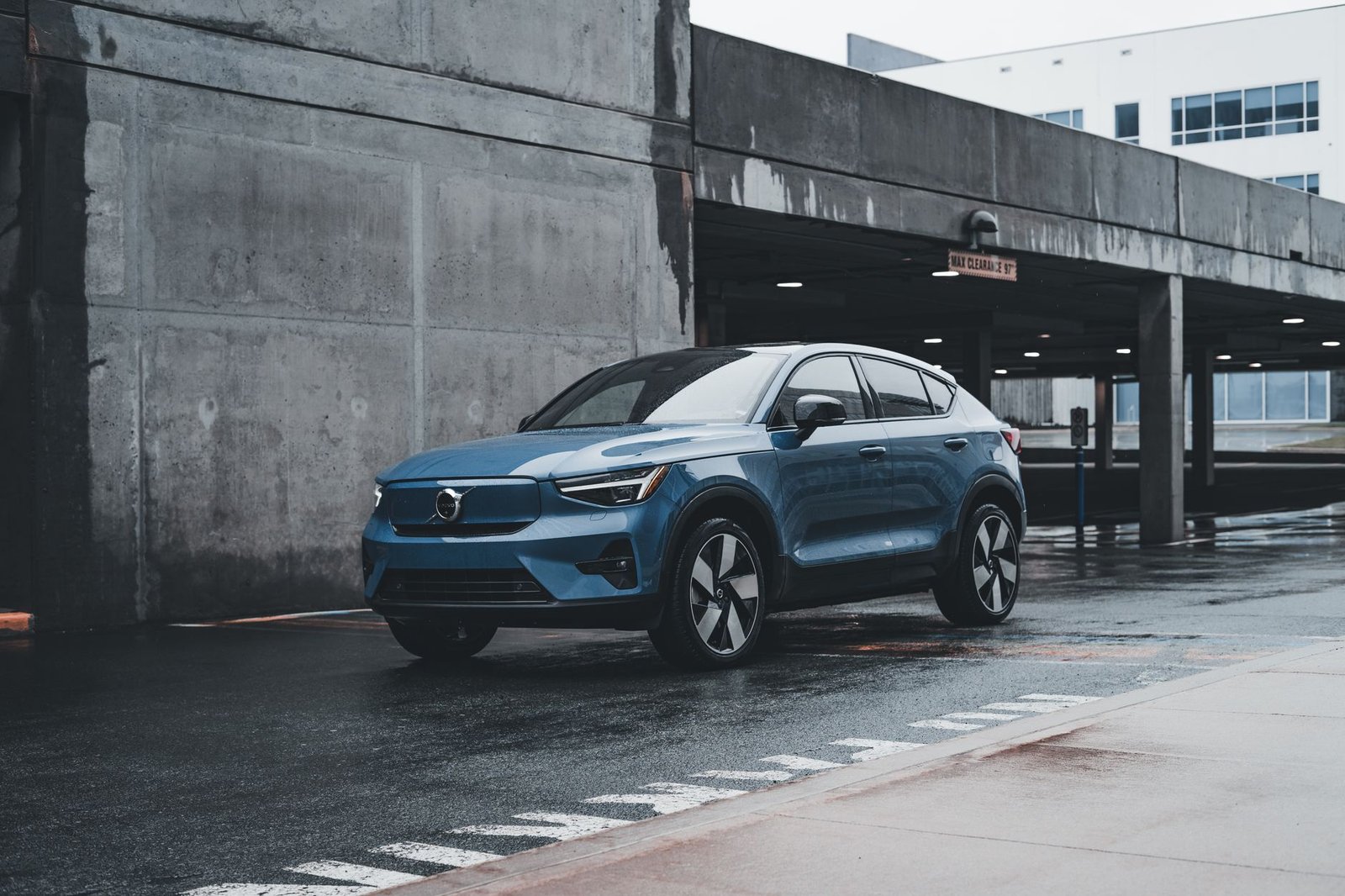
Volvo announced the EX60 as its highest-range, fastest-charging electric SUV to date, then immediately told customers they might have trouble actually buying one. The company is limiting initial production volumes and delaying some market launches. This isn’t a supply chain hiccup or a temporary parts shortage. It’s a calculated decision about how much capital to commit to a vehicle that needs to hit very specific price and performance targets to compete.
When an automaker launches a vehicle in limited quantities, they’re signaling something about confidence and economics. Either they’re unsure about demand, or they’re unable to scale production profitably at the price point customers will accept. The EX60 case offers a clear window into what it actually costs to compete in the midsize electric SUV segment in 2026.
The Math Behind Limited Production Runs
Manufacturing a vehicle is expensive before you sell a single unit. Tooling costs, assembly line configuration, supplier contracts, quality validation. For a typical new vehicle platform, you’re looking at investment in the hundreds of millions before the first customer delivery. The financial logic only works if you can spread those fixed costs across enough units.
An assembly line configured for high volume might build 200,000 units per year. At that scale, your fixed costs per vehicle drop to manageable levels. Cut production to 50,000 units, and suddenly each vehicle is carrying four times the fixed cost burden. The per-unit economics change dramatically.
This is why automakers traditionally aimed for volume. Build 200,000 units, accept thinner margins per vehicle, make money on the total. But electric vehicles complicate this logic. The battery pack alone represents roughly 30 to 40 percent of the vehicle’s total cost. Unlike stamped steel or plastic trim, battery costs don’t drop much with vehicle assembly volume. You’re buying cells from a supplier who has their own volume economics.
So when Volvo limits EX60 production, they’re managing a specific risk: committing to high-volume production before they know whether customers will pay the price that makes those volumes profitable. Build 200,000 units at a loss hoping to make it up later, or build 50,000 units at break-even and see what the market actually does? The conservative financial answer is obvious.
What Premium Pricing Actually Buys You
The midsize electric SUV segment has a pricing problem. To compete on range and charging speed, you need a large battery pack (90-100 kWh) and 800-volt architecture. At current cell-level prices of roughly $100-130 per kWh, a 90-100 kWh pack costs on the order of $9,000 to $13,000 before pack-level overhead, which can push the installed cost higher. The 800-volt electronics add another premium over conventional 400-volt systems.
Add in the actual vehicle (motors, structure, interior, software, assembly) and you’re at roughly $45,000 to $50,000 in manufacturing cost before any dealer margin or profit. To sell at $55,000 to $60,000 retail, which is where this segment lives, you’re working with thin margins. A few thousand dollars in unanticipated warranty costs or a pricing war with competitors, and you’re losing money per unit.
Premium brands like Volvo have one advantage here: customers accept higher prices for the badge. A Volvo can sell at $65,000 where a Chevrolet might top out at $58,000 for similar specifications. That extra $7,000 is pure margin room. It’s the difference between barely profitable and reasonably profitable.
But that premium only holds if the product delivers on the promise. If the EX60 gets 300 miles of real-world range and charges acceptably fast, the Volvo badge supports the price. If it gets 260 miles and charges slowly, suddenly customers are comparing it to vehicles $10,000 cheaper. The premium evaporates.
Limited production lets Volvo validate that the product actually commands the premium before scaling up. It’s expensive insurance, but cheaper than building 100,000 units that have to be discounted $5,000 each to move.
The Capital Allocation Question Nobody Asks
Every automaker has a fixed pool of capital for new vehicle development. Spend it on the EX60, and you’re not spending it on the next-generation XC90 or a smaller electric crossover. Whether the EX60 represents the best use of several hundred million dollars right now matters more than whether it’s a good vehicle.
Traditional automakers are facing an uncomfortable reality: they need multiple competitive electric vehicles across different segments, and they need them simultaneously. The market is fragmenting. Some customers want a $35,000 compact crossover. Others want a $70,000 three-row SUV. You can’t win by dominating one segment anymore. You need credible entries across the range.
This creates a capital allocation nightmare. Do you spend $800 million developing one excellent vehicle, or $400 million each on two pretty good ones? Do you aim for 200,000 units in one segment, or 75,000 each in three segments?
The financially conservative answer is to spread the risk: multiple smaller bets rather than one large bet. Launch the EX60 at limited volume. Launch a smaller crossover at limited volume. See which one finds product-market fit, then scale up the winner. The problem with this approach is that limited volume means high per-unit costs, which means higher prices, which limits your addressable market, which justifies the limited volume. You can get stuck in a loop.
The aggressive answer is to pick one segment, commit fully, and drive costs down through volume. This is roughly what Tesla did with the Model 3 and Model Y: commit to high volume, accept early losses, and get the cost curve working in its favor. But Tesla had access to capital markets that traditional automakers don’t. Volvo’s majority owner, Geely, is not going to tolerate years of losses on a single model line.
Production Constraints Versus Market Constraints
When a company says deliveries will be limited, they’re usually citing production constraints. Not enough battery supply, assembly line ramp-up taking longer than expected, supplier issues. These explanations are often true, but they’re also convenient. Production constraints are fixable problems that don’t reflect on the product itself.
Market constraints are different. If you could build 200,000 units but you’re only building 50,000 because that’s all you can sell at the target price, that’s a market constraint. It means the product is viable but not a breakout hit. It means you’re competing for share in a mature segment rather than creating new demand.
The midsize electric SUV segment is increasingly shaped by market constraints rather than production constraints. Multiple automakers can build these vehicles. The battery supply exists. The technology works. The constraint is the number of customers willing to pay $60,000-plus for an electric SUV when a gas-powered equivalent costs around $48,000.
That price gap is closing, but slowly. Battery pack costs have been dropping on the order of 10 percent per year. Total electric vehicle costs are declining more slowly as production scales. Meanwhile, gas vehicles are getting slightly more expensive due to emissions regulations. The lines cross eventually, but not immediately.
Volvo’s limited launch acknowledges this reality. Build what you can sell profitably today, knowing the addressable market expands over time as costs drop. It’s prudent, but it also means accepting slower growth and market share gains than you might want.
What Smart Money Is Watching
If you want to know whether the EX60 strategy is working, don’t look at the press releases. Look at three things.
First, watch whether Volvo expands production within 12 to 18 months. If they’re adding second or third shifts, building 3,000 units per week instead of 2,000, that means demand is exceeding internal forecasts. If production stays flat, it means they found the ceiling.
Second, watch pricing. If the EX60 starts appearing with $4,000 lease incentives or 0 percent financing within six months of launch, that’s a demand problem. Premium products at launch don’t need incentives. They sell at sticker. Incentives mean the price is above what the market will naturally bear.
Third, watch where the next capital goes. Does Volvo’s next announcement feature another limited-production premium EV, or do they pivot to a higher-volume, lower-price model? The answer tells you whether they think the premium strategy is working or whether they need to compete on a different basis.
The most revealing indicator will be simple production numbers over time. Not the announced capacity or the theoretical maximum, but actual units built per month. If that number grows steadily, the strategy is working. If it plateaus, the company found the limit of what this approach can deliver.