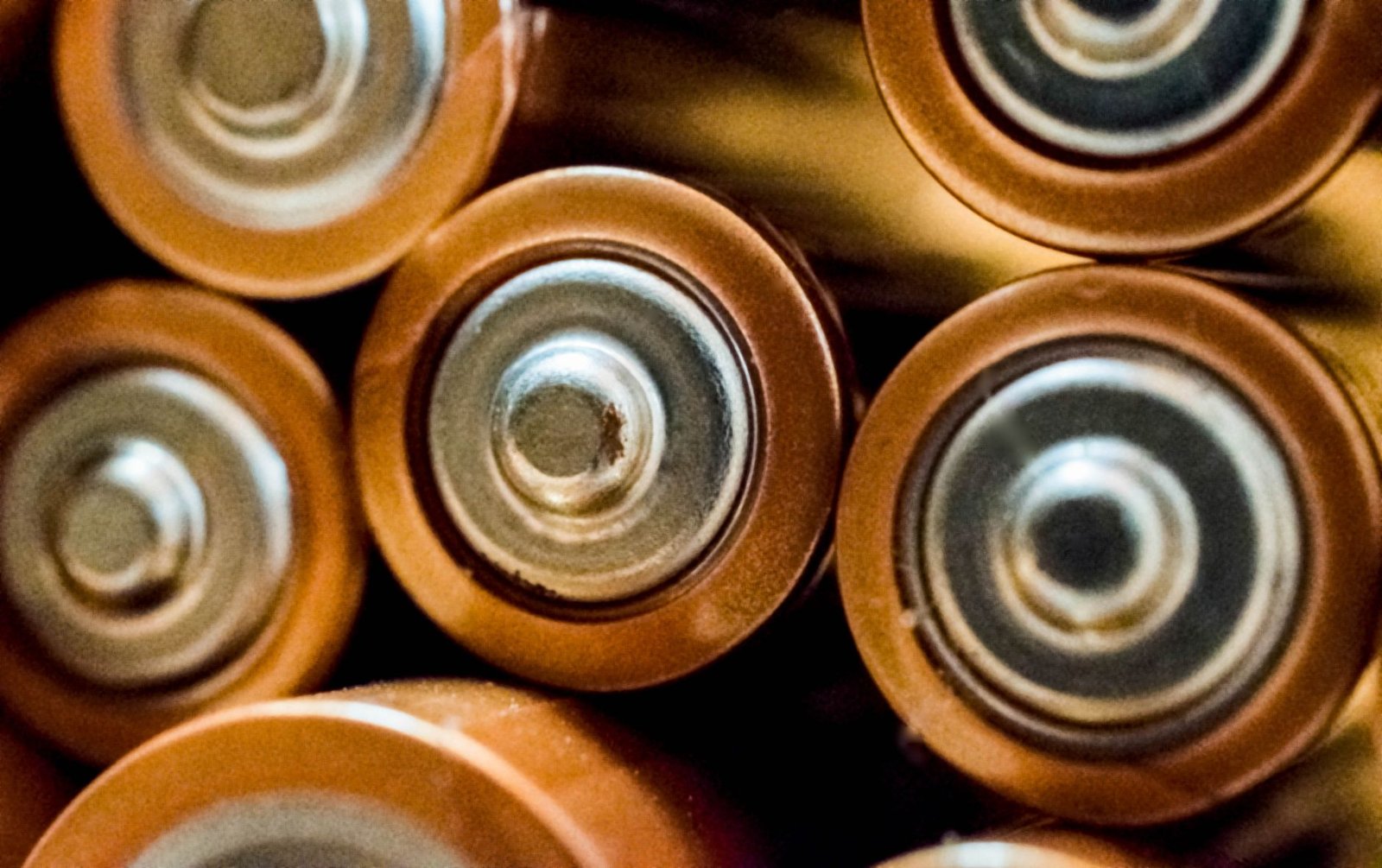
General Motors keeps talking about a battery chemistry called lithium manganese rich, or LMR. The promise sounds straightforward: better energy density than the cheap stuff (lithium iron phosphate), at roughly the same price. But GM hasn’t actually built these batteries at scale yet, and the chemistry itself has been stuck in labs for over a decade. When an automaker announces plans to produce a battery technology “by 2028,” the natural question isn’t whether it’ll work in theory. It’s whether the manufacturing process can actually deliver those performance numbers at that price point, consistently, in a Tennessee factory.
Let me walk you through what LMR chemistry actually is, why it’s been so difficult to commercialize, and what would need to go right for GM’s announced production timeline to mean anything for actual truck buyers.
The Chemistry GM Is Betting On
Lithium manganese rich batteries use manganese as the dominant transition metal in the cathode, with lithium stored in extra sites within the crystal structure. This gives you more lithium ions to move back and forth, which means more energy storage in the same physical space. The theoretical energy density advantage is real, somewhere in the range of 30-35% better than lithium iron phosphate.
Manganese is also genuinely cheap. It costs about $2,000 per ton versus $14,000 for nickel or $28,000 for cobalt. If you can build a cathode mostly from manganese and get decent performance, the raw material cost advantage is substantial. That’s the core economic pitch: LFP-level costs with significantly better range.
The problem is that LMR cathodes degrade in a specific, annoying way. During the first charge cycle, oxygen atoms get released from the crystal structure. This drives voltage decay over subsequent cycles, meaning the battery delivers less voltage as it ages, even if it maintains much of its capacity. Lower voltage means less usable energy. A battery that shows 80% capacity after 1,000 cycles but delivers it at 15% lower voltage isn’t actually giving you 80% of its original performance.
Researchers have worked on this oxygen release problem since the mid-2000s. The typical approach involves coating the cathode particles or doping the crystal structure with stabilizing elements. These methods reduce oxygen loss, but they also add manufacturing steps and cost. The question for any LMR production announcement is: which stabilization method are they using, and how much does it actually cost at scale?
Why Mass Production Changes Everything
Battery chemistries that work in research cells often fail when you try to produce them in million-unit quantities. The manufacturing challenges aren’t exotic, they’re prosaic: coating uniformity, moisture control, defect rates, and thermal management during assembly.
LMR cathodes are particularly sensitive to moisture. Manganese-rich materials react with water vapor and surface contaminants, which degrades performance. This means tighter humidity control in the coating and assembly environment. Tighter control means more expensive equipment and higher reject rates early in production.
The prismatic cell format GM has announced adds another variable. Prismatic cells are rectangular cans, which pack more efficiently into vehicle chassis than cylindrical or pouch cells. But they’re harder to manufacture consistently because any small variation in electrode alignment or electrolyte distribution creates performance differences across the cell. With a new cathode chemistry, you’re debugging the material science and the form factor simultaneously.
GM and LG Energy Solution have experience scaling battery production. Their existing Ultium facilities produce high-nickel cells, and the companies have announced plans to add LFP production. But adding LMR as another chemistry means separate production lines, separate quality control processes, and separate supply chains for precursor materials. The capital cost isn’t trivial, even when retrofitting an existing facility.
The Spring Hill factory timeline calls for upgrades to begin in late 2026 and complete by 2028, with first vehicles using LMR batteries also in 2028. That’s roughly a two-year window from starting line modifications to putting cells in customer vehicles. For comparison, it took about 30 months for the initial Ultium facility in Ohio to go from groundbreaking to producing cells for the GMC Hummer EV. Faster timelines are possible with a retrofit, but they assume minimal manufacturing surprises.
What the Numbers Actually Mean for Trucks
GM’s current longest-range electric truck is the Chevrolet Silverado EV, which gets up to 492 miles EPA estimated with a roughly 205 kWh battery pack. That truck uses high-nickel Ultium cells. The stated target for LMR-equipped trucks and SUVs is “over 400 miles,” which is actually less than what they’re already achieving with nickel chemistry.
This makes sense if you understand the tradeoff. High-nickel batteries deliver the best energy density, but nickel is expensive. LMR gives you worse energy density than nickel but better than LFP, at a cost structure closer to LFP. The play isn’t to build the longest-range truck possible. It’s to build a truck with acceptable range at a lower battery cost.
If we assume a 33% energy density improvement over LFP is accurate at the cell level, you’d need about 135-145 kWh of LMR cells to deliver 400 miles in a truck the size of a Silverado. For comparison, a 400-mile range with LFP would require roughly 180-195 kWh. The smaller pack means less weight, which improves efficiency slightly, and significantly less money spent on raw materials.
The Silverado EV currently starts at around $75,000 for the base work truck, with higher-range trims costing considerably more. If GM can deliver a comparably ranged LMR-equipped truck for meaningfully less than its high-nickel trucks, that’s a real price difference for buyers cross-shopping against F-150 Lightning or Rivian R1T. But the margin math only works if the cells actually cost what GM projects. Lab-scale LMR cells don’t have a known manufacturing cost because nobody’s made them at scale yet.
Where the Story Gets Oversold
Most coverage of new battery announcements treats the energy density claim as the whole story. Higher energy density is good, therefore the technology is better. But energy density is only one variable, and often not the limiting one for electric trucks.
Charge rate matters more than most buyers realize. A truck with 400 miles of range but a charge curve that drops to 50 kW above 60% state of charge is less usable for road trips than a 350-mile truck that holds 150 kW to 80%. We don’t yet know how LMR cells handle fast charging, particularly after 500-1,000 cycles. Manganese-based cathodes generally have good power capability, but the stabilization coatings used to prevent oxygen release can increase internal resistance.
Cycle life also tends to get mentioned only as “comparable to existing chemistries,” which could mean anything from 1,000 to 3,000 cycles depending on depth of discharge and charge rate. For a truck battery, you want 2,000 cycles minimum to get past 200,000 miles of useful life. If LMR cells only deliver 1,200-1,500 cycles before hitting 80% capacity in real-world use, the warranty cost becomes a problem.
Then there’s temperature sensitivity. Manganese-rich cathodes can offer reasonable cold-weather behavior relative to LFP, which is a genuine consideration for trucks used in northern climates. But manganese dissolution and other side reactions make them sensitive to high temperatures. If the thermal management system isn’t designed correctly, a pack sitting in a Phoenix parking lot at 115°F could degrade faster than LFP.
What Would Indicate Real Progress
The meaningful milestones to watch aren’t announcements or production start dates. They’re evidence of consistent manufacturing and vehicle performance.
First, look for third-party teardowns and testing of the actual cells once vehicles ship. Firms like Munro & Associates do vehicle and cost teardowns, while independent battery testing can characterize cell-level performance: energy density, internal resistance, and cycle life under controlled conditions. If those numbers match GM’s claims, the chemistry works. If they’re 10-15% lower, you’re seeing the cost of scaling.
Second, watch early vehicle reviews for fast-charging behavior. If LMR-equipped trucks charge to 80% in 35-40 minutes under ideal conditions and maintain that curve after 20,000 miles, the cells are handling power cycling well. If charge times creep up after the first year or two, something’s degrading faster than expected.
Third, monitor warranty claims and battery replacements. GM offers an 8-year/100,000-mile warranty on Ultium batteries. If LMR cells start showing up in warranty replacements at higher rates than the existing high-nickel packs, that’s a signal the cycle life projections were optimistic.
The final indicator is whether other manufacturers adopt LMR chemistry. If Ford, Stellantis, or Hyundai announce similar production plans within 18-24 months of GM’s launch, it suggests the manufacturing process is achievable and the cost structure works. If they don’t, it might mean GM is absorbing losses to hit a political or marketing goal rather than a genuine cost breakthrough.