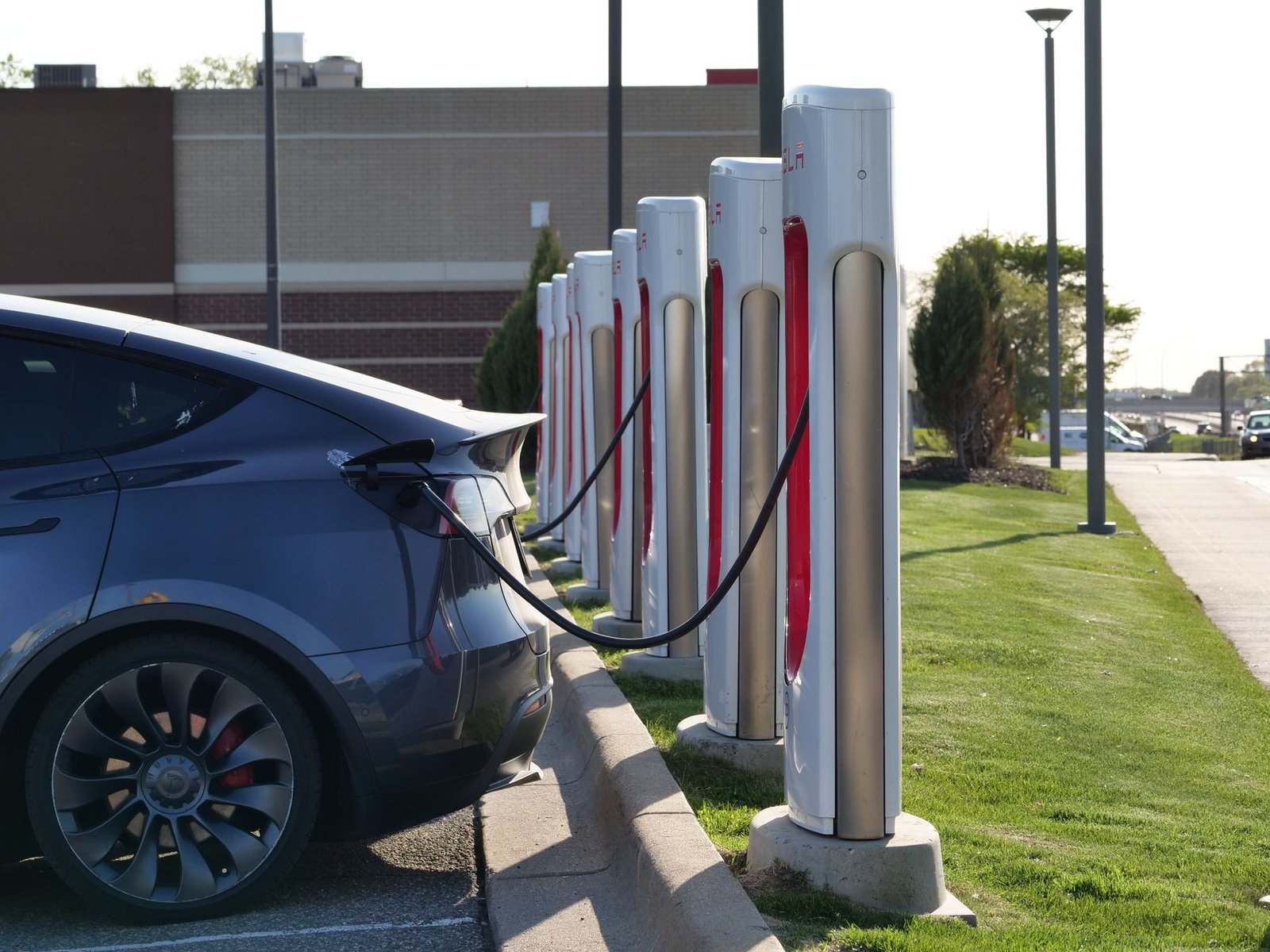
EVgo just opened its latest flagship charging station in metropolitan Detroit with 12 pull-through stalls, 350 kW dispensers, and an overhead canopy that looks exactly like what you’d see at a highway Shell or BP. The company, working with General Motors and retailer Meijer, now operates a growing set of these flagship locations nationwide, with plans to add more sites by year-end. The buildout represents tens of millions in capital deployed to replicate the familiar architecture of fossil fuel infrastructure. Whether this is the right way to spend the money matters more than whether the stations work.
What Changed on the Ground
The EVgo GM charging network expansion follows a clear template. Find high-traffic retail locations. Install pull-through stalls that accommodate trucks and SUVs without jackknifing maneuvers. Add weather protection. Deploy both CCS and NACS connectors to cover the entire EV fleet. The Detroit station sits at a Meijer store, following EVgo’s broader deal with Brixmor to place hundreds of DC stalls at shopping centers. Additional stalls operate across the country through a separate partnership with GM and Pilot Company truck stops.
EVgo runs roughly 4,000 charging stalls nationwide, making it one of the largest public charging operators in the United States. The company plans to deploy higher-power dispensers capable of up to 400 kW peak power. Expansion targets California, Florida, Georgia, Illinois, Michigan, and Texas. The hardware works. Utilization at flagship sites runs higher than older urban installations. But the cost structure raises harder questions about what actually drives adoption versus what looks good in press releases.
The Capital Allocation Error
Building charging infrastructure that mimics gas stations makes intuitive sense until you examine how EV owners actually charge. Most EV drivers rely on public fast charging only occasionally, per industry surveys. The rest happens at home overnight or at work during the day. This isn’t a temporary artifact of early adoption. Physics dictates the pattern. Electrons flow through existing electrical infrastructure to garages and parking lots. Gasoline requires dedicated fueling stops because you can’t pipe it to residential driveways.
EVgo and GM are deploying capital as if the gas station model is the correct template. An overhead canopy costs $200,000 to $400,000 depending on size and permitting. Pull-through stall geometry requires more land per charging point than angled or back-in configurations. That land sits idle except during the handful of hours per week when traffic peaks. The operational model borrows from a century of gasoline retailing without questioning whether the physics of electrons requires the same real estate footprint.
The mistake compounds when you consider where flagship stations get built. Meijer stores, Pilot truck stops, and Brixmor shopping centers optimize for one thing: maximizing traffic through retail square footage. They do not optimize for where EV owners actually need charging support. Road trips represent a small share of total vehicle miles traveled. The bottleneck isn’t charging availability along interstates. It’s charging access for the roughly 40% of Americans who park on streets or in apartment complexes without dedicated spots.
Why Peak Power Doesn’t Solve Dwell Time
A 350 kW charger can add roughly 200 miles of range to a battery in about 15 minutes under ideal conditions. Higher-power dispensers cut that further for compatible vehicles. But peak power only matters if the battery can accept it. Most EVs taper charging rates as they approach 80% state of charge to protect cell longevity. A battery that pulls 350 kW from 10% to 40% might drop to 150 kW by 60% to 80%, then fall to 50 kW for the final 20%. The curve is physics, not a software problem you patch.
This creates an operational mismatch. Gas stations work because refueling takes four minutes regardless of tank size or how empty you arrive. Charge time varies with battery chemistry, pack temperature, and arrival state of charge. You can’t design site throughput around a fixed dwell time. Some sessions take 12 minutes. Others take 45. The canopy and pull-through stalls that cost six figures don’t change this. They just make the waiting slightly less miserable.
High capital cost per stall also limits network density. Gasoline infrastructure includes over 100,000 retail locations in the United States. Even aggressive charging buildout won’t close that gap because the unit economics don’t support it. A flagship charging station needs $2 million to $3 million in total investment for 12 stalls. That capital could instead deploy dozens of Level 2 chargers at apartment buildings, workplace parking, and overnight destinations where cars already sit for hours. Lower power, longer dwell time, but better match to actual usage patterns.
What Buyers Actually Need
EV buyers fall into two categories. Homeowners with garages rarely think about public charging except on road trips. They leave each morning with a full battery. Public fast charging is insurance, not routine. Apartment dwellers and street parkers face the opposite reality. They need reliable access to charging at their residence or workplace. A flagship station 15 minutes away doesn’t help when you need to move your car every two hours to avoid tickets.
The market already demonstrates this. Tesla’s Supercharger network succeeds not because of canopy aesthetics but because reliability runs high and placement follows road trip routes between major metro areas. Drivers tolerate parking lot exposure because the chargers work when needed. Non-Tesla networks have historically struggled with uptime at some locations. No amount of pull-through geometry fixes a broken charger.
Dennis Kish, EVgo’s president, framed the flagship expansion as meeting drivers where they are and integrating infrastructure into their lives. But the statement assumes drivers want charging to feel like gas stations. Survey data suggests otherwise. EV owners value three things: reliability, convenient location relative to where their car already parks, and predictable pricing. Overhead canopies rank well below all three.
The Better Deployment Strategy
Capital discipline requires matching infrastructure to actual demand patterns rather than inherited mental models. Home charging works for a majority of U.S. households. Workplace charging could cover much of the remainder at a fraction of flagship station costs. That leaves a minority who genuinely need frequent public fast charging, primarily renters and those without workplace access. Most capital should go toward overnight Level 2 infrastructure at multifamily buildings.
A $2 million flagship station with 12 fast chargers serves perhaps a few hundred regular users based on typical utilization. The same $2 million deploys dozens of Level 2 chargers at apartment complexes, each serving a handful of regular users. The math favors distributed slow charging when you weigh users served against dollars spent. Yes, slower charging means longer dwell time. But cars parked overnight have eight hours available. The constraint isn’t charge speed. It’s access.
This doesn’t mean zero flagship stations. Road trip corridors need fast charging. But the buildout EVgo targets this year could instead focus on filling gaps in the existing network. New locations in Montana, Wyoming, and West Texas would do more for long-distance travel confidence than more stations in metro Detroit or Houston where coverage already exists.
What the Spending Pattern Reveals
The EVgo GM charging network expansion reflects a broader industry tendency to optimize for visibility over utility. Flagship stations photograph well. Pull-through stalls and overhead canopies signal that EVs have arrived as mainstream products worthy of real infrastructure. Politicians like cutting ribbons at charging stations that look substantial. The optics work even if the capital allocation doesn’t.
GM’s participation makes strategic sense for different reasons. The automaker needs charging network partnerships to compete with Tesla’s integrated ecosystem. Joint announcements with EVgo generate positive coverage and demonstrate commitment to EV infrastructure beyond just building vehicles. GM’s optimal charging strategy might differ from EVgo’s optimal business model. The automaker cares about removing purchase barriers for potential Blazer EV or Equinox EV buyers. The charging network needs to generate acceptable returns on invested capital.
That tension shows in the deployment patterns. Flagship stations cluster in states with strong EV sales where infrastructure already exists rather than filling genuine coverage gaps. They follow retail traffic patterns rather than charging needs. The result is overbuilding in some areas while underserved regions remain underserved. Classic misallocation driven by metrics that measure station count rather than driver utility.