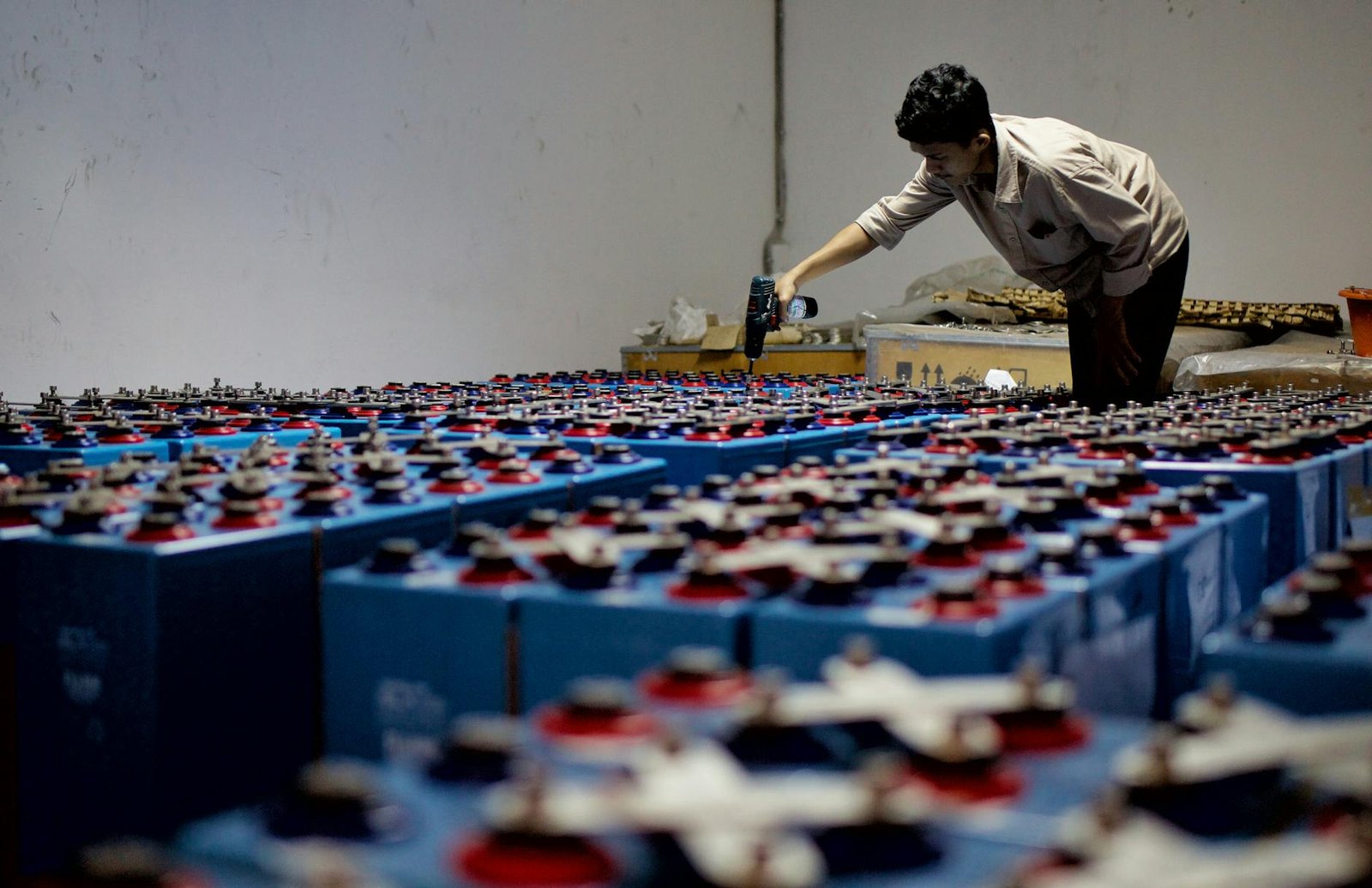
VinFast announced plans for 150,000 battery swap stations across Vietnam, a number so large it requires a second look at the map. Vietnam has 63 provinces. That’s roughly 2,400 stations per province, or one station for every 650 people in a country of 98 million. For context, there are about 12,000 gas stations in Vietnam today. VinFast is proposing to build twelve times that number of battery swap points for electric scooters. The capital commitment, even at modest per-unit costs, runs into billions of dollars. The question becomes whether the financial architecture can survive contact with reality.
How Battery Swapping Actually Works at Scale
A battery swap station is deceptively simple in concept. You ride up, pop out your depleted battery pack, slot in a charged one, and leave. The station handles the charging infrastructure, grid connection, battery inventory management, and thermal conditioning. VinFast’s scooters use dual 1.5 kWh battery packs, each roughly the size of a shoebox but weighing about 10 kg. Total capacity is 3 kWh, enough for 85 kilometers under standard conditions.
The swap itself takes under a minute. Compare that to even fast DC charging for larger vehicles, which requires 20-30 minutes minimum. For a delivery rider making 40 stops per day, those minutes compound into hours of lost productivity. A swap station eliminates the waiting penalty entirely.
The rider pays 9,000 VND per swap (about 35 cents), which includes electricity, plus 200,000 VND monthly per battery for the rental subscription (about $8). Total monthly operating cost runs around $17-20 for typical usage, compared to roughly $30-40 in gasoline for an equivalent scooter at Vietnam’s fuel prices.
The economics favor the rider clearly. The station operator faces a different calculation. Each swap station requires land lease or purchase, grid connection capable of handling simultaneous charging for dozens of batteries, the batteries themselves as inventory, thermal management systems to prevent degradation, and ongoing maintenance. VinFast hasn’t published per-station capital costs, but comparable systems in China run $15,000-30,000 per station depending on capacity and location. At 150,000 stations, even at the low end, you’re looking at $2.25 billion in infrastructure before the first battery gets swapped.
The Grid Math Nobody Mentions
Vietnam’s electrical grid presents constraints that don’t appear in the press releases. Total installed generation capacity is approximately 80,000 MW. Peak demand hits around 60,000 MW during hot months. That leaves roughly 20,000 MW of headroom, though distribution varies wildly by region. Ho Chi Minh City and Hanoi have relatively robust infrastructure. Rural provinces do not.
Each battery swap station charging 30 batteries simultaneously draws about 15 kW, assuming Level 2 charging speeds to preserve battery life. Manageable at the individual station level. But 150,000 stations running at even 20% utilization simultaneously represents 450 MW of new baseload demand, plus charging losses. Not catastrophic for the national grid, but concentrated in urban areas where capacity margins are already tight. VinFast will need to coordinate charging schedules, likely using time-of-use pricing to shift demand to off-peak hours. That adds software complexity and requires sophisticated battery management systems at each station.
The alternative is to accept lower utilization rates, which improves grid stability but wrecks the station economics. If each station only swaps 10 batteries per day instead of 30, your capital recovery timeline stretches from years to decades. The per-swap revenue of 35 cents doesn’t carry much financial weight when amortized against a $20,000 station build cost.
Where the Numbers Start Breaking
VinFast’s model bundles the battery cost into a subscription rather than the vehicle purchase price, dropping the upfront price by approximately 30%. A typical electric scooter in Vietnam sells for $1,200-1,800. Removing the battery cost saves maybe $400-600 at purchase. The buyer then commits to $96 per year in battery rental fees, per battery. With two batteries, that’s $192 annually.
After three years, the subscription cost approaches the purchase discount. After five years, the rider has paid an extra $360-560 compared to owning the batteries outright. The value proposition only holds if battery degradation or replacement costs exceed that premium. Lithium-ion batteries in light-duty applications typically retain 80% capacity after 1,500 charge cycles. A delivery rider swapping twice daily hits that threshold in two years. A casual commuter swapping three times per week takes a decade.
The subscription model transfers degradation risk from the rider to VinFast, which makes sense for high-utilization commercial users. For everyone else, it’s an expensive insurance policy against a relatively slow-moving problem. VinFast needs the commercial fleet segment to anchor utilization rates at each station. Without delivery riders, food couriers, and taxi services creating base demand, the casual commuter traffic won’t generate enough swaps per station to justify the infrastructure.
The Actual Competition
VinFast isn’t competing against gasoline scooters in a vacuum. The real competition is charging at home or work. A rider with access to a 220V outlet can fully charge a 3 kWh battery in about 4 hours for roughly 7,000 VND (28 cents) at residential electricity rates. Own the battery and charge overnight, and your total cost of operation drops to fuel costs alone, about $7 per month for typical usage.
The swap network only wins if convenience justifies the 25% premium over home charging. For commercial riders without reliable parking or electrical access, that premium is worth it. For everyone else, it’s a harder sell. VinFast sells both swappable and fixed-battery versions of their scooters. The market will sort out which model dominates, but the financial incentive clearly favors ownership unless your use case involves 100+ kilometers per day with no overnight charging access.
China’s battery swap experiments offer a preview. Nio operates about 2,000 swap stations for passenger cars across China, targeting a similar convenience proposition. Utilization rates average 15-20 swaps per station per day, concentrated in major cities. Stations in second and third-tier cities run closer to 5-10 swaps daily. Nio hasn’t disclosed profitability on the swap network specifically, but the company loses roughly $400 million per quarter overall. The swap network is part of that equation.
What Most Coverage Ignores
The 150,000 station figure gets reported as if station count is the relevant metric. Geographic density matters more than raw numbers. A station every 500 meters in downtown Ho Chi Minh City creates genuine convenience. A station every 20 kilometers in rural provinces just spreads capital across low-utilization assets.
VinFast’s announcement doesn’t break down deployment by region or timeline. “Thousands of stations already installed” in major metros is vague enough to mean anything from 2,000 to 9,000. The marginal station in a well-covered area adds minimal value. The first station in an underserved region creates the initial network effect but faces chicken-and-egg adoption problems.
The financially disciplined approach would concentrate deployment in high-density commercial corridors first, prove the unit economics, then expand. Announcing a nationwide 150,000 station target before demonstrating profitability at smaller scale raises questions about whether this is infrastructure investment or market signaling. VinFast is a publicly traded company that needs to show growth momentum to maintain its valuation. A massive infrastructure commitment accomplishes that goal regardless of whether the stations ever generate positive returns.
Signals Worth Watching
Track actual deployment numbers quarterly, not announcements. If VinFast installs 5,000 stations in year one, 8,000 in year two, and 4,000 in year three, the economics aren’t scaling as planned. Healthy infrastructure rollouts accelerate as lessons learned reduce per-unit costs and deployment time.
Watch for shifts in the battery subscription pricing. If the monthly rental fee drops from $8 to $5, VinFast is subsidizing adoption to hit utilization targets. If it rises to $12, the company is trying to improve unit economics at the cost of market penetration. Either move signals problems with the original financial model.
Pay attention to station format changes. If later deployments use smaller footprints with fewer charging bays, VinFast is optimizing for lower utilization scenarios. If stations start appearing inside existing retail or service locations rather than standalone sites, the company is trying to reduce land costs. Both would be rational responses to discovering that 150,000 purpose-built stations don’t pencil out.
The technology for electric scooter battery swap works fine. The financial sustainability at the scale VinFast is proposing remains unproven. Capital discipline would suggest proving the model at 15,000 stations before committing to ten times that number. Capital discipline and growth signaling often point in opposite directions.