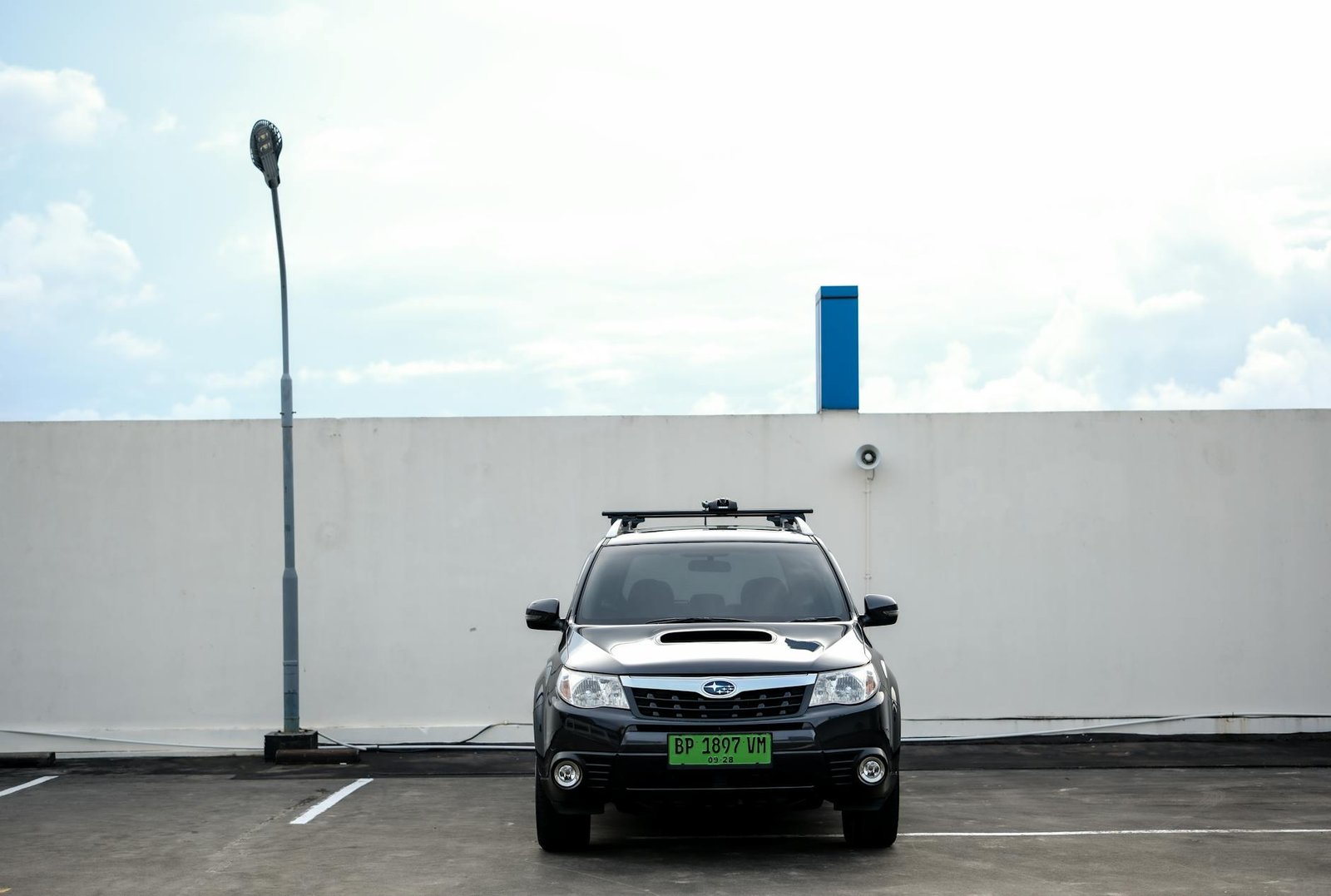
A Subaru dealer in Vermont told me last month he’d pre-sold six Outback Wilderness models to customers who hadn’t driven one yet. They knew the specs, trusted the brand, and wrote deposits. That same week, another dealer two states over couldn’t move three Solterras sitting on the lot, even with $7,500 in discounts stacked on the hood. The difference wasn’t the product. It was the psychological distance between “I know what I’m buying” and “I’m taking a bet on something new.” When Subaru announced the 2027 Getaway, a three-row electric SUV with 420 horsepower and over 300 miles of range, the company framed it as a performance story. Whether buyers will treat a $60,000 family hauler with a plug the same way they treat a $40,000 gas Ascent with 20 years of camp trips behind it remains the central question.
The Actual Product Subaru Is Selling
The Getaway will arrive in late 2026 with a 100 kWh battery, dual-motor all-wheel drive, and seating for six or seven. It hits 60 mph in under five seconds, tows 5,500 pounds, and charges from 10 to 80 percent in about 30 minutes at 150 kW. A smaller battery version will follow in 2027 with an estimated 270 miles of range. The vehicle shares its platform with future Toyota three-row EVs, will be built in North America, and includes features like three-zone climate control, heated seats in all three rows, and 8.9 inches of ground clearance. On paper, it’s a capable family SUV that happens to be electric.
Subaru isn’t selling on paper. The company previewed the vehicle in California and plans a New York Auto Show reveal, focusing on power output (420 hp makes it the most powerful production Subaru ever) and off-road credibility via X-MODE assist. The messaging positions the Getaway as an Outback with more seats and a bigger battery, not as a departure from what loyal buyers already understand. That framing matters because Subaru’s core customer base skews older, rural, and pragmatic. These are people who buy vehicles based on resale value and proven winter performance, not 0-60 times.
The Behavioral Friction No One Is Discussing
Three-row SUV buyers are making a household infrastructure decision, not a car purchase. They’re optimizing for soccer practice logistics, road trips to national parks, and the ability to carry grandparents and luggage simultaneously.
The purchase decision involves multiple stakeholders (often a spouse or partner with veto power), a timeline measured in years of ownership, and a strong aversion to being stranded. This is why the Ascent outsells the Crosstrek in households with kids despite costing $10,000 more. The bigger vehicle reduces friction in daily life.
Electric propulsion introduces new friction points. Charging infrastructure is still uneven, especially in rural areas where Subaru’s customer base concentrates. The Getaway’s 300-mile range sounds adequate until you account for a family of five, a loaded roof box, and winter temperatures that cut effective range by 25 to 40 percent. The vehicle’s cold-weather battery preconditioning helps, but it’s still a feature Subaru has to advertise because buyers remember the stories about Teslas losing half their range in Chicago winters.
A buyer trading in a 2017 Outback with 140,000 miles knows exactly what they’re getting with another Subaru. They can estimate repair costs, fuel expenses, and depreciation curves. The Getaway asks them to trust a new powertrain, a new refueling behavior, and a residual value forecast with no historical comp. That’s a psychological hurdle that shows up in the dealer financing office, not the spec sheet.
Why Range Numbers Don’t Close Sales
Subaru advertises “over 300 miles” for the 100 kWh version, which translates to roughly 3.0 miles per kWh. That’s reasonable for a three-row SUV with dual motors and all-wheel drive. But buyers don’t do kilowatt-hour math. They translate range into familiar trips. Can I drive from Burlington to Boston without charging? Can I tow the boat to the lake and back on one charge? The answer to both is usually “yes, but with planning,” which is a different psychological state than “yes, obviously.”
The planning tax is real. It means downloading apps, creating accounts, understanding charge curves, and learning which networks accept which payment methods. It means arriving at a fast charger and discovering two of the four stalls are broken, or occupied by someone who plugged in and went to lunch. These aren’t hypothetical problems. They’re documented in every EV owner forum and Reddit thread. Subaru can engineer a vehicle that charges quickly and drives 300 miles, but it can’t engineer away the infrastructure gaps or the cognitive load of route planning.
Compare this to the gas Ascent buyer, who pulls into any station, swipes a card, and leaves four minutes later. The Getaway requires trusting that the fast charger will work, that the weather won’t cut range by a third, and that the family won’t complain about adding 30 minutes to a six-hour drive. For early adopters, that’s an acceptable trade. For the median three-row SUV buyer, it’s a reason to wait another generation.
The Price Reality Subaru Isn’t Emphasizing
Subaru hasn’t announced pricing, but based on the platform sharing and market positioning, the Getaway will likely start around $55,000 to $60,000. The gas Ascent starts at $35,000. That’s a $20,000 to $25,000 premium for electric propulsion, faster acceleration, and lower fuel costs. The fuel savings are real (electricity is cheaper than gas per mile), but they accrue slowly. At 12,000 miles per year and $0.13 per kWh versus $3.50 per gallon, the Getaway saves roughly $1,400 annually in fuel. It takes 14 to 18 years to recover the upfront premium through fuel savings alone.
The federal tax credit changes the math, but only for buyers who owe enough in taxes to claim it and who meet income limits. The Getaway will have a NACS charging port and should qualify for the $7,500 credit if final assembly and battery sourcing meet domestic content requirements. That drops the effective premium to $12,500 to $17,500, cutting payback time to 9 to 12 years. Still longer than most buyers keep a vehicle.
Three-row EV sales remain concentrated among affluent early adopters who can afford the premium and have home charging. The Kia EV9 and Hyundai Ioniq 9 target the same demographic. Subaru’s brand strength is in the $35,000 to $50,000 segment, where buyers are price-sensitive and risk-averse. Asking them to stretch to $60,000 for unproven technology is a different value proposition than asking them to stretch to $45,000 for a bigger gas engine and more cargo space.
What Subaru Is Actually Betting On
Subaru is betting that brand loyalty and capability signaling will bridge the trust gap. The company is positioning the Getaway as the vehicle you buy because it’s a Subaru first and an EV second. The emphasis on X-MODE, towing capacity, and cold-weather performance reinforces that framing. It’s a smart strategy if the goal is converting existing Subaru households who were already considering an upgrade and are willing to try electric. It’s a weak strategy if the goal is winning conquest sales from Toyota Highlander or Honda Pilot buyers who have no existing relationship with the brand.
The timing matters. By late 2026, the charging network will be denser, battery costs will be lower, and used EV prices will provide more data points for resale value concerns. Subaru is also planning vehicle-to-load and vehicle-to-home features, which add utility for buyers in rural areas with unreliable grids. These aren’t gimmicks. They’re genuine use cases that reduce the downside risk of owning a large battery on wheels.
Three-row SUV buyers optimize for reducing household friction, and electric propulsion currently adds friction. The Getaway solves the capability problem (it’s powerful, spacious, and handles snow), but it doesn’t solve the behavioral problem (buyers still have to trust the infrastructure and accept the planning tax). That’s a market timing question, not a product engineering question.
The Conditional Path Forward
If Subaru can price the Getaway at or below $55,000 after incentives and the charging network continues improving at the current rate, the vehicle will find buyers. They’ll be households replacing a second or third Subaru, living in areas with reliable fast charging, and willing to trade the gas station habit for home charging convenience. That’s a real market, but it’s smaller than the total three-row SUV segment.
The Getaway won’t outsell the Ascent in year one, and it shouldn’t try. The goal is proving the product works so that buyers in 2028 or 2029 see it as a known quantity, not a risky bet. At that point, the trust deficit narrows, and the fuel savings start looking like a reason to switch rather than a reason to wait. Until then, Subaru is selling a $60,000 promise to customers who’ve spent decades buying $35,000 certainty.