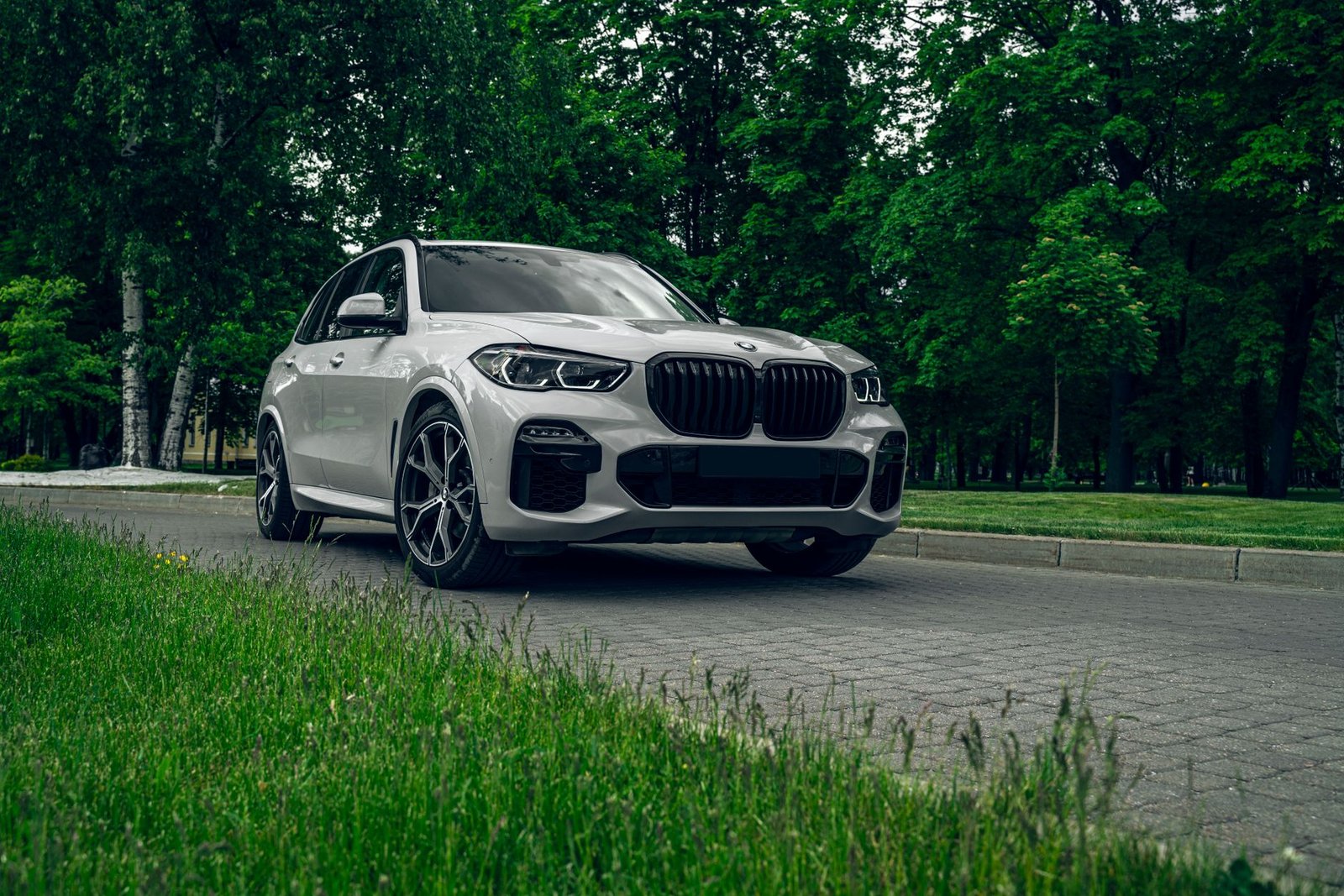
BMW says the iX4 will deliver 428 miles of EPA range when it goes on sale in March 2027, with a base price of $66,300 before destination. That puts it $4,800 above the iX3 and squarely in the territory where buyers start comparing monthly payments to a loaded Model Y or Ioniq 5. The range number is excellent. The question is whether anyone will pay the premium for it.
The BMW iX4 range figure matters less than the gap between what BMW is charging and what the market will bear. At $66,300, the iX4 50 xDrive carries a price premium that reflects neither a dramatic technology leap nor a category advantage. It is a mid-size crossover with a large battery, entering a segment where rivals are undercutting on price while matching or exceeding on charging speed. The constraint is not engineering capacity but capital allocation. BMW is spending to build a vehicle that may arrive after the window for premium-priced long-range EVs has already closed.
What the Announcement Actually Delivers
Production of the iX4 begins at BMW’s Debrecen, Hungary plant ahead of the March 2027 on-sale date, as reported. The facility runs a three-shift schedule and ramped series production in roughly two months, following the iX3 launch earlier at the same site. The iX4 carries a 112.2 kWh battery on an 800-volt architecture, enabling up to 400 kW charging. BMW claims 10 to 80 percent charging in 21 minutes, with 184 miles of range added in 10 minutes under ideal conditions.
The base iX4 50 xDrive produces 468 horsepower and 475 lb-ft of torque from dual motors, running 0-60 mph in 4.7 seconds. The M60 xDrive variant steps up to 603 horsepower and 645 lb-ft, cutting the sprint to 3.9 seconds. The drag coefficient is a low 0.23, contributing to the 428-mile EPA estimate and 514-mile WLTP rating. Dimensions are 188.3 inches long, 74.6 inches wide, and 63.3 inches tall, on a 114.1-inch wheelbase.
In Europe, pricing starts at €70,900 in Germany and £53,250 in the UK for the iX4 40 xDrive, the entry variant not offered in the U.S. market. The numbers are specific, the timeline is clear, and the product is real. What is missing is evidence that this configuration of range, price, and timing solves a problem buyers are actually willing to pay to fix.
The Battery Is Not the Differentiator BMW Thinks It Is
A 112.2 kWh pack delivering 428 miles translates to roughly 262 Wh per mile of consumption, a credible figure for a mid-size crossover with a 0.23 drag coefficient. The 800-volt architecture and 400 kW peak charging rate are impressive on paper but constrained in practice by charger availability. Most high-power CCS stations top out at 350 kW, the ceiling for most U.S. road trips, capping real-world charging closer to 350 kW than 400 kW. The 10-minute range-add claim assumes optimal conditions: a preheated battery, low state of charge, and an available high-power stall with no queueing.
The constraint is not the vehicle’s capability but the infrastructure gap between rated peak power and delivered average power. A Model Y Long Range charges at up to 250 kW on Tesla’s V3 Superchargers, adding roughly 150 miles in 15 minutes under similar conditions. The iX4’s advantage shrinks to minutes, not hours, and only on routes where high-power CCS chargers are dense enough to avoid queueing. For the $66,300 asking price, buyers are paying for peak performance they will access intermittently, not a step-change in usability.
The BMW iX4 range figure of 428 miles is competitive with the longest-range EVs on the market, but it does not redefine the category. The Ioniq 6 Long Range delivers roughly 361 miles for about $45,500, the Model Y Long Range hits about 310 miles starting near $48,000, and the Ioniq 5 with the extended-range battery reaches about 318 miles near $52,000. The iX4 adds roughly 67 to 118 miles of rated range over these rivals but costs $14,500 to $20,800 more. The incremental range requires a battery substantially larger than competitors, which translates directly to materials cost, weight, and capital tied up in each unit.
Capital Spent on Range Instead of Price Competitiveness
BMW is allocating capital to maximize a specification that buyers rank behind price, charging speed, and monthly payment. Industry transaction data shows that buyers prioritize range up to roughly 300 miles, after which the marginal value of additional range drops sharply. The jump from 250 to 300 miles matters. The jump from 350 to 428 miles does not change purchase behavior in proportion to the cost required to deliver it.
The $4,800 premium over the iX3 50 xDrive funds a larger battery, not a faster time-to-market or lower cost per kilowatt-hour. At current lithium-ion pack prices, estimated around $115 per kWh at the cell level for large OEM orders, the incremental capacity in the iX4 versus a 90 kWh competitor adds roughly $2,500 in cell cost alone. Pack assembly, thermal management for the 800-volt architecture, and integration push the total battery premium above $3,000 per vehicle. That cost is embedded in every iX4 sold, regardless of whether the buyer uses the full range or simply wanted a crossover that qualifies for the federal tax credit.
The capital efficiency question is whether BMW should have spent the same budget delivering a 90 kWh version at roughly $58,000 instead of a 112 kWh version at $66,300. The former undercuts the Model Y by about $10,000 and positions BMW as the value leader in premium mid-size EVs. The latter positions BMW as the range leader in a segment where range leadership does not command the price premium it did in 2021.
The Window for Premium Long-Range EVs Is Narrowing
BMW is launching the iX4 into a market where the value proposition for expensive, long-range EVs has inverted. In 2020, buyers paid premiums for range because 200-mile EVs were marginal for road trips and fast charging was sparse. By 2027, the median new EV will likely clear 280 miles of range, charging networks will have filled more of the Interstate corridor gaps, and the customer willing to pay $66,300 for a crossover can choose between the iX4’s 428 miles and a Model Y’s 310 miles plus roughly $18,000 in cash.
The capital BMW committed to Debrecen, the three-shift production ramp, and the 112.2 kWh battery program locks the company into a cost structure that depends on buyers valuing long range at 2021 premiums. The market has moved. Tesla has undercut on price while maintaining 250 kW charging. Hyundai has undercut further while matching or exceeding BMW’s range per dollar. The iX4 is an engineering accomplishment deployed in a pricing environment that no longer rewards it.
The same capital deployed toward an iX4 40 xDrive at roughly $58,000 with a 90 kWh battery and about 340 miles of range would address the actual constraint buyers face: monthly payment. At that price, the iX4 qualifies more buyers for financing, competes directly with the Model Y on lease terms, and still delivers more range than the median EV. The 428-mile version serves a narrower slice of buyers willing to pay for a specification they will rarely use, while the capital required to deliver it could have funded a broader market assault.
Range Leadership Without Market Leadership
BMW will likely sell every iX4 it builds in the first year, because supply will be constrained and because 428 miles of range is a compelling spec for early adopters. The question is what happens in year two, when Debrecen is running at volume and the market has alternatives. The iX4 is not positioned to win on price, and it is not differentiated enough on charging or software to justify the premium. It is a range-optimized vehicle entering a market that stopped optimizing for range some time ago.
The BMW iX4 range capability is real, the engineering is sound, and the production ramp is executable. The capital discipline question is whether the investment delivers durable competitive advantage or simply checks a specification box that the market no longer values at the price required to deliver it. BMW is spending to lead a category that may no longer exist by the time the iX4 reaches volume production.