A family member texted me last week: “Should I wait for the new Ford with the Michigan batteries? I heard they’re better than the Chinese ones.” She’d read that Ford’s new LFP battery production facility in Marshall started shipping packs to test vehicles. The implication was clear in her mind: American-made batteries equal safer purchase, better resale value, patriotic bonus points.
She is not alone. Online forums and dealer lots echo this assumption. Domestic battery production must mean something for the buyer. When you map it against how people actually decide to buy an EV, though, the Michigan plant solves a problem buyers don’t have.
Ford’s $3B Michigan Battery Plant
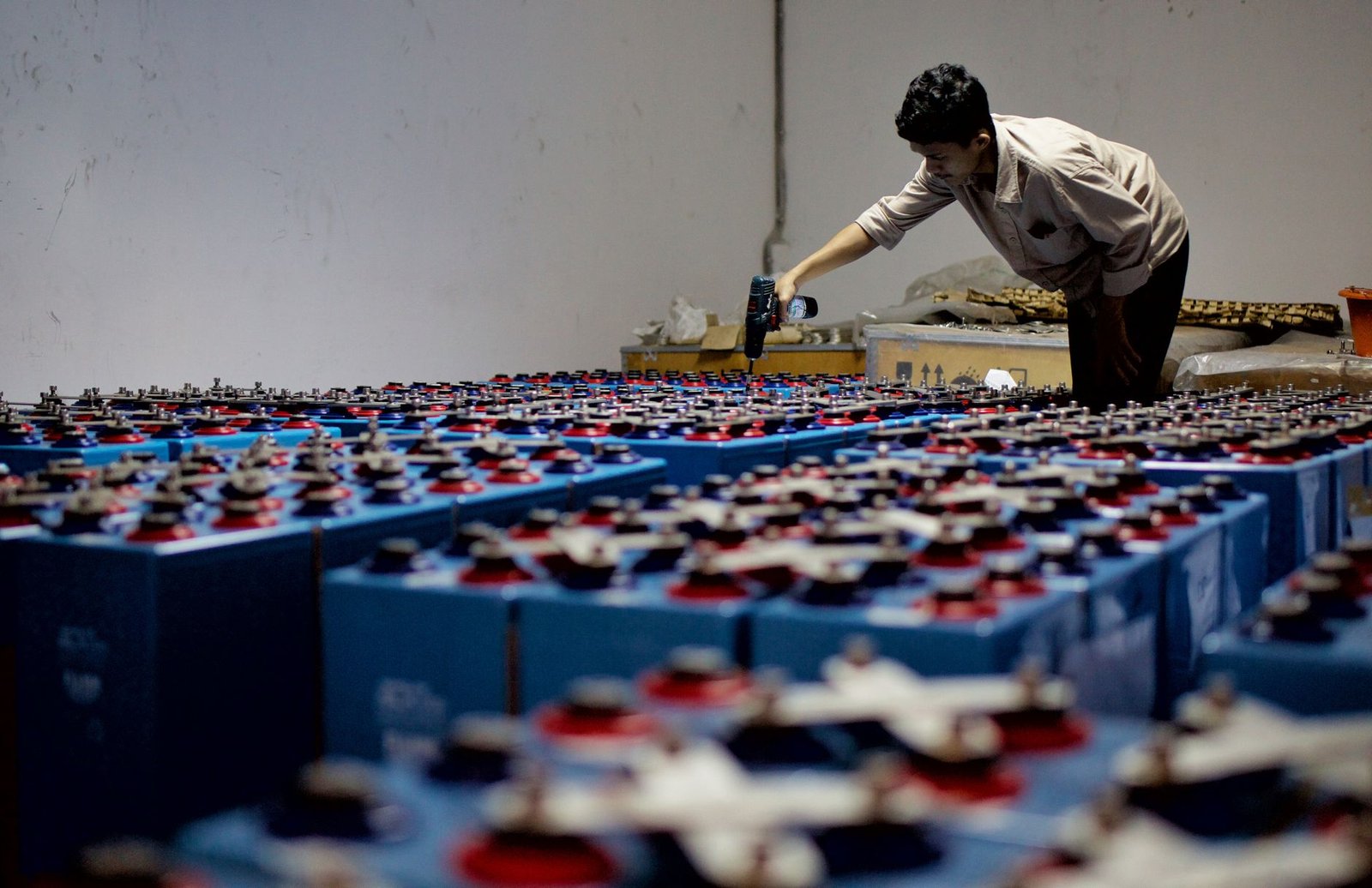
Ford’s BlueOval Battery Park Michigan is objectively impressive. The facility cost roughly $3 billion, spans about 2 million square feet, and is designed to produce around 20 gigawatt-hours of battery capacity annually, according to InsideEVs. It is among the first U.S. plants making lithium-iron-phosphate (LFP) batteries for mainstream consumer vehicles domestically. The packs going into Fathom prototypes right now use a prismatic cell format developed under a licensing deal with CATL but manufactured in Michigan. Raw materials including lithium and iron-phosphate feedstock go in one end, finished battery assemblies come out the other. Electrode production happens inside the plant. The facility is structured to meet U.S. rules on Foreign Entities of Concern.
The narrative writes itself: Ford brings battery jobs home, reduces reliance on China, proves American manufacturing can compete. Ford executives have framed building a battery factory of this scale in a few years as moving at remarkable speed. The plant is built to comply with Inflation Reduction Act requirements. It represents a genuine shift in industrial strategy.
And yet when you ask EV shoppers what stops them from buying, “the batteries are made in China” ranks nowhere near the top. Range anxiety, charge time, upfront cost, and resale uncertainty dominate. The factory location is an abstraction. The monthly payment is not.
Degradation Data vs. Buyer Fears
Battery degradation is a concrete buyer concern. People ask how long the pack will last, whether it will strand them with a worthless car in five years, if warranty coverage is real. Ford research shows roughly 92% average battery health retention for the Mustang Mach-E after five years, based on tens of thousands of vehicles and billions of miles traveled across the U.S. and Canada. After 100,000 miles, the Ford EV lineup averages about 90% battery health. Among 2,000-plus owners of 2021 models who crossed 100,000 miles, the average is around 91%. A smaller set of vehicles passed 200,000 miles and still showed roughly 88% health.
These Mach-Es use NCM chemistry, not LFP. The batteries were not made in Michigan. Many of the cells came from suppliers with Asian supply chains. And they are holding up fine. The degradation curve is gentler than buyers feared. The warranty claims are rare. Resale values on high-mileage EVs are starting to stabilize as the used market realizes the packs don’t die at 80,000 miles.
So when Ford switches to LFP production in Michigan for the upcoming Fathom model, what changes for the buyer? The pack chemistry shifts to iron-phosphate, which typically offers better cycle life and thermal stability than nickel-manganese-cobalt blends. That is a technical advantage. But the existing NCM packs were already outlasting buyer expectations. LFP mainly lowers cost and improves longevity for a problem that turned out to be less severe than predicted. The Michigan location solves a supply chain problem buyers don’t directly experience.
The IRA Tax Credit Angle
Domestic LFP battery production does carry one buyer-relevant benefit: it de-risks future tariff scenarios. If trade policy shifts and import costs spike, vehicles with domestically-produced packs avoid that exposure. The IRA tax credit structure rewards domestic content. For buyers claiming the $7,500 federal credit, compliance matters. Ford’s Michigan LFP packs are intended to check those boxes. CATL provided the technology and training, but the plant is structured so that critical materials do not come from China, Russia, or North Korea. The facility is vertically integrated.
A buyer comparing two similar EVs might choose the one with clearer credit eligibility based on the tax credit structure, not the battery’s origin story. If the credit phases out or the buyer’s income exceeds the cap, the Michigan plant loses its salience. The appeal is policy-dependent, not intrinsic to the product.
Why Factory Location Triggers Quality Assumptions
Buyers conflate manufacturing location with product quality because the two were correlated for decades in other industries. “Made in Germany” signaled precision engineering. “Made in China” once signaled cheap plastic. Those heuristics no longer map cleanly onto battery technology. CATL is the world’s largest battery maker and among the most advanced. The expertise is globally distributed. A Michigan-made LFP pack using CATL’s prismatic cell design and quality control systems is functionally a CATL-designed battery built under license. The plant’s location changes the jobs footprint and the tariff exposure. It does not change the electrochemistry.
Yet Ford’s messaging leans heavily on the domestic angle. The company highlights its roughly $3 billion investment, the Marshall facility’s footprint, the training partnership with CATL engineers who helped install quality control systems and train Ford workers to operate the equipment. This framing serves Ford’s public relations and regulatory positioning. When someone walks into a dealership, they ask about range, price, and charge time. They do not ask where the separator film was coated.
Fathom’s Actual Purchase Variables
Ford’s Fathom model is expected to begin preorders in early 2027 with production and deliveries following later, according to InsideEVs. The vehicle will use the Michigan-made LFP packs. Buyer interest will hinge on the same variables that govern every EV purchase: upfront cost relative to comparable gas models, real-world range on a single charge, availability of fast chargers on relevant routes, interior space and ride quality, brand trust in warranty support.
The Michigan factory gives Ford a more stable domestic supply chain and positions the company for future policy shifts. It is a smart operational move. But it does not solve the friction points that stop buyers at the point of sale. Those remain cost, infrastructure, and education about actual battery longevity. The degradation data is encouraging. The LFP chemistry is proven. The Michigan plant is an impressive facility. Buyers are still doing the math on monthly payments and whether a 300-mile range covers their longest annual road trip. The factory’s ZIP code is not part of that equation.