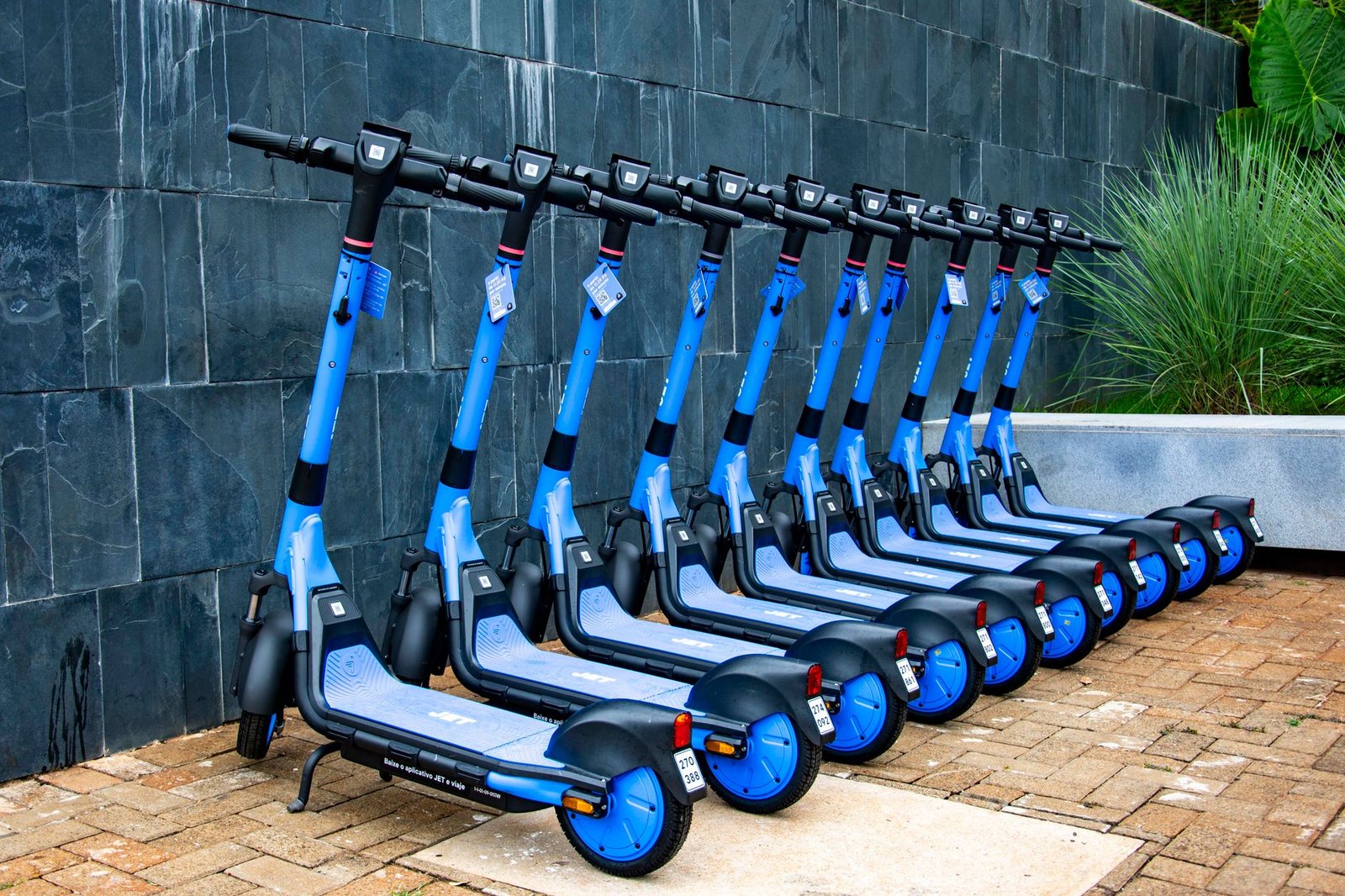
Black Friday ads for electric scooters promise the same thing every year: longer range, more power, deeper discounts. This year’s electric scooter sale cycle follows the pattern. In a market where brands cycle through aggressive discounts every few months, examining who’s actually building a sustainable business reveals significant differences in capital allocation and long-term viability.
The personal electric vehicle market sits in an odd position. Manufacturing costs have compressed. Retail prices have fallen. Yet most brands operate on razor-thin margins, burning through capital to maintain shelf space and social media presence. Some are investing in engineering that creates durable advantages. Others are optimizing for the next promotional window. The difference matters more than the discount percentage.
The Unit Economics Don’t Lie
An electric scooter requires a battery pack, motor, controller, frame, suspension components, and lights. The bill of materials for a mid-range scooter with decent range runs approximately $280 to $420, depending on battery capacity and motor power. Manufacturing assembly adds $60 to $90. Ocean freight from Asian factories to US distribution centers adds another $25 to $40 per unit when shipping in container volumes.
That puts the landed cost between roughly $365 and $550 for a scooter that typically retails between $699 and $1,299. The gross margin looks healthy until you account for the other costs. Warehousing and fulfillment eat 8 to 12 percent of the sale price. Payment processing takes 2.5 to 3 percent. Marketing acquisition costs in the direct-to-consumer channel run $80 to $150 per customer. Customer service and warranty claims subtract another 5 to 8 percent over the product’s first year.
When a brand runs a promotion dropping an $899 scooter to $599, the math changes fast. Taking the landed cost of a scooter in that tier (roughly $450 to $550), the gross margin that was around $350 to $450 at full price shrinks to roughly $50 to $150. After operating costs, many promotional sales generate zero profit or operate at a loss. Sustainable promotions clear inventory or acquire customers the brand will retain. Business models dependent on constant promotions rent shelf space rather than building equity.
Capital Allocation Separates the Players
Companies in this market allocate capital in strikingly different ways. Some invest heavily in product development: better battery management systems, more efficient motors, improved suspension geometry, waterproofing that actually works. These investments show up as lower warranty claim rates and longer product lifespans. They cost money upfront but create defensible value.
Others optimize for cost reduction and marketing spend. They source standard components, apply branding, and push volume through paid advertising and influencer partnerships. This approach generates faster initial growth but creates no technical moat. When the next electric scooter sale starts, customers have no particular reason to choose your brand over the competitor offering a similar spec sheet at a lower price.
The capital efficiency difference compounds over time. A company spending $2 million annually on engineering might develop a battery management system that extends usable pack life and reduces thermal failures. That engineering cost gets amortized across every unit sold. The resulting product reliability reduces warranty costs by $40 to $70 per unit and increases customer satisfaction scores, which drives organic word-of-mouth acquisition.
Compare that to spending $2 million on paid social advertising. You’ll acquire customers, but you’ve created no lasting asset. Next year, you need another $2 million to acquire more customers. The first approach builds compounding returns. The second approach requires linear scaling of spend to maintain growth.
The Inventory Trap
Seasonal demand patterns create a capital allocation challenge that reveals which companies understand their economics. Electric scooter sales spike in spring and early summer, then crater in winter except for holiday promotional periods. A company that manufactures year-round to maintain factory relationships ends up sitting on inventory for six to nine months.
Carrying costs for that inventory run approximately 20 to 25 percent annually when you account for warehouse space, insurance, and the opportunity cost of capital. A scooter that costs $400 to manufacture ties up that capital for half a year or more, adding roughly $40 to $50 in carrying costs before it sells. Companies that don’t carefully manage this dynamic find themselves forced into aggressive promotions just to free up cash, which trains customers to wait for sales rather than buying at full price.
Smart operators manufacture in batches timed to seasonal demand curves and maintain just enough safety stock to handle variability. This requires accurate demand forecasting and strong relationships with contract manufacturers willing to accept uneven production schedules. It’s operationally harder but financially sounder. The companies that can’t execute this end up trapped in a cycle where every electric scooter sale becomes necessary rather than strategic.
What the Warranty Terms Actually Tell You
Read the warranty fine print on electric scooters and you’ll learn more about capital allocation than any marketing material reveals. A company confident in its engineering offers meaningful coverage: two years on the frame, one year on the battery with clear capacity guarantees, six months on wear items like tires and brake pads.
Warranty terms that sound good in headlines but contain restrictive conditions tell a different story. “Lifetime frame warranty” that excludes anything related to water damage, impact, or “improper use.” Battery warranties that cover defects but define normal degradation so broadly that few claims qualify. These terms signal that the company expects high failure rates and is managing future warranty liability rather than engineering reliable products.
The actuarial math matters. If your product has a 12 percent failure rate in year one requiring $150 average repair costs, you’re looking at $18 in expected warranty expense per unit sold. Build that into your pricing and warranty terms, and you can operate sustainably. Try to hide it with restrictive terms, and you’ll spend the capital fighting customer service battles and managing reputation damage instead.
The Component Sourcing Decision
Battery cells represent the single largest cost input, typically 35 to 45 percent of the total bill of materials. Brands face a capital allocation choice: source commodity cells from large suppliers at competitive prices, or invest in developing relationships with cell manufacturers to get custom specifications optimized for your use case.
Commodity sourcing costs less upfront. You pay market prices and your capital goes to inventory rather than development. But you get the same cells everyone else uses, with the same performance characteristics and the same degradation curves. Your product performs identically to competitors using the same cells.
Custom cell development requires upfront investment, typically $200,000 to $500,000 to work with a manufacturer on optimized chemistry, form factor, or thermal characteristics. That cost gets amortized across future production, adding $5 to $15 per unit depending on volume. But if the development work yields cells that charge meaningfully faster or survive more charge cycles, you’ve created differentiation that matters.
Most brands take the commodity path because it requires less capital and delivers faster time to market. The ones willing to invest in custom development create technical advantages that persist across product generations and justify price premiums that stick even during promotional periods.
Signals That Separate Investment From Desperation
Watch how companies talk about their products during promotional periods. Marketing that emphasizes spec sheet numbers (top speed, range claims, motor watts) signals commodity positioning. Marketing that explains specific engineering choices (why they selected a particular suspension geometry, how their battery management system handles temperature extremes, what testing they conducted) signals confidence in technical differentiation.
Look at pricing consistency across channels. If the same scooter sells for wildly different prices on the company site, Amazon, and big-box retail within the same month, you’re seeing poor inventory management or desperation to move units. Consistent pricing with planned promotional windows shows disciplined operations.
Check whether the company sells replacement parts at reasonable prices with clear availability. A brand that stocks batteries, controllers, motors, and structural components for products three years old is investing in customer lifetime value. A brand where replacement parts are unavailable or priced close to new unit costs is optimizing for initial sale volume, not durability.
Pay attention to product revision cycles. Annual model updates that change cosmetic details but keep the same core components signal marketing-driven product management. Updates every 18 to 24 months with meaningful technical improvements (better battery chemistry, more efficient motors, improved weather sealing) signal engineering-driven development with proper capital allocation for R&D.
The electric scooter sale pattern will continue. Promotional cycles work too well at driving transaction volume for brands to abandon them. The companies allocating capital toward durable competitive advantages rather than the next marketing campaign are building businesses that can sustain profitable growth. The ones optimizing for promotional efficiency are trading long-term viability for short-term revenue. The discount percentage doesn’t tell you which category you’re buying from. The engineering details do.