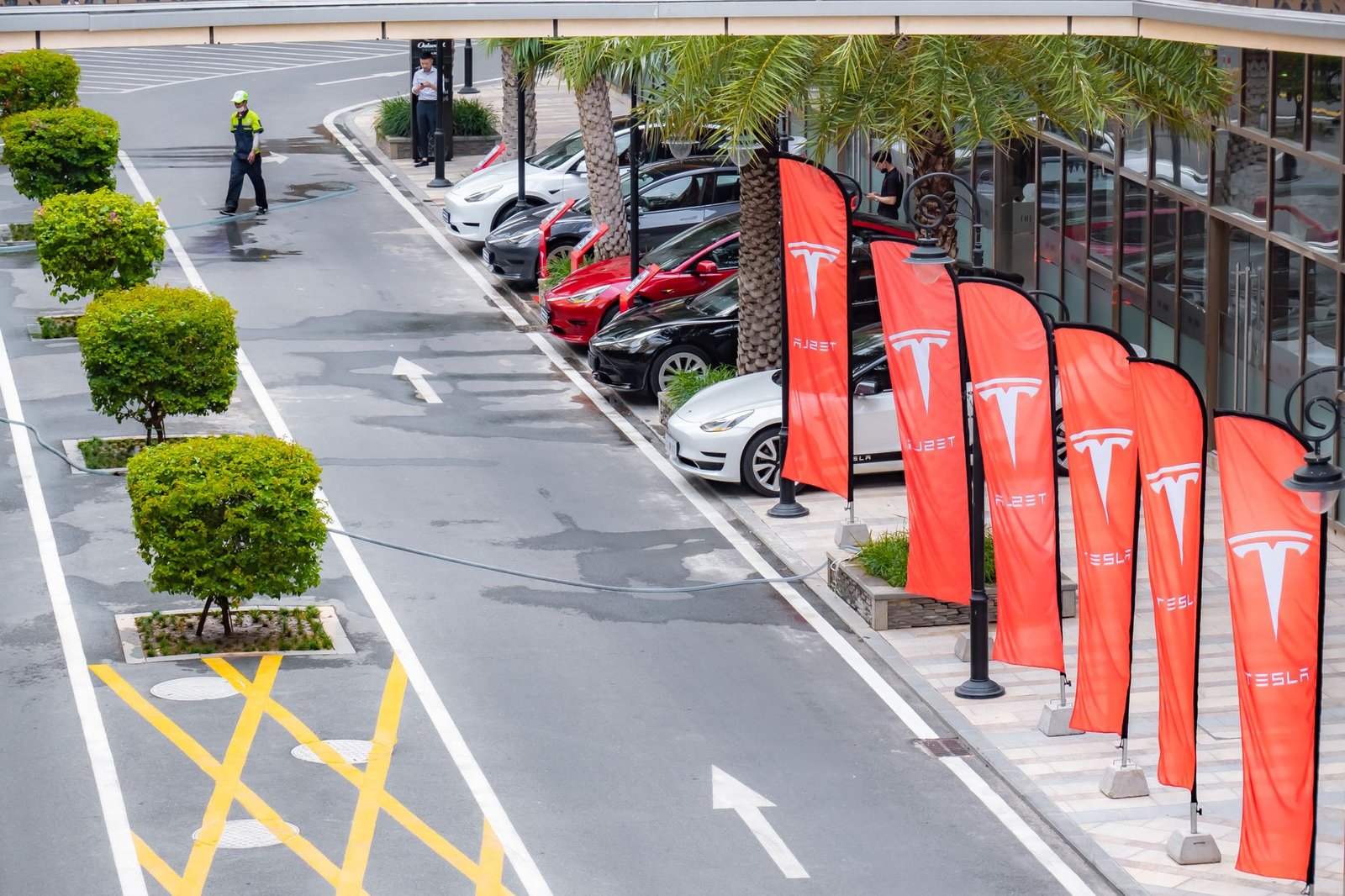
Germany’s electric vehicle adoption has grown substantially over the past five years. While specific monthly figures vary across sources, the trajectory is clear: battery-electric vehicles now represent a meaningful and growing portion of new car registrations, though they still trail combined gasoline and diesel sales in most months. This trajectory raises a question most coverage ignores: what happens when EVs stop being a niche product and become mainstream?
Market share in automotive isn’t like market share in smartphones. When EVs cross from 15% to 35% of monthly sales, the infrastructure demands don’t just double. They multiply in ways that create bottlenecks nobody planned for.
Consider what 35% penetration means in practical terms. Germany registers roughly 2.8 million new cars annually. At 35% EV share sustained across a year, that’s roughly 980,000 battery-electric vehicles entering the fleet. Each one needs charging infrastructure, grid capacity, and service networks trained on high-voltage systems. More critically, each one represents a manufacturing commitment made 18-24 months earlier, when automakers had to guess what demand would look like.
The Germany EV market share numbers reflect something more fundamental than consumer preference shifting. They show what happens when regulatory pressure, fleet emission requirements, and company car tax advantages align. German company car rules make EVs significantly cheaper for business buyers through lower benefit-in-kind taxation. Combine that with EU fleet emission targets that fine automakers €95 for every gram of CO2 per kilometer over their fleet-average limit, multiplied by every vehicle sold, and you get manufacturer behavior that prioritizes EV sales even at thin margins.
This creates a market dynamic that doesn’t match typical supply and demand curves. Automakers aren’t just responding to customer desire. They’re shaping demand through pricing and availability, making EVs the rational financial choice for fleet buyers while limiting production of combustion vehicles that would push them over emission thresholds.
The Manufacturing Constraint Nobody Sees Coming
High monthly EV share creates a problem that doesn’t show up in sales statistics: production flexibility disappears. When Volkswagen commits to producing hundreds of thousands of ID.4 units annually, that’s not just an assembly line decision. It’s a battery supply contract signed years prior, stamping equipment that costs eight figures to retool, and supplier agreements with minimum volume commitments.
Legacy automakers built their businesses on flexibility. Model mix could shift month to month based on demand. High demand for SUVs? Increase their production. Sedans slowing down? Dial them back. This works because gasoline, diesel, and hybrid vehicles share most components. Engines, transmissions, and fuel systems have different specifications, but the manufacturing processes overlap enough that factories can adjust.
EV production doesn’t work this way. Battery-electric vehicles and combustion vehicles share almost nothing in their powertrains. You cannot convert an engine production line to make battery packs on short notice. The skills required are different, the supply chains are separate, and the capital equipment is specialized. When an automaker announces an EV production target, they’re making a bet they cannot easily hedge.
This rigidity means that high Germany EV market share months might alternate with lower ones, not because demand fluctuates, but because production capacity hits hard limits. A factory configured for a given EV volume cannot simply nudge output upward; meaningful increases require retooling that takes quarters, not weeks.
The battery supply chain amplifies this constraint. Cells come from factories that take two to three years to build and cannot easily expand. When LG or CATL commits to supplying VW, they’re building capacity for a specific volume. If VW suddenly needs 20% more batteries, those cells don’t exist. They have to come from a factory that doesn’t exist yet.
Where the Grid Actually Stands
Germany’s electrical grid wasn’t designed for a rapid influx of EV charging load. The charging infrastructure conversation usually focuses on public fast chargers, which are visible and easy to count. The real constraint is residential and workplace charging, which accounts for the large majority of actual charging behavior.
A single apartment building with 50 units, where 15 residents buy EVs in the same year, can need electrical service upgrades costing €100,000 or more. Transformers and service connections sized for mid-20th-century electricity use cannot handle 15 vehicles drawing 7kW simultaneously every evening. This isn’t a technology problem. The hardware exists. It’s a coordination and capital problem spread across millions of buildings with different owners, utility companies with different upgrade schedules, and permitting processes that move slower than EV adoption.
German utilities have started implementing “smart charging” rules, which allow the grid operator to throttle charging speeds during peak demand. This works technically but creates a user experience problem. EV owners who plug in expecting a full charge by morning may find their vehicle short of target because the grid needed to limit load. This doesn’t break anything, but it erodes the convenience advantage that makes EVs attractive.
The scale of grid upgrades required becomes clearer when you model it out. Germany’s total electricity consumption is roughly 500 TWh annually. Adding one million EVs driving 15,000 km per year at 20 kWh per 100km adds roughly 3 TWh of demand, which sounds manageable at about 0.6% of total consumption. But that demand concentrates in specific hours and specific neighborhoods. Grid capacity isn’t about annual totals. It’s about peak load on individual transformers.
The Profitability Fiction
Most coverage of Germany EV market share treats these sales as equivalent to combustion vehicle sales. They are not. Volkswagen has reportedly lost thousands of euros on each small EV sold, depending on the market and specification. Stellantis has stated publicly that small EVs are difficult to make profitable at current battery costs. BMW and Mercedes maintain better margins, but largely on premium EVs priced well above €60,000.
This matters because high EV market share sustained through thin or negative margins doesn’t represent a stable market. It represents a transition period where automakers accept weak unit economics to meet regulatory requirements and avoid fines. The question isn’t whether EVs can achieve high market share. They clearly can when automakers are willing to subsidize them. The question is what happens when that subsidy ends.
Battery pack costs have fallen dramatically, from well over $1,000 per kWh in 2010 to roughly $130 per kWh in recent years at the pack level for leading manufacturers. But they haven’t fallen fast enough to make mass-market EVs profitable at combustion vehicle price points. A VW Golf costs roughly €28,000 and generates a profit. An ID.3 with broadly comparable specifications sells for meaningfully more and struggles to make money. Much of that gap traces back to battery cost.
If pack costs need to reach roughly $80 per kWh for price parity, and they’re currently near $130, that’s about a 40% reduction still required. Battery costs have been falling at roughly 10-15% annually in recent years, which implies several more years before break-even, assuming the rate holds. But cost reduction rates tend to slow as technologies mature. The easy gains from scaling production are largely captured. Further reductions require chemistry improvements and manufacturing innovations that are harder to schedule.
What the Sales Mix Reveals
Looking at which EVs actually sell in high-share months reveals more than the headline number. Company car purchases make up a large share. Many private buyers still favor combustion vehicles or wait for used EVs. This split matters because company car advantages are policy choices that can change. Germany’s current rules make EVs attractive for business use through lower benefit-in-kind taxation. If that policy shifts, demand patterns could reverse quickly.
The used EV market in Germany is also thin compared to combustion vehicles. A three-year-old diesel Golf has a well-established resale value and a deep market of buyers. A three-year-old ID.3 has neither. Residual values are uncertain, which makes leasing companies nervous and increases monthly payments. This creates a feedback loop where high new EV sales don’t translate to high used EV availability, keeping total fleet electrification slower than new sales suggest.
The Indicators That Matter
Watching monthly Germany EV market share numbers is interesting but not particularly informative. Better indicators: residential grid connection approval times, battery cell production capacity coming online in Europe, and automaker profit margins on EVs in the €25,000 to €35,000 range.
If grid connection times start extending beyond six months, that signals infrastructure is falling behind adoption. If European battery factories start operating well below their rated capacity utilization, that suggests demand is softer than manufacturing commitments assumed. If a major automaker reports consistently profitable sales of a mass-market EV, that indicates the transition has reached sustainability.
The current situation is high sales supported by policy and thin manufacturer margins. That can continue for years, but it’s not the same as a self-sustaining market. The real milestone won’t be a 50% EV market share spike in a single month. It will be 30% sustained across a year with positive unit economics and without grid strain. We’re not there yet.