Dongfeng Motor just unveiled an EV charger with 1.5 MW peak output, capable of delivering 1,500 amps at 1,000 volts to a single vehicle. That’s enough to theoretically add 400 miles of range in under ten minutes, assuming the car can accept it. The technical spec sheet reads like an arms race: BYD’s Flash Chargers promise five-minute top-ups, while battery makers like CATL claim their cells can handle 10-80% charges in around five minutes. Grid infrastructure can’t support widespread deployment of chargers this powerful without expensive substation upgrades that utility economics don’t currently justify.
Dongfeng’s charger can serve two EVs simultaneously with automatic power splitting between cables, maintains roughly 96.7% efficiency, and handles voltage ranges from 150V to 1,000V. The company already plans next-generation units outputting 720 kW to 2.4 megawatts with integrated battery storage. On paper, this solves range anxiety. In practice, it creates a different problem: the electrical infrastructure required to make these chargers ubiquitous doesn’t exist, and building it costs more than most charging networks can afford.
Grid Economics Versus Megawatt Dreams
A 1.5 MW charger requires the same instantaneous power draw as roughly 1,000 to 1,500 homes. Installing one means either tapping into existing high-voltage distribution lines with spare capacity or paying the utility to run new service. In dense urban areas, that second option can cost several hundred thousand to a few million dollars per site, depending on distance from the nearest substation and available capacity. Multiply that by the hundreds of chargers needed to serve a metropolitan area, and you’ve built a business model where each charging session needs to generate substantial revenue just to cover debt service.
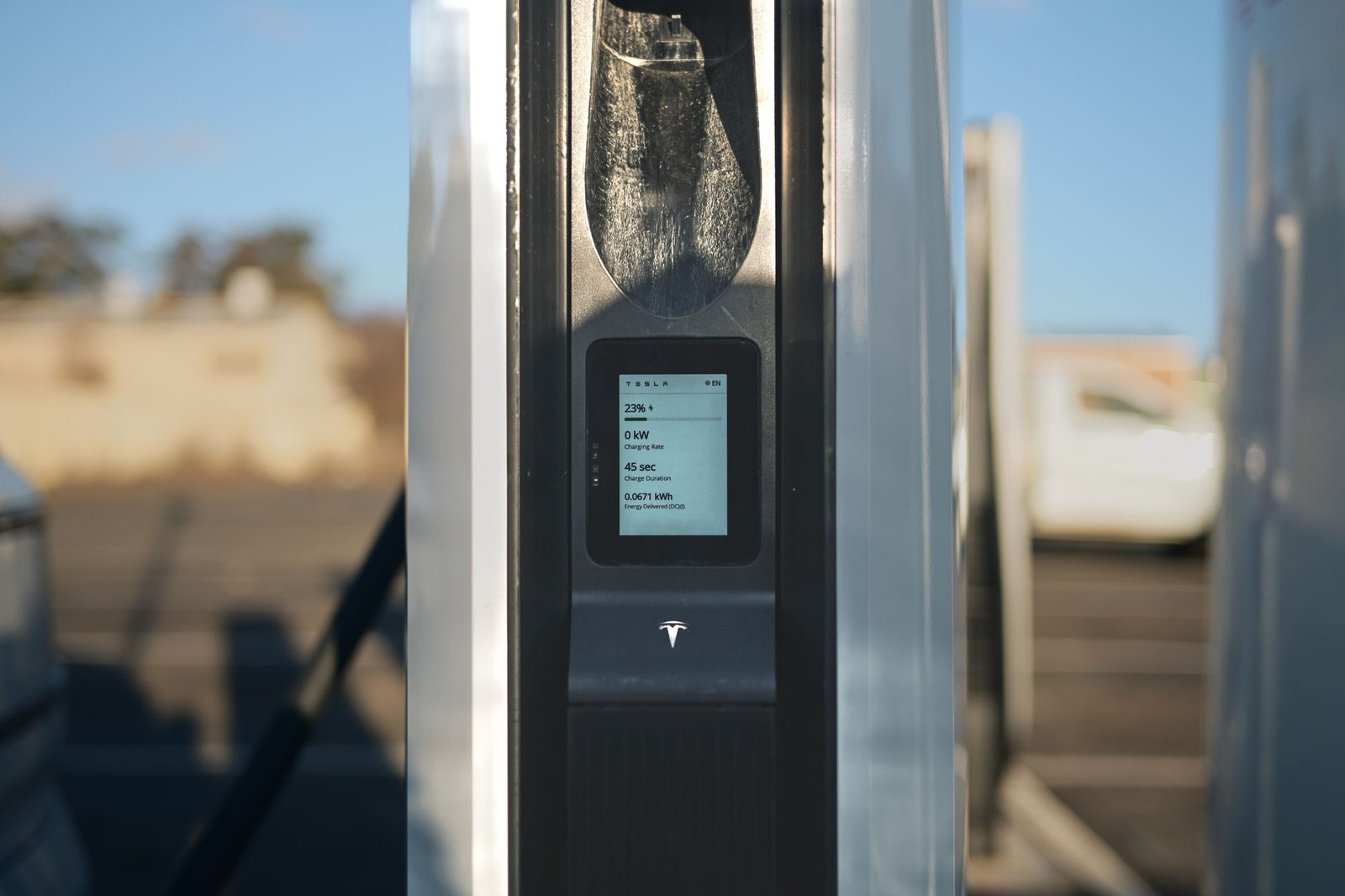
Peak-demand charges compound this. Grid operators typically bill commercial customers based on their highest 15-minute power draw during a billing cycle. A single 1.5 MW unit operating at full capacity for ten minutes could set a demand charge that applies to the entire month’s bill. For a charging station running multiple high-power units, monthly demand charges can run into the tens of thousands of dollars even if total energy delivered is modest. This is one reason Tesla Superchargers rarely exceed 250 kW per stall: the economics get harder at higher power levels unless utilization stays consistently high, which typical consumer charging patterns don’t support.
Dongfeng’s integrated battery storage in future models addresses part of this. A sufficiently large buffer battery can draw power from the grid slowly during off-peak hours and discharge rapidly during charging sessions, cutting demand charges. But battery storage capable of buffering a 1.5 MW charger is expensive; grid-scale lithium storage runs on the order of several hundred dollars per kWh installed, so a 2 MWh system suitable for smoothing multiple charging sessions can run north of $500,000 before ancillary costs. Add that to the base site development, and the payback timeline can extend past a decade unless charging prices rise substantially.
Battery Acceptance Rates Trail Charger Output
Dongfeng’s charger can deliver 1,500 amps, but most EV battery packs can’t accept that current without thermal damage. Lithium-ion cells generate resistive heat during fast charging proportional to current squared. Doubling charge current roughly quadruples that resistive heating. A pack designed for 350 kW charging already pushes thermal management systems hard. Scaling to 1.5 MW means either dramatically increasing cooling capacity (adding weight, cost, and complexity) or accepting reduced cycle life.
CATL’s Shenxing battery line reportedly charges 10-80% in around five minutes at peak power, but that requires specific cell chemistry and thermal architecture. Switching from a standard lithium-ion pack to a fast-charge-optimized design adds meaningful cost per vehicle in battery and thermal management. Automakers building for the mass market won’t absorb that unless customers demonstrate willingness to pay premiums for charge speed. Current data suggests they largely won’t: most EV buyers charge primarily at home or work, using public fast charging mainly on road trips a handful of times per year.
Dongfeng’s charger handles up to 1,000V, but most current EVs run 400V or 800V architectures. Moving to higher voltage reduces current for a given power level (1.5 MW at 1,000V is 1,500 amps; at 800V it’s about 1,875 amps), easing thermal stress. But higher-voltage systems require more expensive semiconductors, heavier insulation, and stricter safety protocols. The cost increment is real, and legacy platforms can’t retrofit to higher voltage without complete electrical architecture redesigns costing hundreds of millions in development.
Commercial Incentives Versus Technical Capability
Fleet operators running delivery vans or ride-hail vehicles value fast charging because vehicle downtime directly cuts revenue. A taxi sitting at a charger for 30 minutes loses fares it could otherwise earn. Cutting that to ten minutes has clear economic value, potentially justifying higher per-kWh charging prices. But consumer buyers don’t calculate downtime the same way. They compare fast-charging time to gasoline fill-ups, expect parity, and resist paying premiums.
Charging networks won’t deploy expensive 1.5 MW infrastructure until vehicle adoption justifies utilization. Automakers won’t pay for 1,000V architectures and ultra-fast-charge battery chemistry until charging networks deploy the infrastructure. Both sides wait for the other to move first, which is part of why fast-charging speeds have largely settled around 250-350 kW for premium vehicles and roughly 150 kW for mainstream models. The gap between technical possibility and economic deployment persists.
BYD’s five-minute charge claims illustrate the framing problem. Those numbers assume starting from a low state of charge, using a charger operating at peak output, under optimal temperature conditions, with a battery pack specifically designed for ultra-fast charging. Real-world sessions typically run longer because users arrive at 30% charge (not 10%), ambient temperature isn’t ideal, or the charger splits power between multiple vehicles. Dongfeng’s automatic power splitting feature makes this explicit: with two cars charging simultaneously, the available power is divided between them, increasing charge time versus the headline single-vehicle spec.
Storage Economics Don’t Close the Gap
Battery storage at charging sites sounds elegant until you calculate payback. Assume a site with four 1.5 MW chargers wants enough storage to shave peak demand charges. The upfront storage cost easily runs into the millions, while monthly savings from avoided demand charges are meaningful but bounded. Simple payback often stretches to several years before considering financing costs, maintenance, or battery degradation over that period. Most charging networks operate on venture capital expecting exits within five years, not infrastructure investments with decade-plus horizons.
The alternative is limiting charger availability to match grid capacity. Instead of enabling 1.5 MW output continuously, operators could offer it only during off-peak hours or when site battery storage has sufficient charge. But drivers don’t want to check an app to learn whether high-speed charging is available before routing to a station. Inconsistent performance degrades the value proposition versus slower, more predictable charging.
Dongfeng’s next-generation plans targeting 720 kW to 2.4 MW suggest they understand the commercial reality. Building a range of products lets fleet operators choose appropriate power levels based on duty cycle requirements and site economics. A depot serving overnight delivery vans might install 720 kW chargers sufficient for their needs at lower grid infrastructure cost than 1.5 MW units. A highway corridor site serving long-haul trucks justifies 2.4 MW but requires utility partnerships and regulatory support most private operators can’t secure alone.
Reallocating What the Market Needs
A site with eight 350 kW chargers can serve more vehicles per day than four 1.5 MW chargers at lower installation cost and better grid compatibility. Total throughput matters more than peak rate for consumer applications. The obsession with ultra-high power reflects competitive positioning as much as customer demand analysis.
Fleet charging represents the better near-term application for megawatt-scale infrastructure. A distribution center operating 100 electric delivery vans needs concentrated charging capacity timed to shift schedules. Installing multiple high-power chargers at a single location with dedicated grid connection and managed load profiles solves the economics that defeat consumer networks. Dongfeng’s claim that their next-generation units will be “compatible with both passenger and commercial EVs” suggests they recognize this bifurcation.
Building far more 150 kW chargers reduces wait times and eases range anxiety through ubiquity, not speed. Norway is the clearest example: its EV adoption reached roughly 90% of new car sales, driven less by ultra-fast charging than by the fact that chargers are widely available and by strong tax and pricing incentives favoring EVs over gasoline vehicles. The United States keeps funding headline-grabbing megawatt projects while charger density remains inadequate for mass adoption.
Outlook
Dongfeng’s 1.5 MW announcement is real engineering for a market segment that mostly doesn’t exist yet. Fleet operators will deploy ultra-high-power charging where economics support it. Consumer networks will continue adding chargers in the 250-350 kW range because they balance capability with cost. The gap between what’s technically possible and what’s economically viable remains wide, and grid constraints ensure it stays that way until utilities reform rate structures or governments subsidize infrastructure upgrades.
Battery technology will eventually support faster charge rates without thermal compromise, but that timeline stretches years, not months. Cell chemistry improvements happen incrementally. Automakers won’t redesign electrical architectures for each generation. The 800V systems entering production now will define much of the mainstream EV market through the rest of the decade. By then, charger technology will have advanced further, perpetuating the gap between capability and deployment.
Dongfeng solved an engineering problem but not the economic or infrastructural barriers preventing deployment. Until grid infrastructure costs fall or utilization models improve, ultra-high-power charging remains largely a technical demonstration rather than a scalable consumer business. The companies that win the next decade of EV charging won’t have the most impressive peak specs. They’ll have the most chargers in the right locations at prices customers accept.