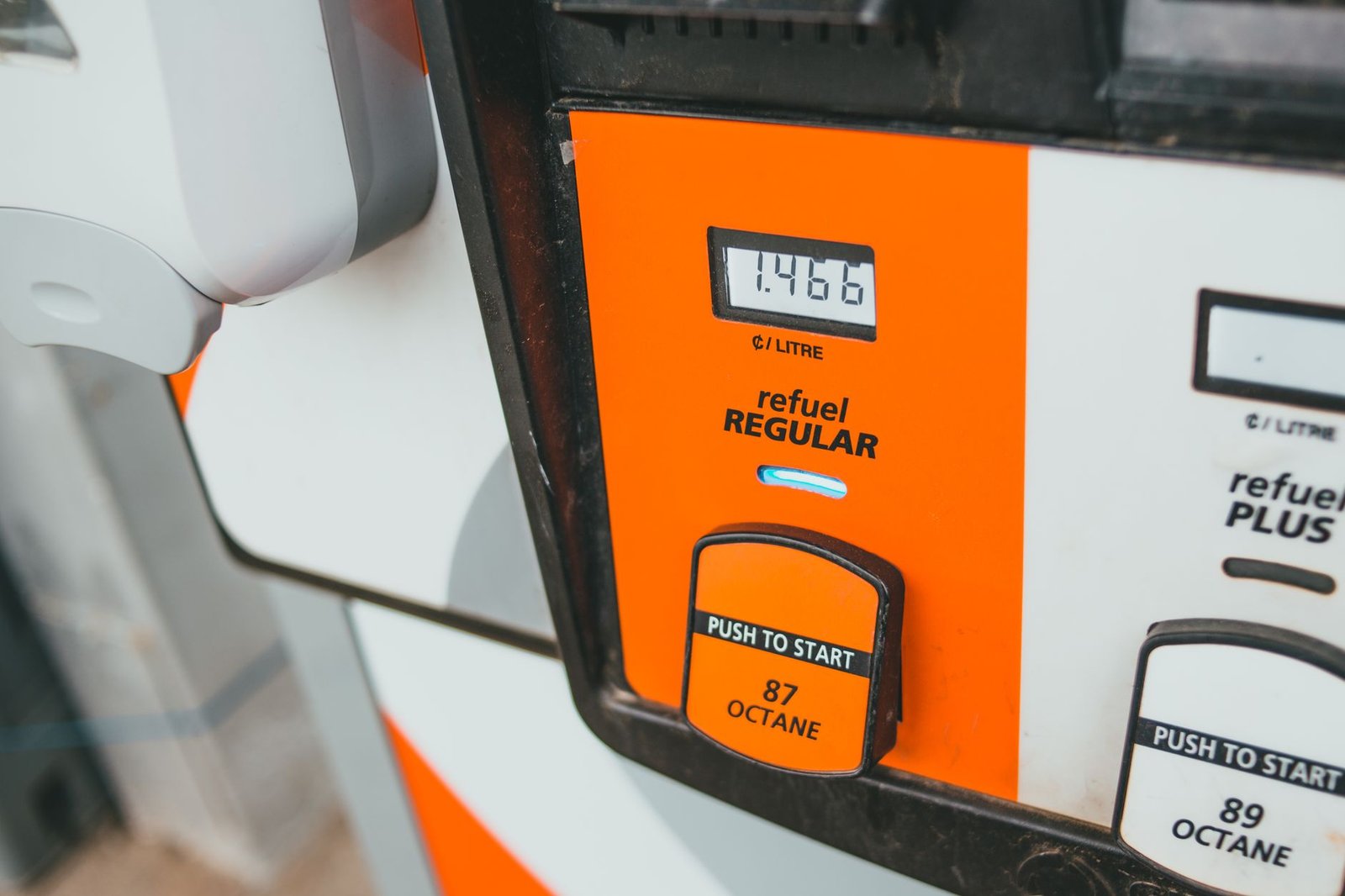
BP’s premium pump in Chicago hit $7.19 per gallon this past spring, and the predictable question surfaced again: what price finally breaks the last holdouts? Electrek surveyed their readers on exactly this, collecting over 2,800 responses. Nearly half said no price would do it. That answer matters more than the number itself, because it reveals the actual friction in EV adoption: for a meaningful segment of buyers, fuel cost isn’t the binding constraint.
The survey framed the question as pain-at-the-pump economics, asking respondents to estimate the threshold where anti-EV skeptics would capitulate. The modal answer wasn’t $8, $10, or even $15 per gallon. It was effectively infinity: a plurality believed some drivers would never switch regardless of gasoline cost. On its face, this reads as irrational. Plug-in vehicles offer lower operating costs per mile in nearly every jurisdiction with grid access, and the gap widens as fuel prices rise. But buyer behavior doesn’t optimize around operating cost alone. It optimizes around perceived risk, switching costs, and whether the alternative feels like a concession.
What the Survey Actually Measured
The Electrek poll captured sentiment, not purchase intent. Respondents were asked to model someone else’s behavior, specifically the behavior of declared EV skeptics. That introduces two layers of abstraction. First, the respondents themselves skew heavily toward EV-interested demographics, reading a site dedicated to electric mobility. Second, they’re predicting the breaking point of a cohort defined by resistance. The resulting answers tell you more about how EV advocates view holdouts than about holdout behavior itself.
But the core finding still holds weight. If you ask EV-sympathetic readers what it would take to move the unmovable, and half say “nothing,” they’re signaling something real about the adoption curve. They’ve observed that cost sensitivity has limits when the product category itself carries stigma, uncertainty, or operational trade-offs that money doesn’t solve. The question isn’t whether $12-per-gallon gas would shift some buyers. It’s whether price alone can overcome the non-price objections that define the last cohort of the market.
The Physics of Buyer Inertia
Switching costs in automotive purchases aren’t purely financial. A buyer replacing a paid-off F-150 with a Lightning isn’t just comparing fuel expenses. They’re evaluating whether the Lightning can tow their camper without watching range collapse under load, whether their rural route has charging infrastructure, whether their electrician quotes $2,000 or $8,000 for a home installation, and whether they trust Ford’s service network to support an EV drivetrain over ten years of ownership. Each of these introduces uncertainty that a gasoline savings calculation doesn’t address.
The capital outlay matters differently, too. EV prices have fallen, but the upfront premium over comparable ICE vehicles still exists for most segments. A buyer spending $45,000 on a gas-powered SUV might face $52,000 for the EV equivalent, a $7,000 premium. If that buyer drives 12,000 miles annually and gasoline averages $4 per gallon, the fuel savings recover the difference slowly. At $7 per gallon, payback accelerates. But if the buyer’s planning horizon is five years, the total savings materialize gradually rather than as a monthly budget item that changes behavior. The savings are real but back-loaded and abstract. The $7,000 premium is immediate and concrete.
Risk tolerance skews the calculation further. Gasoline infrastructure is ubiquitous and proven. Charging infrastructure is improving but remains uneven, particularly in rural and exurban markets. A buyer who occasionally drives 300 miles to visit family isn’t optimizing for the 50 weeks per year they commute 20 miles. They’re optimizing to avoid the scenario where they’re stranded or forced into a 45-minute charging stop with two kids in the back seat. That scenario might occur twice a year, but it dominates the purchase decision because it represents acute inconvenience that gasoline vehicles never impose.
Behavioral Guardrails in Action
The survey responses pointing to “never” aren’t necessarily irrational. They reflect a realistic assessment that some buyers weight non-economic factors more heavily than fuel cost. For a segment of truck buyers, diesel torque and refueling speed aren’t trade-offs they’re willing to make even if operating cost doubles. For drivers in apartment complexes without charging access, the inconvenience of relying on public infrastructure doesn’t disappear at any gasoline price. These aren’t irrational preferences. They’re constraints that fuel cost alone doesn’t remove.
Another cohort resists on identity grounds. For some buyers, an EV represents alignment with policy mandates or cultural signaling they reject. Telling this group that $10 gas justifies switching misses the point. They’ll adjust consumption, carpool, or buy a smaller ICE vehicle before they adopt a category they view as politically imposed. You can dismiss this as culture-war nonsense, but it’s real behavior with real market impact. Automakers trying to forecast EV penetration rates can’t ignore it just because it’s inconvenient.
The gap between stated preference and actual behavior complicates this further. Buyers who claim no price would move them might switch at $9 per gallon when their Tahoe needs replacement and the EV tax credit stacks with state incentives. Or they might not. Revealed preference only emerges when the actual decision arrives, and by then, the variables have shifted: EV range improved, charging networks expanded, or their neighbor bought one and reported a positive experience. Price is one input among many, and its weight varies depending on what else changed.
Capital Discipline and the Last Cohort
Automakers face a sequencing problem. To reach the final cohort of buyers, they need charging infrastructure that justifies the switch, but charging networks expand only when utilization supports the capital investment. That utilization depends on EV adoption, which won’t accelerate until infrastructure improves. Gasoline price spikes can break the deadlock temporarily, pushing marginal buyers into the market and improving the unit economics for charging operators. But sustained infrastructure growth requires sustained demand, not spikes.
The cost structure of EVs hasn’t reached full parity with ICE vehicles in most segments, despite falling battery prices. Buyers making purchase decisions today compare current prices, not projected 2027 prices. If gas prices rise but EV prices remain elevated due to supply chain constraints or battery material costs, the effective premium persists. A buyer facing $7 gasoline and a $10,000 EV premium still performs the payback math, and if the answer is several years, many will wait. They’ll drive their current vehicle longer, hoping either EV prices fall or gas prices moderate.
Hybrids complicate the picture further. For buyers unwilling to commit fully to plug-in architecture, hybrid drivetrains offer a middle path: lower fuel consumption without range anxiety or charging logistics. If gas prices rise, hybrids capture buyers who might otherwise have considered EVs, delaying full electrification. The optimal strategy for these buyers might be a plug-in hybrid, capturing electric-only range for daily commutes while retaining ICE backup for long trips. That shifts the question from “what gas price triggers an EV switch” to “what gas price triggers PHEV adoption,” which is a different adoption curve entirely.
The Actual Lesson
The survey’s real insight isn’t the specific dollar figure respondents predicted. It’s the recognition that price sensitivity has structural limits. For a significant portion of the market, fuel cost isn’t the primary constraint. Infrastructure access, upfront capital, perceived risk, and non-economic preferences all bind before price does. Automakers and policymakers optimizing around fuel cost alone are solving the wrong equation.
This doesn’t mean gas prices are irrelevant. Higher fuel costs shift the margin, pulling forward some purchases and improving EV economics for fleet operators and high-mileage drivers. But the survey respondents who answered “never” weren’t being obstinate. They were observing that the last cohort of buyers won’t switch purely on operating cost, because their objections aren’t purely economic. Convincing them requires solving for charging access, reducing upfront cost, and proving long-term reliability. Fuel price is one lever, but it’s not the binding constraint for the buyers who matter most to reaching full electrification.
The path to high EV penetration runs through buyers who don’t care about gas prices as much as they care about whether the vehicle works for their specific use case. Understanding that is worth more than any survey about hypothetical pump prices.
Excerpt: A survey asking EV advocates what gas price would convert holdouts found nearly half said no price would do it, revealing that for a meaningful share of remaining buyers, fuel cost isn’t the binding constraint on adoption.