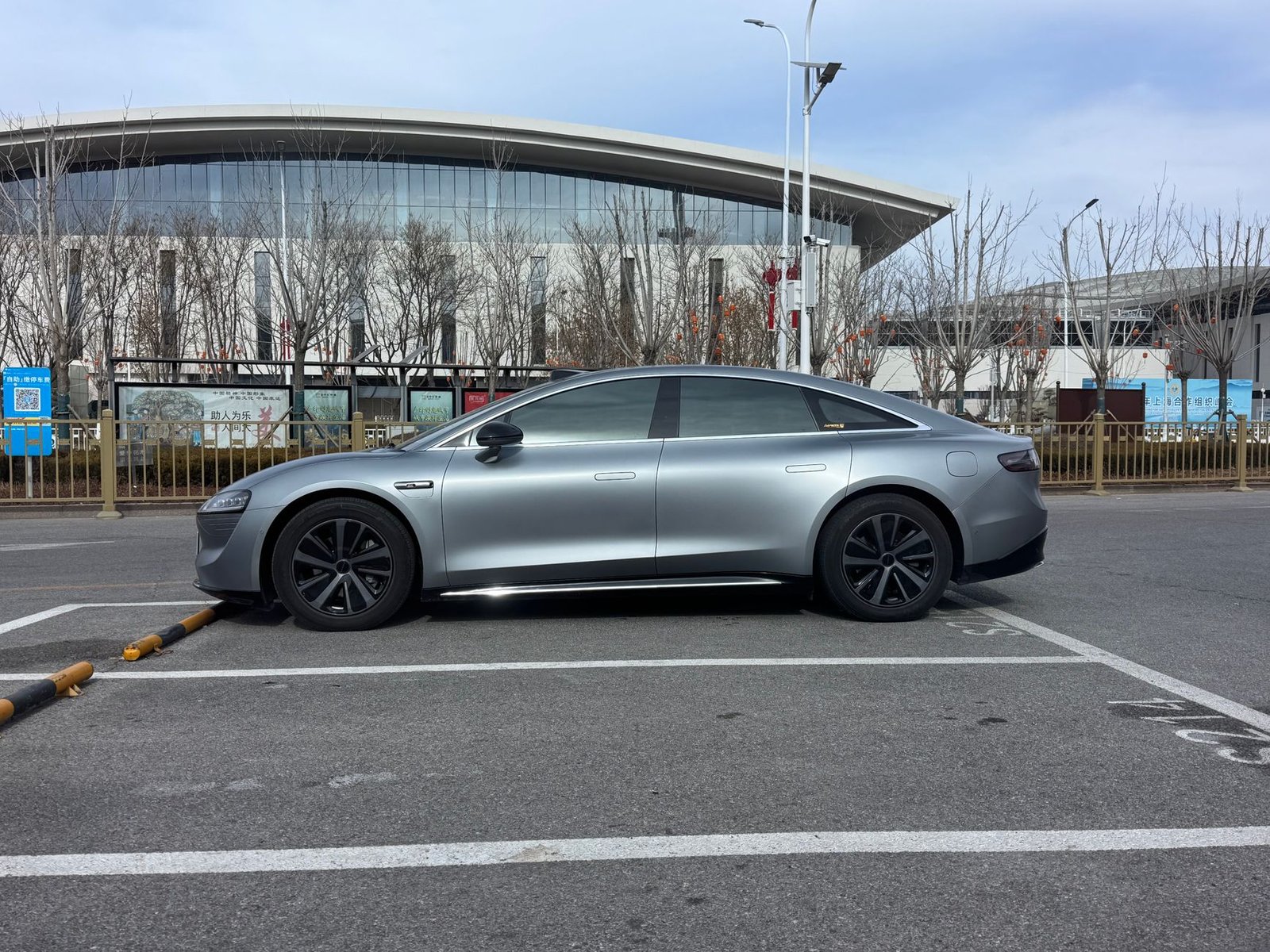
You’re configuring an electric sedan online, late at night, trying to make sense of competing range claims. The BYD Han EV advertises over 1,000 kilometers on a single charge. A Tesla Model 3 Long Range claims 629 kilometers. A Lucid Air Grand Touring promises 837 kilometers. The numbers escalate, but what are you actually buying? This isn’t about who printed the biggest number on the spec sheet. It’s about whether those kilometers translate to real-world capability or just clever test-cycle engineering.
The core question: Are we witnessing a genuine leap in usable range, or are manufacturers gaming measurement standards to win the spec-sheet war?
The Test Cycle That Inflates Everything
When Chinese automakers quote range figures for vehicles like the BYD Han EV, they use the China Light-Duty Vehicle Test Cycle. CLTC measures range under conditions that bear little resemblance to highway driving: gentle acceleration, low average speeds, and minimal climate control use. The result is range numbers that look spectacular on paper but shrink in real-world conditions.
Compare this to EPA testing in the United States, which includes higher-speed highway cycles and more aggressive acceleration patterns. A vehicle rated on CLTC typically delivers roughly 65 to 75 percent of that figure under EPA methodology. A 1,000 km CLTC claim therefore translates to roughly 650 to 750 km EPA-equivalent range, or about 405 to 465 miles. Still impressive, but the gap between test and reality matters.
The physics are unforgiving. Aerodynamic drag increases with the square of velocity. At 120 km/h on a highway, you’re fighting four times the air resistance you face at 60 km/h. Climate control compounds the problem: heating a cabin in winter can consume 3 to 5 kW continuously, reducing effective range by 20 to 30 percent in cold weather. CLTC testing doesn’t capture these energy sinks adequately.
What a 100 kWh Battery Actually Delivers
Large battery packs enable long range, but they come with tradeoffs the marketing materials skip. A 100-plus kWh battery adds several hundred kilograms to vehicle weight compared to a 60 kWh pack. That mass penalty affects efficiency, handling, tire wear, and suspension design. You’re hauling an extra grand piano everywhere you drive.
Charge time becomes the hidden constraint. Even with 800-volt architecture and 350 kW peak charging capability, filling a depleted 100 kWh battery takes meaningful time. Manufacturer claims like “10 to 70 percent in a few minutes” describe peak charging rate under ideal conditions: battery temperature in the optimal 25 to 35 degree Celsius window, external temperature moderate, and battery state of charge in the sweet spot where cells accept maximum current. Real-world charging sessions, starting from a cold battery after highway driving in winter, take considerably longer.
The charging curve matters more than peak rate. A battery might accept 350 kW briefly, but taper to 150 kW by 50 percent state of charge and lower still as it fills. Your average charging power over a 20 to 80 percent session determines real-world convenience, not the peak number.
Cost scales with capacity. At current lithium-ion pack-level prices of roughly $100 to $115 per kWh, a 100 kWh battery represents on the order of $10,000 to $11,500 in cell and pack cost. This is before factoring in the thermal management system, battery management electronics, and structural integration. Whatever the sticker price, it’s worth comparing the cost per usable kilometer against a smaller-battery vehicle charged more frequently.
Who Actually Needs 1,000 Kilometers
The buyers who benefit from maximum range are specific: those without consistent home charging, drivers in extremely cold climates where range degradation is severe, or people covering long rural routes with sparse charging infrastructure. If you’re commuting 40 kilometers daily and charging at home every few days, a 1,000 km battery is hauling unused capacity constantly.
Fleet operators running predictable routes optimize differently. A delivery van covering 200 km per day doesn’t need 1,000 km range. It needs a battery sized to the duty cycle plus a margin, minimizing upfront cost and weight. Smaller battery, lower price, faster charging because you’re only refilling a partial pack instead of a full one.
The European market buyer faces different infrastructure. Germany has high-speed autobahn driving where sustained 140 km/h depletes batteries rapidly, but also dense fast-charging networks where 20-minute stops are manageable. The calculation changes in markets with limited charging: rural Australia, parts of the American West, or developing markets where infrastructure lags vehicle adoption.
Cold-weather drivers get the clearest benefit. In northern climates where temperatures routinely drop below minus 10 degrees Celsius, effective range can fall to 50 to 60 percent of rated capacity. A vehicle rated for 1,000 km CLTC might deliver 400 km or less in severe winter conditions with highway driving and cabin heating. Suddenly, that oversized battery isn’t overkill, it’s necessity.
The Constraint You Should Optimize For
The decision isn’t really about range. It’s about charging access and duty cycle. If you have reliable home charging and drive less than 300 km on most days, you’re optimizing for the wrong variable by prioritizing maximum range. You should optimize for charge speed and efficiency, because you’ll charge frequently anyway and want minimal time at public chargers.
If your use case involves regular 500-plus kilometer drives through areas with sparse charging, or you lack home charging and depend on public infrastructure, then usable range becomes the primary constraint. But be honest about frequency. How often do you actually drive 500 km in a day? If it’s twice a year, you’re paying for and hauling several hundred kilograms of extra battery to optimize for a tiny fraction of your driving.
The infrastructure assumption matters more than the range number. Betting on a 1,000 km range vehicle is betting that charging infrastructure won’t improve materially in the next five years. If fast-charging networks densify and charge speeds reach 500 km of highway range in 10 minutes, the range advantage narrows and you’re left with a heavier, more expensive vehicle optimized for yesterday’s infrastructure.
Choose Based on What You Actually Drive
If you drive 150 km daily, charge at home, and take two long trips per year: buy a 75 kWh vehicle with good charging speed. Use the roughly $2,000 to $3,000 in battery cost you save versus a 100 kWh pack for charging equipment at home or simply bank the difference. The rare long trip will involve a charging stop, but you’ll enjoy better efficiency and lower cost for the overwhelming majority of your driving.
If you cover 400-plus kilometers regularly, face cold winters, or lack home charging: the math favors maximum range. You’re using the full battery capacity frequently enough to justify the cost and weight penalty. The BYD Han EV or similar large-battery vehicles make sense here.
For buyers in temperate climates with good charging access, the 1,000 km range claim is marketing solving a problem most people don’t have. The real constraint is charging infrastructure quality and your access to home charging, not the size of the battery pack. Choose accordingly.