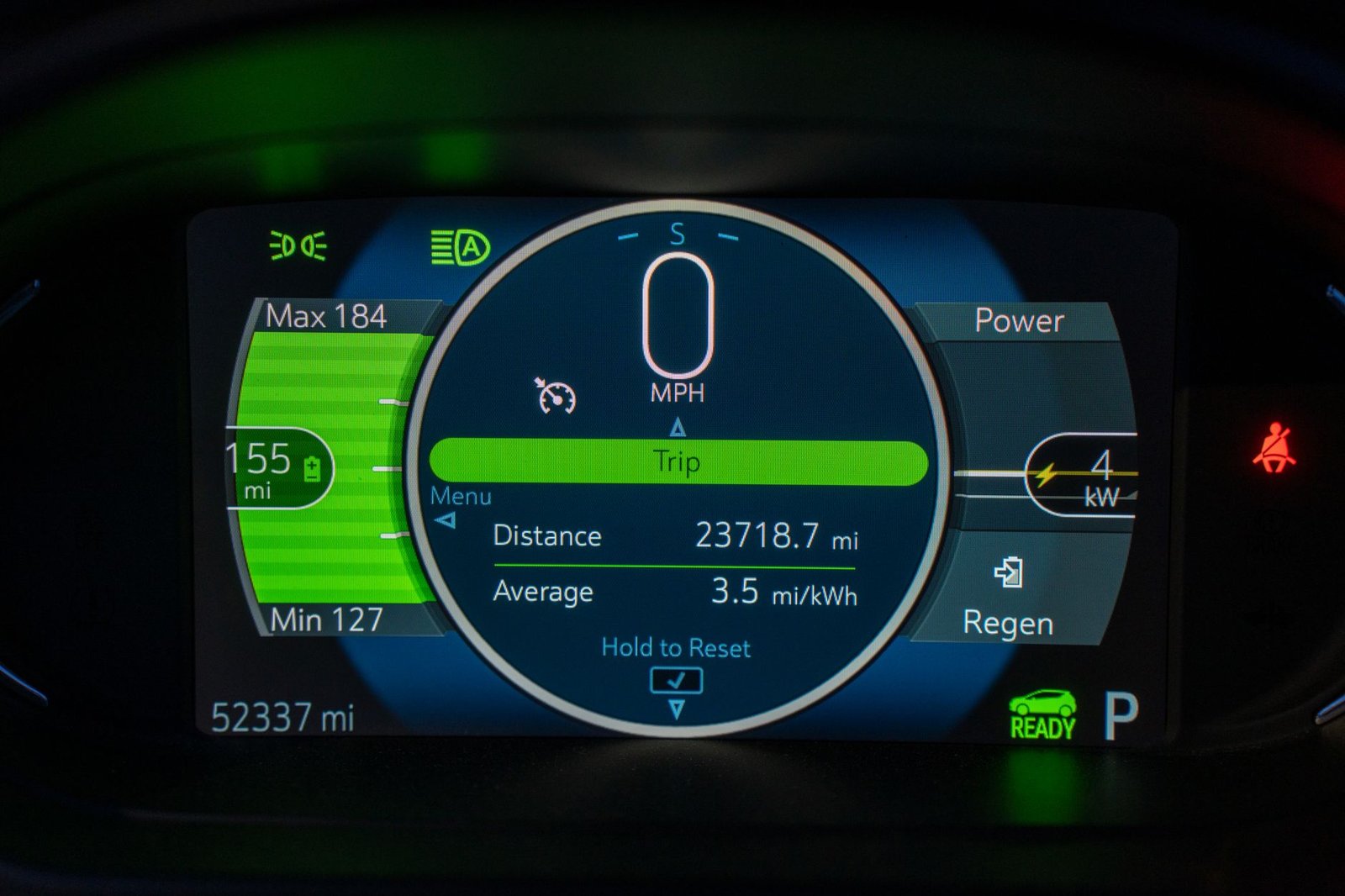
You’re standing in a dealership, looking at two electric cars. One advertises 300 miles of EPA range, the other 250. The first costs $4,000 more. You calculate the extra range buys you flexibility, maybe eliminates one road trip charging stop. You write the check. Six months later, you’re getting 210 miles in winter highway driving from the 300-mile car and 195 from the cheaper option. The gap you paid for has shrunk to one charging stop worth of electrons, maybe 15 minutes at a DC fast charger. Whether the gap between EPA numbers and real-world performance is consistent enough to guide purchase decisions worth thousands of dollars determines whether those estimates serve buyers.
The Comparison Nobody Makes at Purchase Time
Every EV buyer compares EPA range numbers because that’s the only standardized data available at decision time. A 2023 Hyundai Ioniq 6 with the long-range battery gets an EPA estimate of 361 miles. A Tesla Model 3 Long Range gets 358 miles. A Chevrolet Blazer EV gets around 320 miles. These numbers anchor negotiations, justify price premiums, and shape which vehicles get shortlisted.
EPA range estimates measure something specific: performance on a controlled laboratory test cycle that simulates city and highway driving at moderate temperatures. The test cycles run at average speeds well below highway cruising, with climate control disabled. Real drivers encounter 75 mph interstate traffic, 20-degree mornings, and passengers who want the heat on.
How much each vehicle’s real-world performance degrades from its EPA baseline under identical conditions matters more than comparing EPA number to EPA number. Some vehicles lose 15% in cold weather highway driving. Others lose 35%. That variance determines whether a 300-mile EPA car beats a 280-mile EPA car in actual use.
What Spec Sheets Hide About Range Performance
Two vehicles with identical EPA ratings can deliver radically different results in practice because the test protocol doesn’t capture several variables that dominate real-world efficiency.
Thermal management architecture matters more than battery size in cold weather. A vehicle with a heat pump can maintain a larger share of its EPA range at 20°F while drawing modest power for cabin heat. A vehicle using resistive heating at the same temperature might draw several kilowatts and drop well below EPA range. That’s a gap of 15 to 20 percentage points that doesn’t appear in any specification table. The EPA test runs near room temperature, so cold-weather penalties never show up in the rated number.
Highway efficiency varies with aerodynamics and motor tuning. EPA testing includes highway cycles, but the average speed sits well below 70 mph. Some vehicles maintain efficiency at sustained interstate speeds because their motors operate in a favorable part of the torque curve at 75 mph. Others see efficiency collapse above 65 mph as aerodynamic drag overwhelms motor optimization. A vehicle rated for 300 miles EPA might deliver 240 miles at 70 mph, or closer to 190 miles at higher speeds, depending on its drag coefficient and powertrain calibration.
Charging curves interact with advertised range to determine road trip utility. A 250-mile EPA vehicle that charges from 10% to 80% in 18 minutes delivers more practical range than a 300-mile EPA vehicle that takes 38 minutes for the same state-of-charge window. The faster-charging car lets you stop more often but spend less total time plugged in. EPA range estimates say nothing about charge time or thermal performance during repeated fast-charging sessions.
The Real Trade-off: Accuracy Versus Comparability
Buyers face a choice between two approaches for evaluating range, though most don’t realize they’re choosing.
The EPA number offers comparability. Every vehicle gets tested on the same cycle, at the same temperature, using the same measurement protocol. The number is repeatable and regulated. It’s also predictably wrong for any specific driver because no real person drives the EPA test cycle in EPA test conditions year-round. But the error is systematic. If you know you typically get 75% of EPA range in your climate and driving style, you can apply that discount to any vehicle’s EPA number and rank options consistently.
Real-world crowdsourced data offers accuracy for specific conditions but loses comparability. When drivers report their observed range, they’re measuring different routes, different temperatures, different traffic patterns, different climate control usage. One driver’s “highway range” means 65 mph with the heat off. Another’s means 80 mph with the defroster running. The data reflects reality but becomes difficult to use for cross-shopping because the measurement conditions aren’t controlled.
The gap between these approaches costs buyers money because most people use EPA numbers to compare vehicles (good for consistency) but then feel deceived when their personal results diverge (bad for expectations). The buyer who pays $4,000 extra for 50 more miles of EPA range might get 15 more miles of real-world range, or 40, or close to zero if the more expensive vehicle has worse thermal management for their climate.
Who Each Approach Actually Serves
EPA range estimates work for buyers who understand they’re buying a ranked comparison, not a prediction. If you know the test conditions and you know your driving differs from those conditions, the EPA number becomes an index. It tells you Vehicle A has a larger battery and better test-cycle efficiency than Vehicle B. It doesn’t tell you which one will leave you stranded in February.
This approach serves someone shopping multiple vehicles in the same efficiency class. Comparing a Hyundai Ioniq 6 to a Tesla Model 3 using EPA numbers gives you useful information because both vehicles get tested identically and both will deviate from their EPA numbers by roughly similar amounts in real-world highway driving. The rank order tends to hold even when the absolute numbers don’t.
Real-world data serves buyers who need worst-case planning numbers for a specific use case. If your daily commute includes 40 miles of 75 mph freeway driving in Minnesota winter, you need to know whether a given vehicle can do that round trip without charging at work. EPA numbers can’t answer that. Reported winter highway range from owners in similar climates can.
This approach serves someone who has already narrowed the choice to one or two vehicles and needs to validate that the leading candidate actually works for their situation. It also serves fleet buyers who can aggregate data from their own vehicles to build use-case-specific range predictions.
The Variable That Determines Which Number Matters
How much buffer you need above your regular driving distance determines the decision point. If your daily usage sits at 60% of a vehicle’s range, EPA estimates work fine for cross-shopping. You have enough margin that real-world variance doesn’t strand you. You care about the rank order of vehicles, not the precision of the estimate.
If your daily usage pushes 85% of advertised range, EPA estimates become unreliable for purchase decisions. Real-world data in your climate and speed range becomes essential because the gap between EPA and reality determines whether you make it home. At that utilization level, a vehicle rated for 250 miles EPA that delivers 220 miles in your conditions beats a vehicle rated for 280 miles EPA that delivers 210 miles. The EPA rank order inverts.
The expensive mistake is paying a premium for EPA range you won’t realize in practice. The cheap hedge is buying one size up in battery capacity when your usage sits near the margin. The analytical failure is assuming EPA range gaps translate linearly to real-world gaps.
What the Variance Costs
Buyers pay for EPA range at roughly $100 to $150 per rated mile when comparing trim levels of the same model. Moving from a 250-mile battery to a 300-mile battery typically costs $5,000 to $7,500. If that 50-mile EPA gap translates to 30 miles in your real-world driving, you paid roughly $167 to $250 per usable mile. If it translates to 15 miles because the larger battery adds weight that erodes highway efficiency, you paid roughly $333 to $500 per mile.
The capital is allocated efficiently when the EPA gap predicts the real-world gap. It’s wasted when thermal management or aerodynamic differences compress the real-world gap below the EPA gap. Most buyers don’t have enough information at purchase time to know which situation they’re in. The EPA number becomes a price anchor that may or may not reflect value delivered.