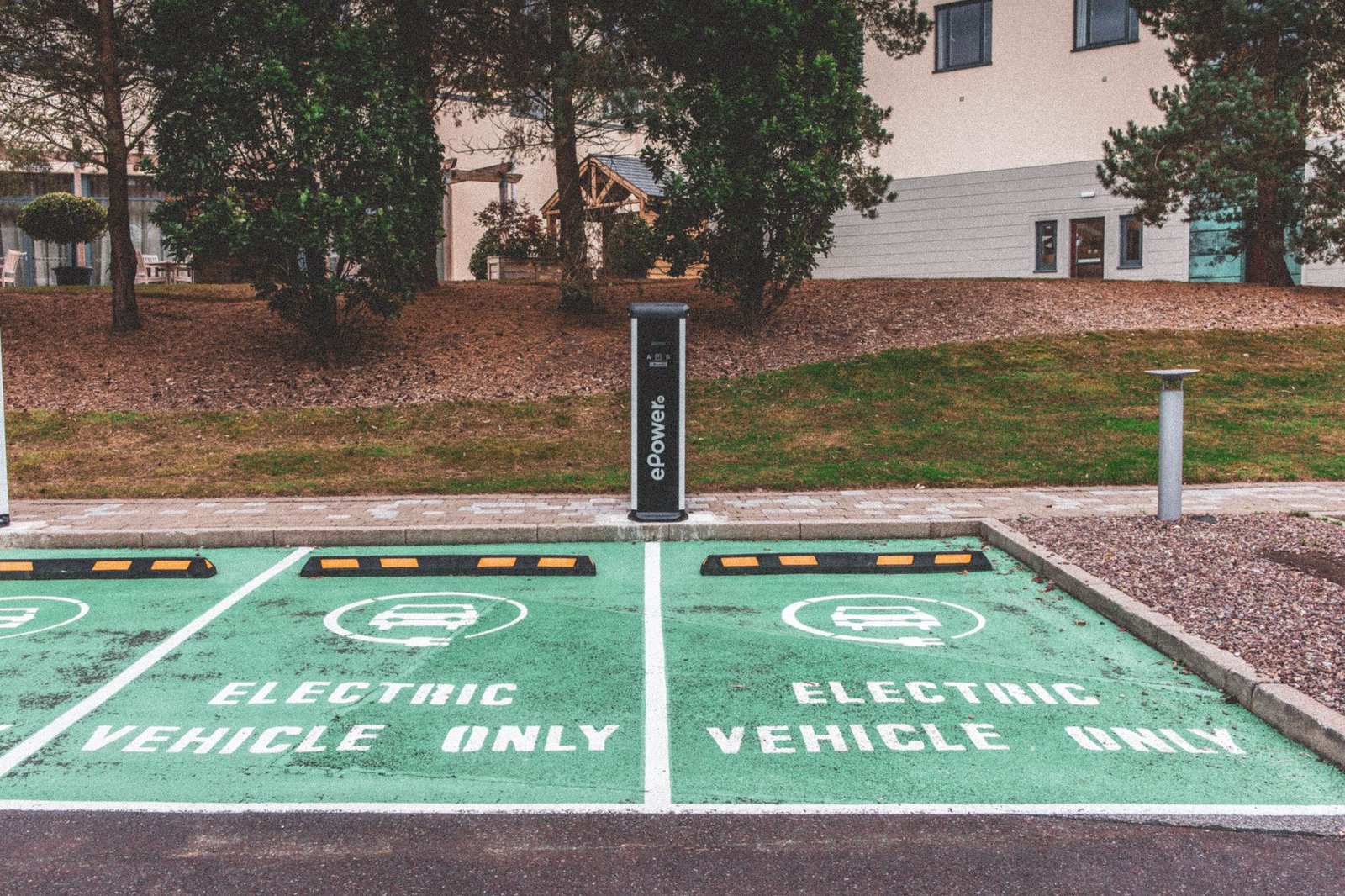
A driver pulls into a parking lot with a 20% battery charge and 200 miles left to drive. Two buildings sit side by side. One is a fast-food restaurant that added DC fast chargers six months ago. The other is a charging station that added a coffee shop last week. Both offer the same charge speed and roughly the same food. The driver will probably choose differently than you’d expect, and that difference reveals why the order of infrastructure deployment matters more than the infrastructure itself.
Restaurant chains adding EV charging stations treat the chargers as amenities to drive food sales. Charging networks adding food service treat the restaurant as an amenity to improve charger utilization. These aren’t just different business models. They’re different customer relationships with different cost structures, and the one that gets built first in any given location shapes what’s economically viable for the second mover.
The 30-Minute Window
Fast charging to 80% takes 20 to 40 minutes at current power levels, depending on the vehicle’s charge curve and battery size. Restaurant meals take 15 to 45 minutes depending on service speed and whether you eat in the car. The overlap is real but not automatic. A charging session doesn’t naturally consume a meal’s worth of time, and a meal doesn’t naturally consume a charge cycle’s worth of time.
Which activity anchors the stop determines everything. If the driver came for the charger and food is a time-fill option, the charging network captures the primary transaction and keeps 100% of the charging revenue. The restaurant competes against every other food option within walking distance, plus whatever the driver brought from home. If the driver came for the food and charging is a convenience add-on, the restaurant captures the primary transaction and the charging revenue is either a loss leader or a third-party concession.
Early adopters skew the data. EV owners today still skew toward higher-income households with access to home charging. They rarely need public DC fast charging for daily use. When they do charge publicly, it’s often on road trips where the meal stop was already planned. Adding a charger to an existing restaurant chain serves this population well because they were coming anyway. But as EV adoption moves beyond early adopters to apartment dwellers and drivers without home charging, the primary need shifts from occasional road trip top-ups to regular charging as a utility service. Those drivers aren’t looking for restaurants with chargers. They’re looking for chargers, period.
Real Estate Constraints Lock In Early
A DC fast charging station needs different real estate than a restaurant. Charging stalls require pull-through access or wide turn radii for vehicles with trailers. Peak utilization happens during commute hours and weekend travel windows, not traditional meal times. Electrical service requirements can run from several hundred kilowatts to over a megawatt for a four-to-eight-stall site, far beyond what a typical fast-food restaurant’s electrical infrastructure supports.
Retrofitting a restaurant parking lot with chargers means working within existing constraints. The building is already placed. Parking spaces are already striped. Electrical service is sized for kitchen equipment and HVAC, not for high-power charging. Adding four 150 kW chargers typically requires a utility service upgrade, often including transformer work and trenching across the parking lot. Depending on how far the site sits from adequate grid capacity, this can cost anywhere from the low six figures to over $500,000 before you install a single charging pedestal.
A purpose-built charging site makes different tradeoffs. You can orient stalls for traffic flow, place the electrical room adjacent to utility access, and design around peak charging load rather than peak burger throughput. But adding food service after the fact means fitting a kitchen and seating into a building designed around charging infrastructure. The economics rarely work unless the charging volume is high enough to support full-service amenities, which generally means a large, high-traffic site rather than a handful of stalls.
The first mover sets the physical template. If the restaurant comes first, the charging infrastructure adapts to restaurant real estate. If the charging station comes first, food service adapts to charging real estate. Reversing this sequence is difficult because the capital costs of the first build are largely sunk.
Customer Acquisition Flows Downhill
A driver who regularly charges at the same location will try the food eventually. A driver who regularly eats at the same location won’t necessarily charge there unless it’s the most convenient option. This asymmetry matters because customer acquisition costs flow downhill.
Charging networks spend heavily to acquire users: app downloads, payment setup, loyalty programs, customer support for charge session failures. Once a driver is in the network, adding food purchases is incremental revenue with minimal additional acquisition cost. Restaurant chains also spend to acquire customers, but those customers don’t automatically become charging customers. A diner-turned-charger means the restaurant paid acquisition costs twice, once for food loyalty and once for charging adoption.
The sequencing shapes who bears the acquisition cost. If the charging network builds first, they pay to acquire the charging customer and the restaurant (whether owned or franchised) captures incremental food revenue from an already-acquired audience. If the restaurant builds charging first, they pay to acquire both the dining customer and the charging customer, often with lower margin on the charging side because they lack network scale.
EV charging restaurants face a structural disadvantage against charging stations with food service. The restaurant starts with a dining customer base that doesn’t need charging. Converting them requires both EV adoption and a preference for that specific location over alternatives. The charging network starts with a charging customer base that definitely needs charging and may well want food. Converting them requires only competitive food and proximity.
The Pre-Ubiquity Window
The deployment sequence matters most in the window before ubiquitous coverage. Right now, many drivers still plan routes around charging availability. Apps like A Better Route Planner optimize for charge stop locations, not food preferences. The first network to achieve density in a corridor becomes the default choice, and adding food service reinforces that advantage.
If charging infrastructure eventually approaches gas station density, the dynamic flips. Drivers won’t route around chargers any more than they currently route around gas stations. Charging becomes a commodity differentiated by price, speed, and reliability. At that point, co-location with restaurants matters more because the driver’s choice is no longer “where can I charge” but “where do I want to be while I charge.”
But current DC fast charging coverage still has major gaps outside interstate corridors. Networks building density now are establishing customer habits that will persist even after alternatives exist. If restaurants wait until charging is ubiquitous to add chargers, they’ve missed the window where co-location provides a competitive advantage. If charging networks wait until they’re ubiquitous to add food service, they’ve already captured the customer relationship and can negotiate better terms with food tenants.
The Capital Equation
A restaurant chain evaluating whether to add charging must decide whether early-mover advantage in the pre-ubiquity window offsets the capital cost and operational complexity. A charging network evaluating whether to add food service must decide whether incremental revenue from an already-captive audience justifies the real estate and staffing costs.
The math favors different sequences for different operators. A restaurant chain with strong road-trip traffic on major interstate routes can justify charging installations because their customer base already includes long-distance travelers. A charging network with consistently high utilization on existing stalls can justify adding food service because the marginal cost per transaction is low. But a restaurant chain in an urban area serving mostly local traffic has weak charging economics, and a charging network with low utilization can’t support food service overhead.
The sequence that works depends on the answer to one question: who is the infrastructure for? If it’s for road-trippers passing through, restaurants adding chargers can work. If it’s for local drivers who need regular charging access, charging stations with food service are better positioned to win. And whichever model achieves density first in a given market will heavily influence whether the other is economically viable at all.