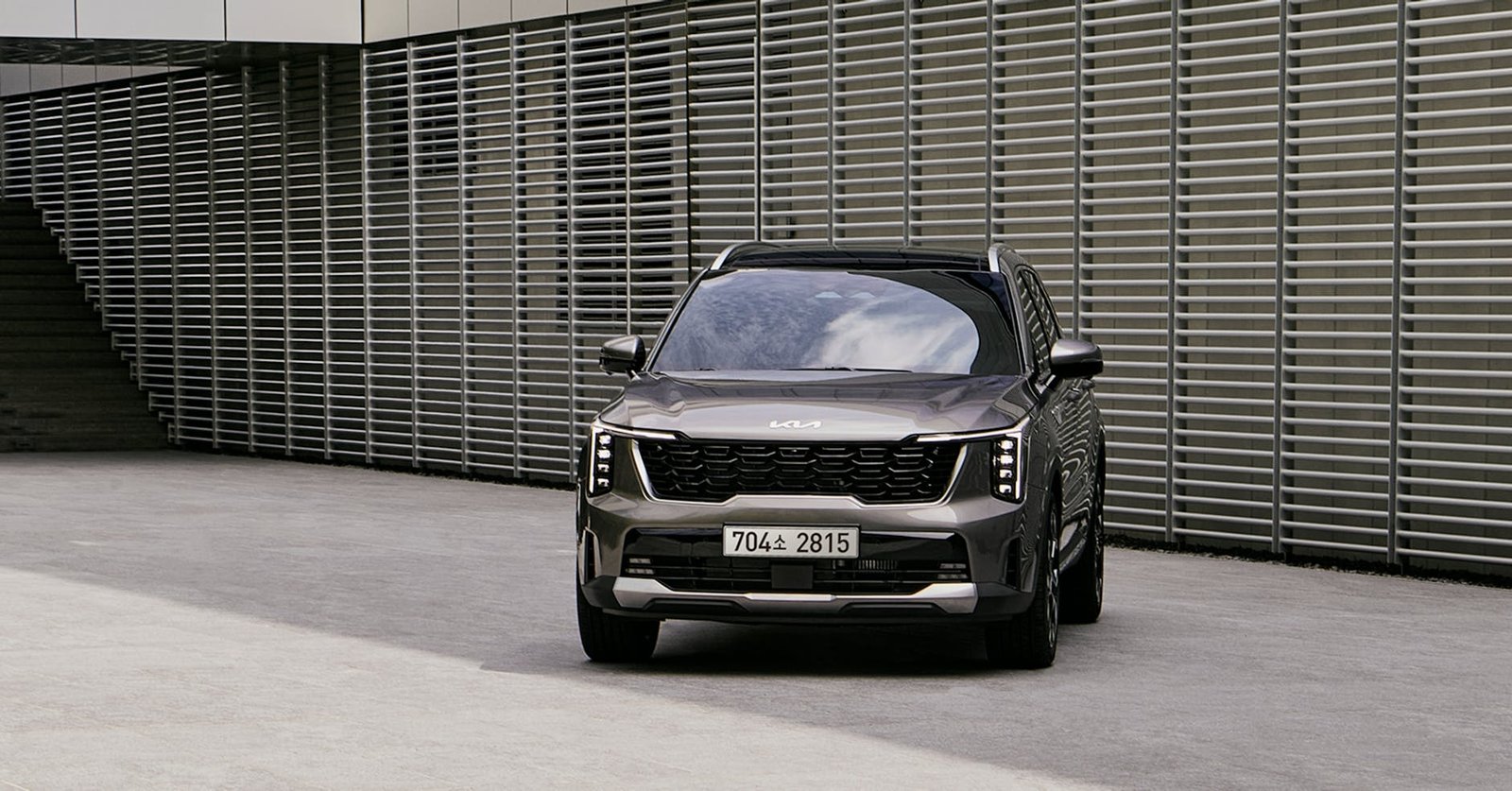
Kia announced its Telluride hybrid this year and promised an extended-range electric version (EREV) by 2029. That five-year gap exists because the automaker needs the hybrid to succeed first. The lessons learned from selling that vehicle will determine whether the EREV makes financial sense at scale.
Automotive product development is path-dependent in ways that aren’t obvious from outside the industry. You can’t just skip to the “better” technology. The infrastructure you build for one powertrain, the supplier relationships you develop, the customer service capabilities you train for, and crucially, the data you collect about how buyers actually use these vehicles all cascade into what becomes technically and economically feasible next.
What an EREV Actually Does
An extended-range electric vehicle uses electric motors to power the wheels, just like a full EV. A gasoline generator onboard kicks in when the battery runs low, producing electricity to keep you moving. You can plug it in at home and run on battery power for your daily commute. You can fill the gas tank for road trips. Ford, Jeep, Ram, and Scout Motors have all confirmed EREV variants coming to the U.S. market.
The appeal: you need a smaller battery than a full EV to cover the same distance. This matters enormously for large vehicles where battery cost scales with weight. A three-row SUV like the Telluride weighs around 4,500 pounds empty. Hauling that mass around requires a massive battery pack if you want 300-plus miles of range. The EREV sidesteps that problem by carrying 40 or 50 kWh instead of 100 kWh, letting the gas engine handle the edge cases.
Hyundai, Kia’s corporate sibling, announced last year that their EREV platform would target 600 miles of combined range. That figure tells you the battery alone probably delivers 60 to 80 miles, with the rest coming from burning gasoline to generate electricity. A hedge against range anxiety without the cost penalty of a full battery-electric vehicle.
Why the Hybrid Has to Come First
Kia currently sells five hybrid models in the U.S.: Niro, Sorento, Sportage, Carnival, and starting in 2025, the Telluride. The company plans to expand that to eight hybrids by decade’s end, adding the Seltos later in 2025, plus the K4 and an unnamed pickup truck. Target sales across hybrids and EREVs: 1.15 million units annually by 2030, out of 4.3 million total vehicle sales.
That hybrid volume is the foundation for the EREV program. Building a conventional hybrid teaches you how to integrate electric drive systems into vehicles originally designed around internal combustion engines. You learn which suppliers can deliver electric motors at the quality and cost you need. Service requirements when a dealer technician opens the hood and finds both a gas engine and electric components become clear. You discover which warranty assumptions were wrong.
Customer usage data matters more. Do Telluride hybrid buyers plug in regularly if you give them a small plug-in battery option, or do they treat it like a regular hybrid and never charge? What percentage of miles end up being electric versus gasoline in real-world use? That usage data determines whether the business case for a 50 kWh battery pack and a generator system actually holds up when you scale to tens of thousands of units.
The Kia Telluride hybrid entering the market now generates that dataset. By 2029, Kia will know whether Telluride buyers are the kind of customers who will pay extra for plug-in capability and use it, or whether they just want slightly better fuel economy without changing their behavior. Focus groups can’t answer that kind of question.
The Capital Commitment Problem
An EREV production line requires different equipment than a hybrid line. The battery pack is larger, which means different assembly tooling. The generator system needs its own integration steps. You’re certifying the vehicle as both an EV and a gasoline vehicle for regulatory purposes, doubling your testing burden. And you need to convince your supplier base to develop components for a powertrain architecture that doesn’t exist yet at volume.
Suppliers won’t invest in EREV-specific tooling until they see credible order volumes. Automakers won’t commit to order volumes until they’re confident the market exists. Hybrid sales performance breaks that deadlock. If the Telluride hybrid sells well, Kia can point to actual transaction prices and take rates to justify the EREV investment to their board and their suppliers.
The 2024 CEO Investor Day included specific targets: 1.6 million EVs and 1.15 million hybrids/EREVs by 2030. The EV number is larger because Kia still sees battery-electric as the long-term destination, but the hybrid/EREV category carries less near-term risk. You’re selling customers a familiar driving experience with better efficiency. The EREV bets that some subset of those hybrid buyers will pay more for plug-in capability once they’ve experienced electric-assist driving.
The sequencing also matters for dealer networks. A dealership that has sold and serviced Telluride hybrids for three years will have trained technicians, diagnostic equipment, and parts inventory in place when the EREV arrives. Trying to launch an EREV into a dealer network that has never touched a high-voltage battery system invites disaster. Vehicles will sit on lots waiting for parts, service appointments will take twice as long as scheduled, and frustrated customers will amplify every problem on social media.
What Happens If the Hybrid Doesn’t Sell
Telluride buyers might not care about fuel economy enough to pay the hybrid premium. Three-row SUV customers tend to prioritize space, towing capacity, and perceived safety over efficiency. If the hybrid version sits on dealer lots while the conventional gas model moves quickly, Kia has a clear signal that this customer base won’t pay for electrification.
In that scenario, the EREV becomes much harder to justify. You’re asking buyers to pay even more for plug-in capability when they already rejected a smaller electrification premium. The business case collapses unless battery costs fall so dramatically that the EREV ends up cheaper than the hybrid, which looks unlikely given the additional generator hardware.
Kia’s President and CEO Ho Sung Song framed the strategy around multiple powertrain options rather than going all-in on EVs: “EVs, hybrids, plug-in hybrids and other forms of electrification will serve as key drivers for Kia’s sustainable growth.” The company is keeping options open because the path forward depends on what customers actually buy.
The Bigger Industry Pattern
Path-dependence explains why multiple automakers are doubling down on conventional hybrids right now despite years of bold EV promises. EV sales growth in the U.S. has slowed because demand turned out to be more price-sensitive than the industry expected. Policy whiplash around federal incentives added uncertainty. The manufacturing capacity and supplier relationships built for EV programs don’t disappear just because sales forecasts were wrong.
Hybrids let automakers redeploy those electric drivetrain components in products with lower barriers to adoption. You’re asking customers to change their refueling behavior zero percent. That makes the sale easier, which generates the volume that drives down component costs, which eventually makes the full EV or EREV more economically viable.
The Kia Telluride hybrid arriving now reflects updated assumptions about how fast battery costs will fall and how quickly charging infrastructure will expand. The 2029 EREV timeline builds in time to see whether those assumptions prove correct. If fast charging becomes ubiquitous and cheap, maybe the EREV gets canceled in favor of a full EV. If battery costs stay high and infrastructure stays patchy, the EREV becomes the volume leader and the full EV becomes the niche product.
Why This Matters for What Comes Next
The body-on-frame pickup truck Kia mentioned for their U.S. market entry follows the same pattern. The company already sells the Tasman pickup in Australia, the Middle East, and Korea. Bringing an EREV version to the U.S. market means watching how Ford’s upcoming Ranger PHEV and the Scout Motors truck perform first. If those vehicles succeed, Kia has proof the market exists. If they struggle, Kia can adjust the strategy without having committed to U.S. production.
Path-dependent decision-making in practice: the choices available in 2029 depend entirely on what happens with the hybrid between now and then. The EREV only makes sense if the hybrid sells, which only happens if Kia priced it correctly and the vehicle delivers on real-world efficiency promises, which depends on supplier quality and dealer service capability. You only learn all of that by actually selling the product at scale.
You can’t skip steps because each phase generates information that determines whether the next phase is viable. The alternative: betting billions on a powertrain configuration with no market validation. That’s how you end up with expensive vehicles sitting unsold on dealer lots while your competitors take market share with products customers actually want.