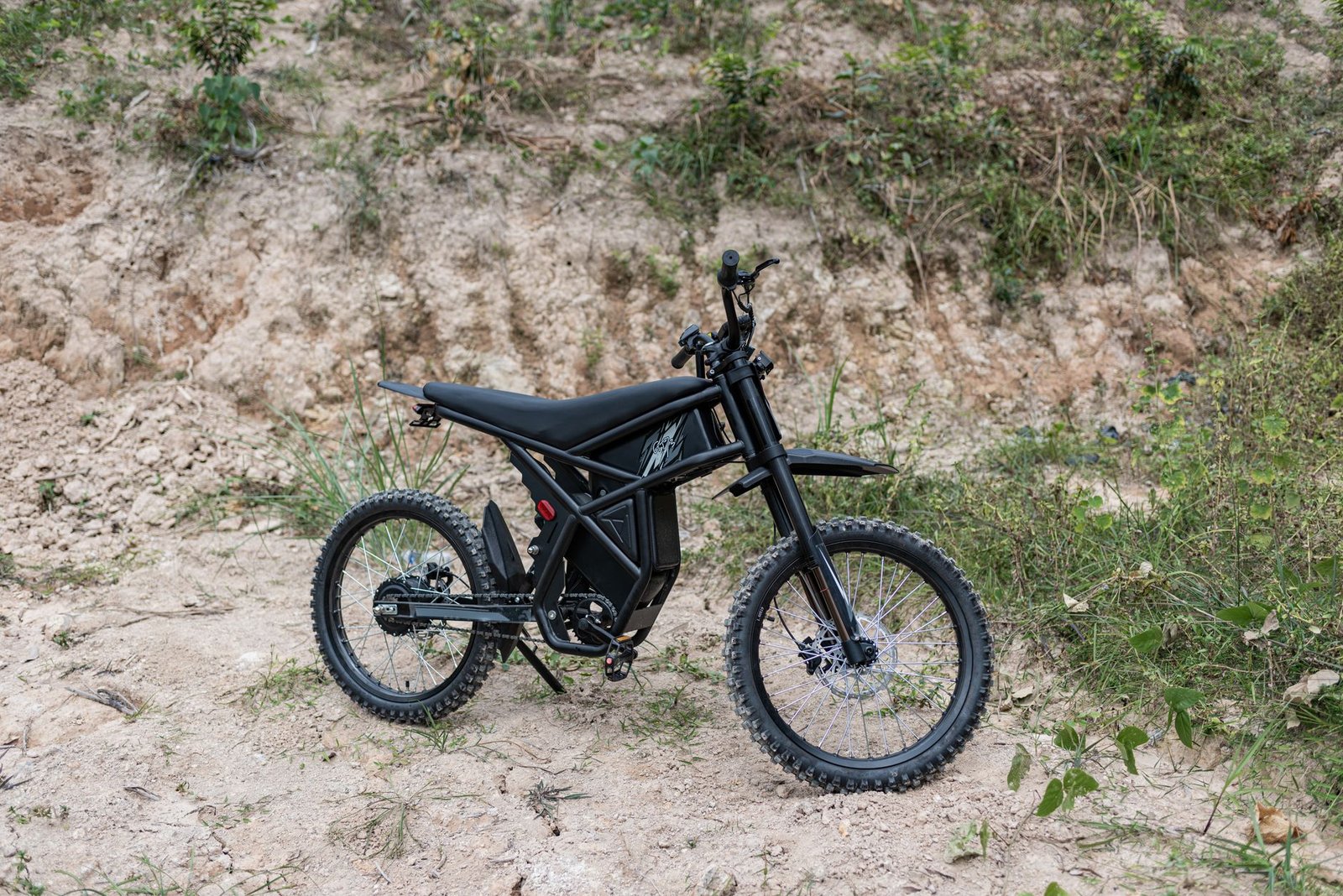
A factory-direct folding e-bike for under $800 sounds like the kind of deal that breaks open a market. Heybike’s promotional pricing puts full-suspension, fat-tire electric bikes within impulse-purchase range for consumers who’d never consider a $3,000 Specialized or Trek. The Mars 2.5 and Ranger S 2.0 models promise credible specs: 500W motors, 48V batteries, claimed ranges up to 50 miles. At $799 with a promo code, these Heybike e-bikes undercut comparable bike-shop inventory by roughly half or more. The pricing works because the bill of materials is genuinely cheaper when you eliminate dealer margins and optimize for a single high-volume SKU shipped direct from Guangdong. But the constraint that makes sub-$1,000 e-bikes economically viable is the same one that defines their total cost of ownership, and it has nothing to do with the sticker price.
The core issue is component durability under actual use. An e-bike motor, controller, and battery pack operating at rated output will generate predictable wear rates. A 500W hub motor spinning at 25 mph for an hour dissipates a meaningful fraction of its input as heat even under efficient conditions. Over several hundred charge cycles, a 48V 15Ah lithium pack (the typical spec at this price point) will degrade toward 80% of nameplate capacity, and that fade comes faster if the battery management system lacks sophisticated cell balancing. These aren’t defects. They’re the physics of running electrical and mechanical systems near the thermal and voltage limits the price point demands. A $799 e-bike uses the same lithium-ion chemistry and similar motor topology as a $2,500 model, but the cost difference shows up in margin thickness: how much thermal overhead the controller has, whether the battery uses name-brand cells with tight QC, how much reinforcement the frame carries around high-stress joints.
What the Price Actually Buys
The $799 Heybike represents a bill-of-materials approach that’s been optimized down to the last washer. The cost structure looks roughly like this: $200 for the battery pack, $120 for the motor and controller, $80 for the frame and fork, $60 for wheels and tires, $40 for drivetrain components, $50 for brakes and peripherals, $50 for assembly and QC, leaving around $200 for shipping, import duties, marketing, and thin gross margin. Those figures aren’t disclosed by Heybike, but they’re consistent with teardown analyses and supplier pricing for comparable components at volume. The constraint is that every line item is already near the floor. You can’t cut the battery pack below $200 without switching to unbranded cells or reducing capacity. You can’t make the frame cheaper without reducing wall thickness or using lower-grade aluminum alloy.
The frame itself illustrates the tradeoff. A folding mechanism introduces a structural discontinuity that concentrates stress at the hinge points. A high-end folder like a Brompton uses custom-butted steel tubing and a forged hinge that’s been refined over decades. A budget folder uses straight-gauge aluminum tube and a stamped hinge with a larger safety factor to compensate for material variation. Both work, but the budget version weighs more and has less fatigue life under repeated folding cycles. Over many folding cycles, microscopic cracks may begin propagating from the hinge pin holes, especially if the user exceeds the rated weight limit or rides over rough surfaces that induce frame flex. This isn’t a failure of design. It’s the predictable outcome of optimizing for minimum viable cost rather than maximum service life.
The Battery Math Nobody Shows You
The claimed 50-mile range assumes pedal assist level 1 on flat ground with a light rider and no headwind. Under those conditions, the motor draws perhaps 10-15 watt-hours per mile, and a 48V 15Ah pack (720Wh nominal) can realistically deliver 50 or more miles. But heavier real use looks different. A 200-pound rider climbing a 5% grade at 18 mph in assist level 3 pulls closer to 25-30 Wh/mi, cutting range to roughly 25 miles. Cold weather knocks another 20% or so off usable capacity. After several hundred charge cycles, the pack may hold only around 575Wh of effective capacity. Now that same hill climb delivers under 20 miles of range, and the rider who bought the bike expecting 50-mile commutes is nursing it home on the last bar of charge.
The replacement battery costs $300 to $400, depending on whether you buy OEM or third-party. That’s roughly 40% to 50% of the bike’s original purchase price. If the pack lasts two to three years under daily use, the effective annual battery cost is $100 to $200. Add another $100 per year for brake pads, tires, chain, and cassette wear, and the all-in operating cost approaches $200 to $300 annually. Over five years, total cost of ownership can reach well over $1,500, assuming the frame and motor survive that long. A $2,500 e-bike with a name-brand motor and a longer warranty starts looking like a different value proposition when you account for replacement parts and resale value.
Where the Constraint Bites
The deeper issue is that e-bike componentry doesn’t scale down gracefully below a certain price threshold. A Bosch or Shimano mid-drive motor costs several hundred dollars wholesale because it’s built to survive thousands of hours of operation with minimal degradation. The electronics are conformal-coated, the bearings are sealed, the gears are hardened steel. A generic 500W hub motor costs a fraction of that because it skips those steps. It’ll run fine for a long time if you don’t exceed the thermal limits, but there’s less margin for abuse. The battery management system in a budget pack might lack per-cell monitoring, meaning one weak cell can drag down the entire series string without the system detecting it until capacity has dropped substantially. These aren’t defects you can engineer away at $799. They’re the direct result of the price point.
The frame and fork face the same constraint. Aluminum has no true fatigue limit, unlike steel. Every stress cycle brings it closer to failure, and there’s no way to inspect for sub-surface cracks without X-ray or ultrasound. A premium e-bike frame is overbuilt by a wide margin to ensure it survives many years of hard use. A budget frame is built closer to the calculated minimum because every gram of extra material costs money. Both pass the same static load tests, but one has far more margin for real-world impacts, overloads, and manufacturing variation. The result is that budget e-bikes have a higher variance in service life. Some will run for years without trouble. Others will develop cracked welds, failed controllers, or dead batteries within months.
The Service Network That Doesn’t Exist
Traditional bike shops don’t want to work on direct-to-consumer e-bikes. The margins are too thin, the parts supply is uncertain, and warranty claims require dealing with an overseas seller who may or may not respond. A customer with a failed controller on a Heybike faces a choice: attempt the repair themselves using parts ordered from AliExpress, ship the bike back to the seller at their own expense, or write it off as a loss. None of those options are appealing, and none of them show up in the $799 purchase price. The total cost includes the time spent diagnosing problems, the frustration of dealing with poor documentation, and the risk of ending up with an expensive paperweight.
This dynamic creates a market where buyers with high mechanical aptitude and willingness to tinker can extract real value from budget e-bikes, while buyers expecting an appliance-like experience end up disappointed. The person who can swap a controller, rebuild a battery pack, and true a wheel will keep a $799 Heybike running for years at minimal cost. The buyer who expects to ride it like a car, charging it when needed and otherwise ignoring maintenance, will likely give up after the first major repair bill.
What the Market Actually Needs
The constraint isn’t that cheap e-bikes exist. It’s that they’re marketed as equivalents to bikes costing three times as much, when the performance envelope and service life are fundamentally different. A more honest framing would position sub-$1,000 e-bikes as entry-level transportation appliances with defined service lives and higher ownership engagement requirements. Think of them like economy cars: they’ll get you where you’re going if you maintain them properly and don’t exceed their design limits, but don’t expect luxury-car refinement or longevity.
The pricing pressure Heybike and similar brands create does serve a purpose. It forces traditional bike manufacturers to justify their premium pricing with tangible durability and service advantages. It expands the market by making e-bikes accessible to buyers who’d never spend $3,000. And it provides a proving ground for incremental improvements in low-cost battery chemistry and motor efficiency. But it only works if buyers understand what they’re actually purchasing: not a cheap version of an expensive bike, but a fundamentally different product optimized for a different set of constraints.
The Real Calculation
The right way to evaluate a $799 e-bike is total cost per mile over its realistic service life, not sticker price. If the bike delivers 5,000 miles before requiring major component replacement, and total ownership cost including battery, tires, and parts reaches $1,500, that’s 30 cents per mile. A $2,500 e-bike delivering 15,000 miles with roughly $800 in lifetime parts costs comes out to about 22 cents per mile and likely has residual value at end of life. The premium bike is cheaper on a per-mile basis, assuming the buyer keeps it long enough to amortize the upfront cost.
But that calculation only holds if the buyer would have purchased the premium bike in the first place. For someone who needs basic motorized transportation and has mechanical skills, the budget option makes sense. For someone expecting a turnkey appliance with dealer support, it’s a false economy. The market failure is that the pricing doesn’t transparently communicate which product you’re actually buying. A $799 Heybike e-bike is a legitimate value if you treat it as a consumable with a three-year horizon and plan for component replacement. It’s a bad deal if you expect it to perform like a $2,500 bike for a third of the price. The physics and the cost structure don’t support that expectation, no matter how good the promotional discount looks.
**Excerpt:** A $799 Heybike looks like a breakthrough deal until you calculate cost per mile over the bike’s actual service life. The price point works by cutting durability margin to the minimum, leaving buyers to absorb replacement costs the sticker price doesn’t show.